The SEEHN was saddened to learn of the tragic loss of lives in Piatra Neamt hospital on Saturday. SEEHN Secretariat conveys its deepest condolences and sympathy to the families of the victims and to the Romanian people. We praise the courage and spirit of sacrifice of the Romanian doctors trying to save the patients with the risk of their own life. In these moments of great sorrow we wish to voice the SEEHN`s full solidarity with the Romanian people. Our thoughts and prayers are with the families of those who lost their life and we wish those who were injured a swift and full recovery.
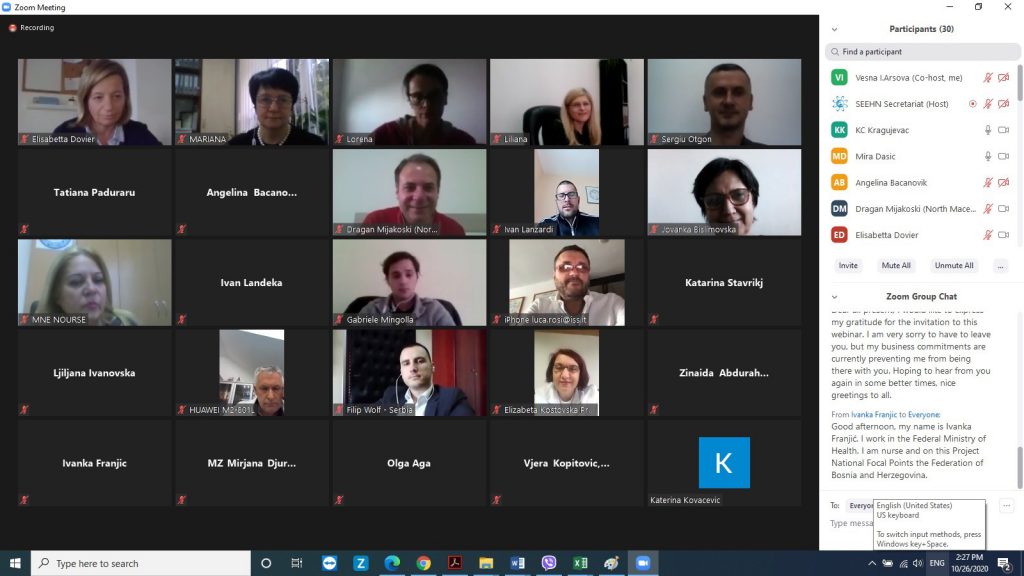
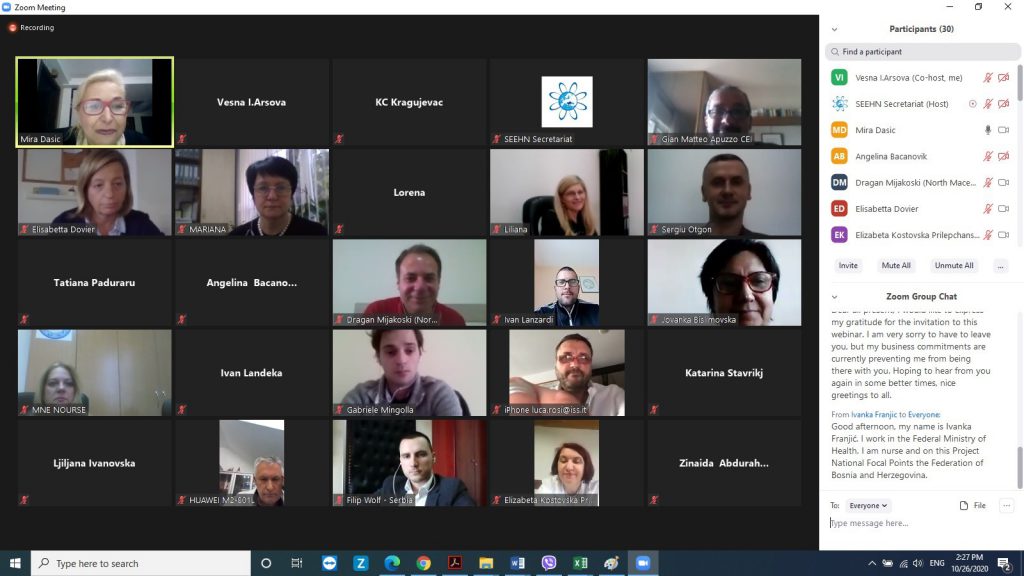
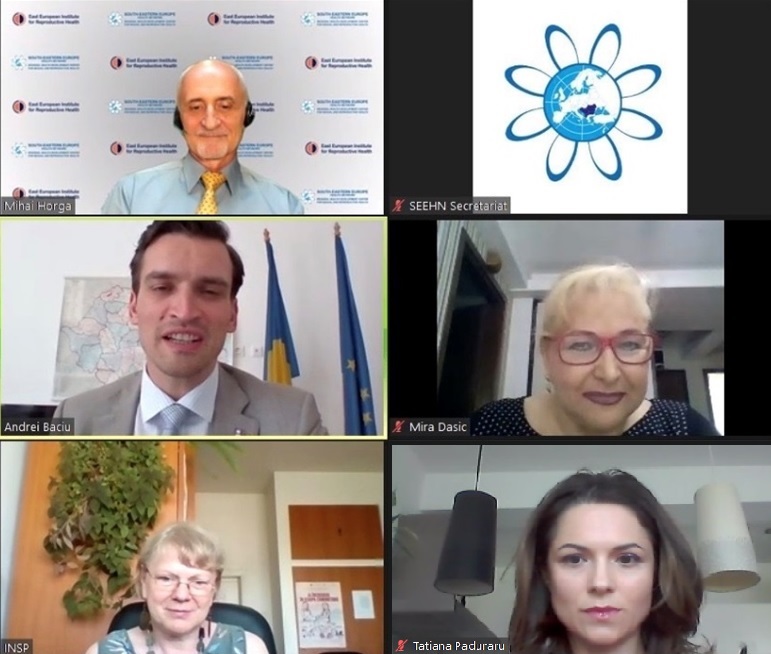
SEEHN Secretariat organized the First Regional Webinar “Primary Healthcare as main gatekeeper and crucial systemic element in the COVID-19 containment”, on 26 October 2020.
nnnn
This regional event is part of the project “Strong nurses for strong health systems and a healthier world” that is mainly funded by CEI and implemented by the SEEHN Secretariat in very close collaboration with SEEHN six Member States.
nnnn
Around 35 participants from BiH, MDA, MKD, MNE, SRB, CEI representatives and experts from the National Institute of Public Health from Italy’ and Lazzaro Spallanzani National Institute for Infectious Diseases’ and from the Istituto Superiore di Sanita’ joined online.
nnnn
Nurses are one of the core pillars of the health systems and are at the forefront of the COVID-19 response – providing care and playing a critical role in emergency risk reduction, preparedness and response. Primary health care nurses are often the first ones to get in direct contact with potential COVID-19 positive patients providing guidance and collecting samples for the diagnostic. They also provide the essential care for the patients, they coordinate efforts with other health professionals and other members of the response team during emergencies. Without well-prepared and protected healthcare staff, there is no effective response to health threats.
nnnn
Participants contributed to discussions on the primary health care crucial role as gatekeeper and first line contact with potential COVID-19 patients.
nnnn
Discussions focused on the ways to bridge the gap between nurses, patients and GPs and or hospitals in order to enhance community containment and to improve COVID-19 case-management. One of the highlighted nurses’ roles was on how to strengthen the prevention, promotion and advocacy work of the nurses.
nnnn
The COVID-19 pandemic is still not entirely known, evidence is gathered on the way and it is essential to have a regional platform to share experience. Every piece of information counts, any new way of doing things matters to improve efforts against COVID19.
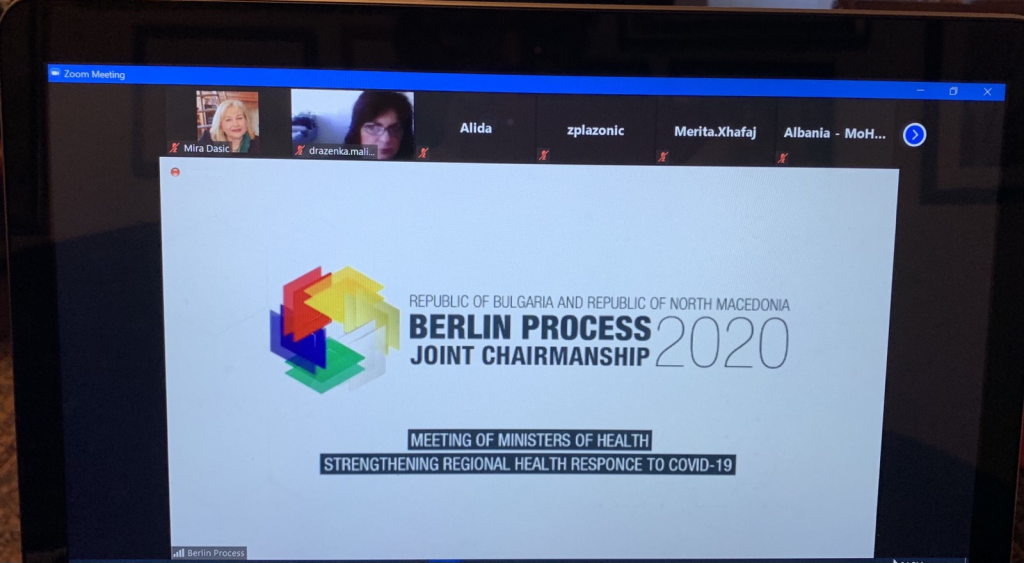
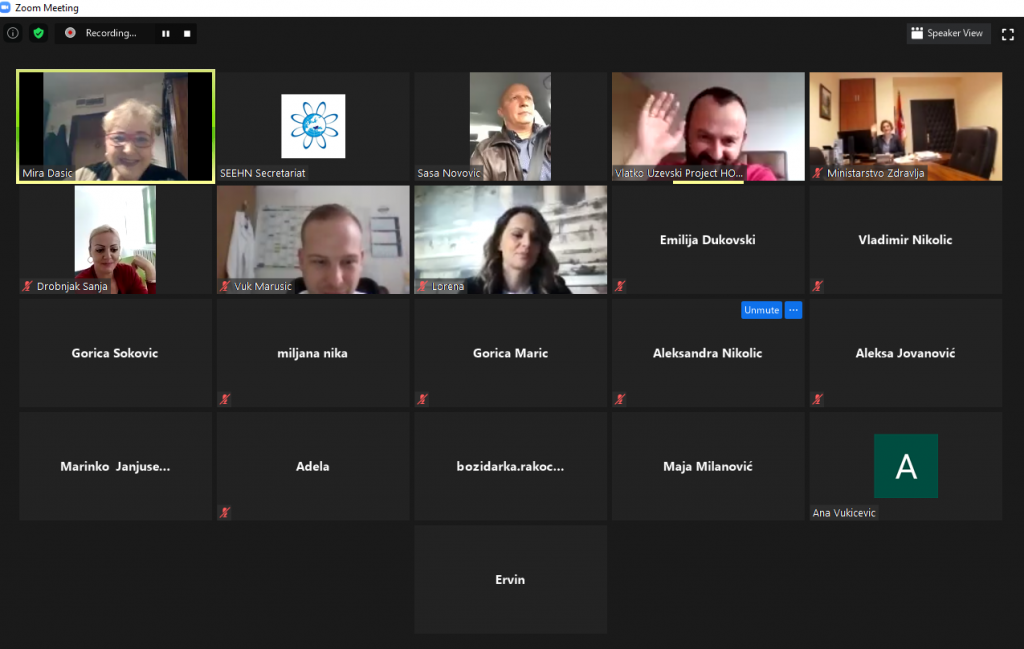
Dr. Mira Dasic, Director of the SEEHN Secretariat participated at the online Meeting of the Ministers of Health within the Berlin Process, on 22 October 2020 co-chaired by North Macedonian Minister of Health, Dr. Venko Filipche and the Bulgarian Health Minister Dr. Kostadin Angelov.
nnnn
For the first time this year, the Health sector has been included on the agenda. The discussions focused on the COVID-19 health response in the region and beyond. It comprised dialogues on coordinated approach to free movement of people, goods and services while keeping the epidemic situation under control.
nnnn
EU representative on Health and Crisis Management, Advisor Ms Isabel De la Mata, WHO Regional Director for Europe Dr. Hans Kluge, prof. Dr. Johanna Hanefeld from the Center for International Health Care, Robert Koch Institute, Dr. Andrea Aman Director of the European Center for Disease Prevention and Control and Dr. Mira Dasic, SEEHN Secretariat Director, joined these high-level discussions. Representatives from Albania, Bosnia and Herzegovina, Bulgaria, Croatia, Italy, Kosovo*, Montenegro and Poland also contributed to this important meeting.
nnnn
The flu season started and the incidence of COVID is raising in all the countries over the South Eastern Europe Region and this meeting was of outmost importance to discuss the next package of measures to contain the outbreak and to support Western Balkan populations and beyond. It was also highlighted that at this critical time the support of international donors is of utmost importance.
nnnn
During her intervention, Dr. Dasic mentioned some of the SEEHN specific activities linked to the outbreak.
nnnn
Among them are:
nnnn
Building critical skills and knowledge necessary for health workers to respond rapidly and efficiently to COVID-19;
Assessment of the stress and burn out among the healthcare workers during the COVID-19 pandemic;
Increase of the knowledge on COVID-19 among Primary Health Care nurses;
Establishing of the Thematic Network on Sexual and Reproductive Health to gather more data on the COVID-19 associated pregnancies and newborns.
nnnn
Throughout this COVID-19, pandemic one thing came clear that no single country or organization can face these global and regional public health challenges alone. For this reason, establishing and strengthening partnerships will be another key component for all counterparts’ efforts ahead.
nnnn
One of the outcomes of this meeting is the establishment of a system of information exchange on the pandemic management experiences in the region. It is extremely important to foster better coordination in Western Balkan countries and beyond to be able to cope effectively with the COVID-19 pandemic in the next period.
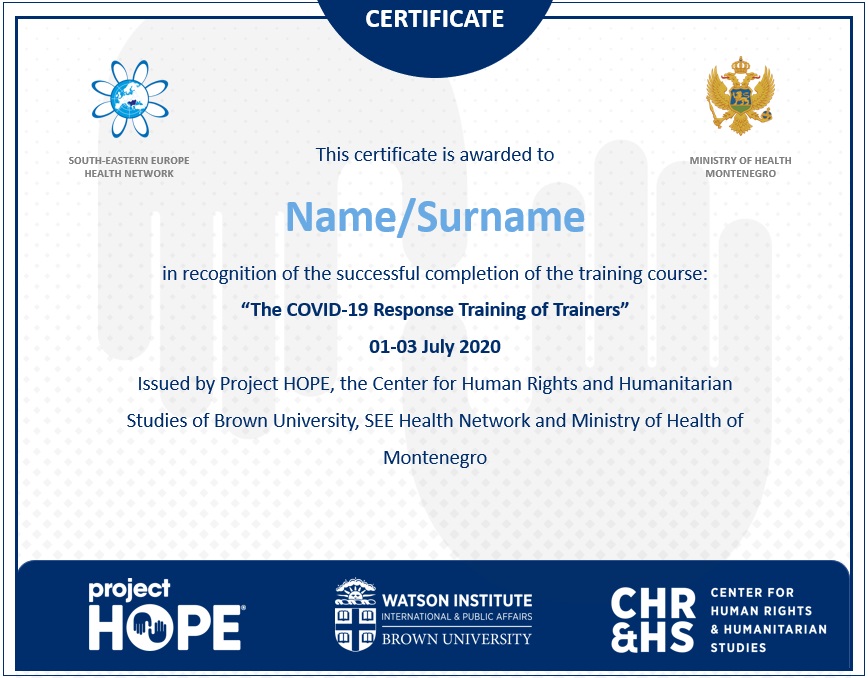
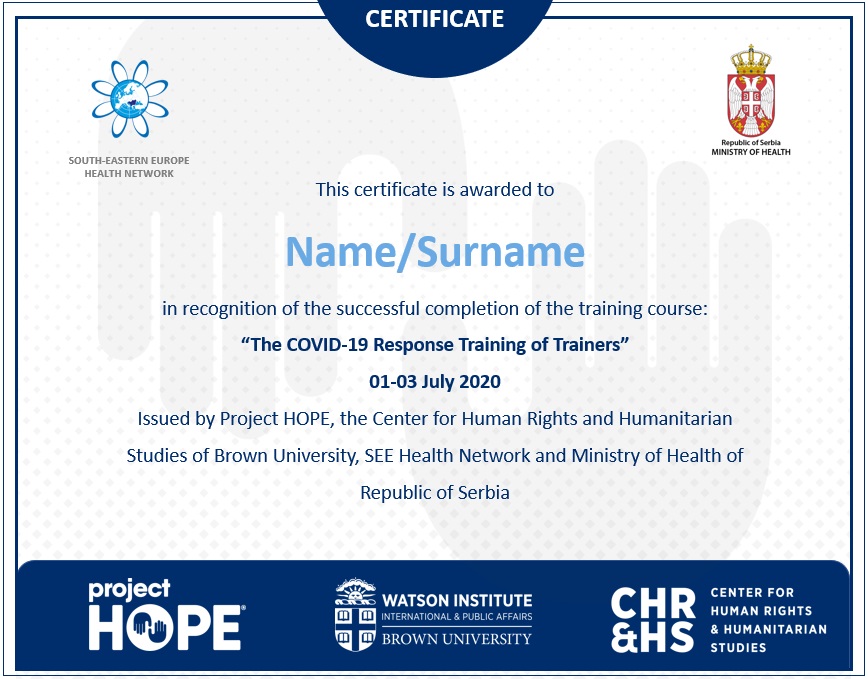
In the first phase of the COVID- 19 Training of trainers, 32 participants from Albania, Montenegro and Serbia successfully completed the online training course and were awarded certificates during the online ceremony held on 8 October 2020.
nnnn
The SEEHN Secretariat teamed up with Project Hope to develop a six-month COVID-19 ToT online program for healthcare workers, designed to teach and evaluate the trainees from the selected SEEHN Member States on core competencies, including on infection prevention and control; contact tracing; screening and triage; diagnosis and management; and risk communication and public health messaging.
nnnn
ToT model for healthcare workers was developed by Project HOPE in partnership with experts from Center for Human Rights and Humanitarian Studies at the Watson Institute of Brown University, United States. The training materials were translated to Albanian, Montenegrin and Serbian and will be used during the second dissemination phase that will be conducted in the forthcoming period by the certified trainers.
nnnn
SEEHN Secretariat extends its appreciation to Project HOPE for the partnership in this important training program as part of a joint effort to rapidly scale-up COVID-19 response in the selected SEEHN member states. The Secretariat also expresses its gratitude to the national focal points and to the training participants for their efforts and contributions for the successful implementation of the program.
nnnn
SEEHN reaffirms its commitment to further working on strengthening the health workforce capacities in SEE region.
In a global effort, every year, we celebrate World Hypertension Day, to promote public awareness of the causes and consequences of raised blood pressure (BP), and to mobilize national and local authorities to create enabling environments conducive to healthy behaviours.
nnnn
This year, due to the COVID-19 pandemic, the World Hypertension League (WHL) is celebrating World Hypertension Day on October 17th, and the dedicated theme is Measure Your Blood Pressure, Control It, Live Longer.
nnnn
Hypertension is the leading cause of mortality and disability all over the world and is at the top of the list among single risk factors accounting for cardiovascular disease deaths and second after smoking as a preventable cause of death.
nnnn
Furthermore, emerging reports have demonstrated a high prevalence of hypertension among patients with COVID-19.
nnnn
Hypertension is an important avoidable risk factor and one of the goals of the United Nations 2025 agenda is the achievement of a 25% reduction in uncontrolled hypertension. Enhanced community Blood Pressure (BP) screening programs and routine measurement of BP by health‐care professionals at all clinical encounters will contribute to achieving this goal.
nnnn
SEE Health Network supports the global efforts and the promotion of awareness about the risks of hypertension in the South Eastern Europe Region.
nnnn
The 39th SEEHN plenary meeting included joint work on hypertension and deaths from cardiovascular diseases in an effort to reduce the burden of NCDs within the region.
nnnn
A dedicated RHDC (Regional Health Development Center) on NCDs (Non Communicable Disease), hosted by Montenegro, is mandated to coordinate regional initiatives highlighting that cost-effective interventions can have a significant impact on prevention and reduction of high blood pressure and the diseases it causes.
nnnn
The SEEHN joins the WHL challenge and encourages its Member States to participate in the WHD celebration. Rigorous BP measurement and NCD awareness endeavors in the community and clinical settings, and the acquired results of the screening activities will contribute to the efforts in the reduction of uncontrolled hypertension.
This year’s World Mental Health Day, comes at a time of great preassure on our daily lives as a result of the COVID-19 pandemic. Therefore, its celebration on the 10th of October as a tool for global education, awareness and advocacy on mental illness and its major effects on peoples’ lives worldwide is more timely than ever before.
nnnn
Mental health conditions are highly prevalent and represent one of the leading causes of suffering and disability in the European Region.
nnnn
Nowadays challenges
nnnn
The outbreak has further exposed the limitations of our mental health care systems in particular worsening of the existing mental health conditions, triggering new ones, and making access to mental health services even more scarce. The crisis has had a huge psychological impact. Most populations have experienced uncertainty in recent months, when trying to find meaning in rapidly changing events, and being unable to follow the familiar patterns of daily life. With the rise of the burnout among health workers from the frontlines of the pandemic there is an urgent call to confront the mental health fallout of the COVID-19 crisis and to support the resilience of communities experiencing lockdowns.
nnnn
Therefore, these exceptional circumstances are a timely reminder of the importance of investing in mental health for societies to prosper.
nnnn
nnnn
SEEHN & Mental Health
nnnn
For over a decade, SEEHN has been the undisputed vehicle of health development in the area of mental health in the Region, the thematic area being assumed as of outmost priority on the agenda of the health ministries across the SEE region. The nine SEE ministries of health committed their governments to reform the old psychiatric hospital system to the new community mental health centers aimed to help people live better lives. A dedicated RHDC to mental health was also established in Bosnia and Herzegovina to accelerate change in the region.
nnnn
A key initiative of the SEE Health Network, recently launched, focus on generating knowledge necessary for health workers to respond rapidly and efficiently to COVID-19 through assessment of the stress and burn out among the healthcare workers during the COVID-19 pandemic.
nnnn
Strong partnerships
nnnn
Strong partnerships are needed to improve services and change societal attitudes about mental health, to support new initiatives, including raising awareness. In this sense, much is expected from the new WHO European Programme of Work. SEEHN welcomes that mental health has a central position within it and on behalf of its Member States, strongly supported it at the 70th session of the WHO Regional Committee for Europe.
nnnn
The inclusion of mental health as one of the flagship initiatives complementing the European Programme of Work, shaping a mental health coalition within the region is an encouraging effort meant to trigger change, and to mobilize around critical issues and for which high-visibility, high-level political commitment can be transformative.
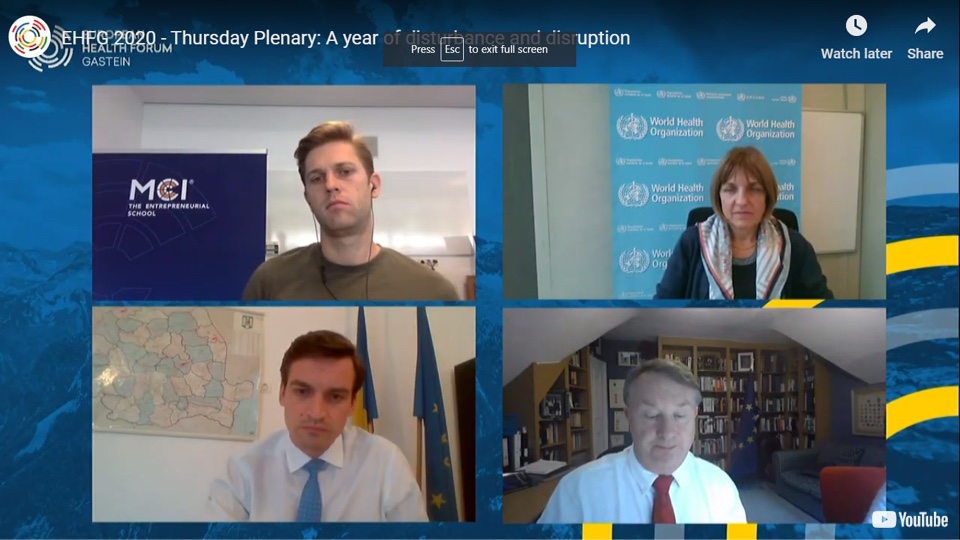
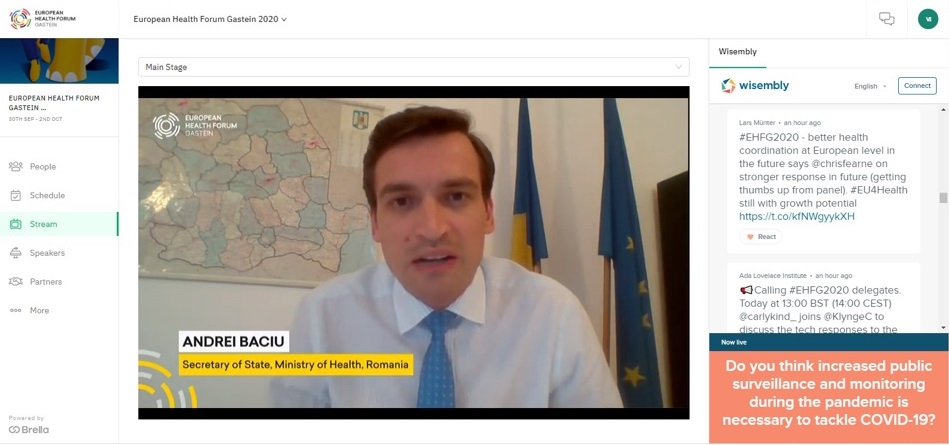
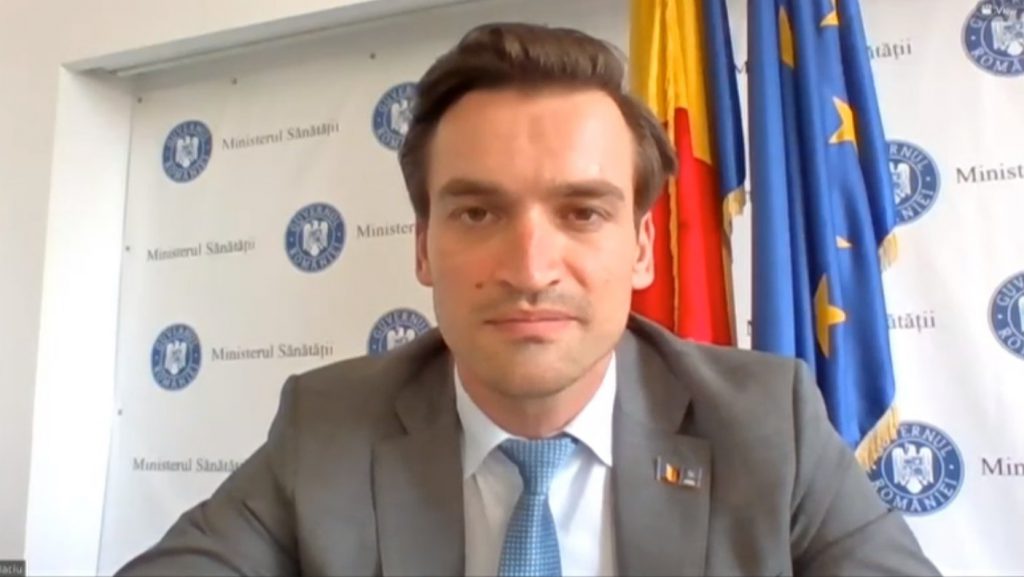
Today the South East Europe Health Network was represented at the European Health Forum Gastein by dr. Andrei Baciu, Secretary of State within the Ministry of Health of Romania, on behalf of the Romanian Presidency to the SEEHN.
nnnn
The plenary debate focused on tackling the COVID-19 Infodemic, a major challenge that all our Governments of the SEE Region experienced with the spread of the novel coronavirus.
nnnn
The avalanche of information about the virus spreading rapidly on social media platforms created confusion and mistrust and undermined an effective public health response. Disinformation erodes trust in institutions and harms democracies by hampering the ability of citizens to take informed decisions. It may have far-reaching consequences, cause public harm, be a threat to democratic political and policy-making processes, and may even put the protection of citizens’ health, security and their environment at risk.
nnnn
The Secretary of State addressed questions on the impact of the infodemia in countries in South East Europe and on strategies to address vaccine hesitancy in the context of a new COVID-19 vaccine.
nnnn
The South Eastern European Region is no exception to the invasion of an infodemia as contagious as the novel coronavirus, the official mentioned during his intervention and shared national experiences from the SEE region to reflect the challenges the SEE Governments faced.
On 28th of September at the Regional Webinar “European mHealth Hub Support, representatives of the SEE Governments had the opportunity to explore the benefits of mHealth deployment in the national health systems and to share experience with Western Balkan Economies on digital solutions developed by the Hub”.
nnnn
mHealth is considered to be a strategic area of eHealth approaches, and one important tool for tackling the healthcare challenges the health systems are facing. Its potential is recognized to increase prevention and improve quality of life, contribute to a more efficient and sustainable healthcare, and empower patients by giving them a participatory role.
nnnn
Around 30 participants from the SEEHN Secretariat, RCC, WHO, European mHealth Innovation and Knowledge Hub, EC, ITU Office for Europe and representatives of Western Balkan Economies engaged in open discussions to exchange views on the digitalization potential on the transformation of health care systems.
nnnn
The Webinar highlighted the experience and expertise of the mHealth Hub in building countries’ capacity and provide practical assistance to plan, implement and scale national mHealth programs, according to the countries’ needs. All stakeholders committed to build on the momentum and take further steps aimed at scaling up evidence-based digital and mobile health solutions. There are common possibilities for future partnerships to be explored, and by working collaboratively with the mHealth Hub it will allow learning and sharing knowledge and will provide mechanisms to boost the uptake of eHealth solutions within the Western Balcans – and beyond, and to support Western Balkan economies in specific benefits regarding mHealth.
Today, the 18th of September, the SEEHN Secretariat organized the kick-off meeting of the focal points of the newly launched project “Strong nurses for strong health systems and a healthier world “, funded underthe CEI COVID-19 Extraordinary Call for Proposals. Due to the extraordinary circumstances, the meeting was organized in virtual format.
nnnn
In the opening, the Secretariat presented an overview of the aim of the meeting and a timeline of the deliverables and milestones of the project, the state of the art and challenges, to provide the participants with a common understanding of tasks, defined roles, responsibilities, and concrete next steps.
nnnn
The survey is considered a crucial milestone for the outcomes of the project and the Secretariat urged the participants to consider sending a timely national feedback.
nnnn
Another item on the agenda included the stakeholder involvement, and the participants convened on the opportunity to organize a dedicated meeting with the Associations of nurses from the beneficiary Member States.
nnnn
Before concluding, the representatives of the Secretariat briefed the participants on the project visibility requirements and on the dissemination activities the beneficiary Member States have to comply with.
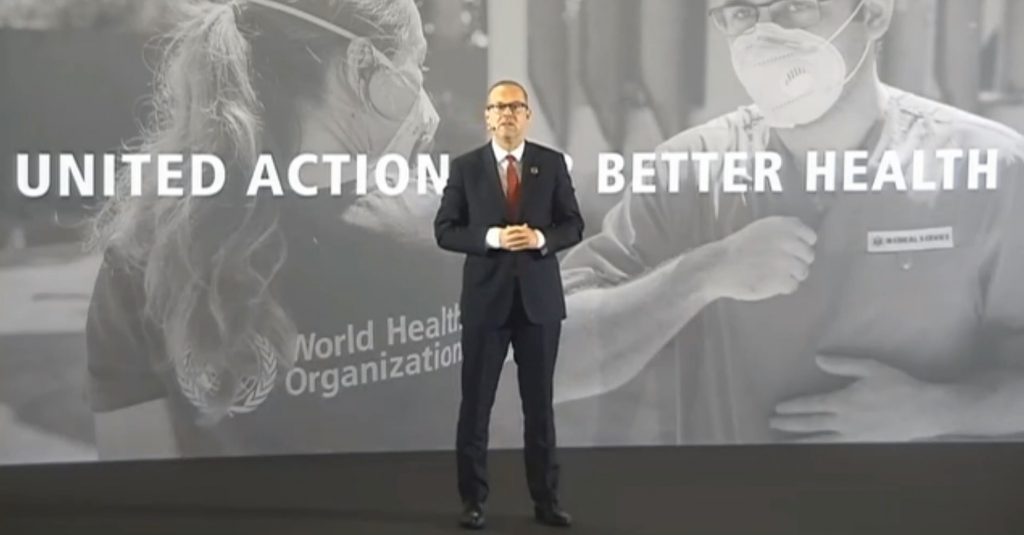
Dr Hans Kluge, WHO Regional Director for Europe, opening speech shows a realistic and welcome approach for collaboration and partnerships. Only together we can succeed in achieving better health for all.
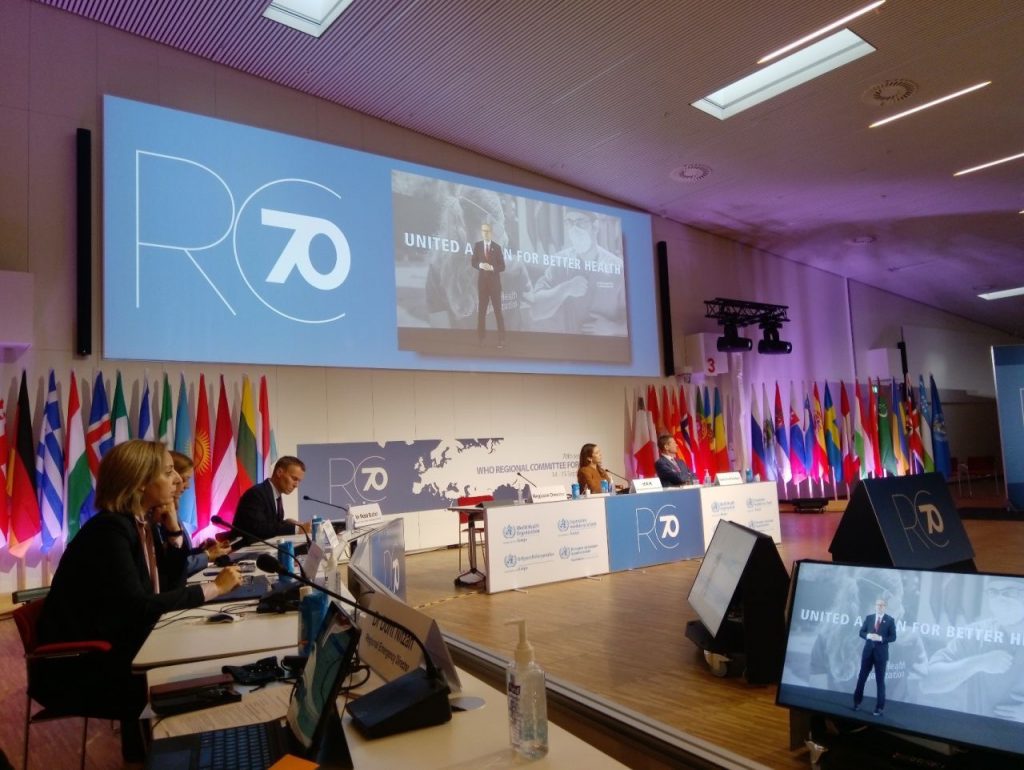
Acknowledging the key leadership and extraordinary commitment of the Regional Director Dr. Hans Kluge targeting the health and the well being of our region, the SEEHN Presidency representative Dr. Andrei Baciu welcomed the European Programme of Work, 2020–2025 – “United Action for Better Health in Europe” in a second intervention during the afternoon session of the first day of the WHO RC 70. (The intervention briefed on the recent initiatives of the Network implemented with the WHO support and further enhanced under the first Sub-Regional Cooperation Strategy, 2018-2023). Dr. Andrei Baciu expressed the Network and its Members States` allignment to the underlying principles of leaving no one behind and strengthened health leadership reflected on the new EWP proposal. The SEEHN Presidency representative also underlined the role of SEEHN as a cost-effective vehicle for providing assistance in regional context and further pledged for investment in the South Eastern Region in terms of intelligence and funding as key to achieve longstanding results and sustainable health gains and promoting a culture of health in the SEE region.
In his intervention, on behalf of the Network, the Romanian Presidency of the SEEHN reflected on the regional challenges generated by the Covid-19 outbreak and emphasized the role of joint efforts and solidarity for a coherent response against the pandemic. “I would like to further call on our partners WHO, the WHO Regional Office for Europe, the European Commission and all other UN Agencies to continue the initiatives to ensure an equitable access to safe, and affordable medicines and vaccines against COVID-19 with a special focus on the most vulnerable countries and people most at risk”, the SEEHN representative concluded.
The 70th meeting of the WHO Regional Committee for Europe is taking place virtually this year on 14-15.09.2020, due to the COVID-19 pandemic. SEEHN will be represented by the Romanian Presidency. Dr Andrei Baciu, State Secretary will deliver two SEEHN statements on the Regional Directors’ Report and the new European Programme of Work 2020–2025 “United action for better health”.
“SEEHN MEMBER STATES RESPONSE TO THE COVID-19 PANDEMIC AND IMMUNIZATION AS ONE OF THE CORE HEALTH SYSTEM SERVICES IN SEE REGION”
n
nnnn
nnnn
The South-Eastern Europe Health Network 42ndnSEEHN Plenary Meeting organized by the SEE Health Network MontenegrinnPresidency, Executive Committee and Secretariat was held on 21 July, 2020 as annonline event.
nnnn
Thenmeeting joined the member states National Health Coordinators and /ornAlternates, the partner countries, international organizations, directors ofnthe SEEHN Regional Health Development Centers (RHDC) and Diplomatic corps, withnover 50 participants.
nnnn
Then42nd Plenary focused on the unprecedented COVID-19 pandemic effect on the SEEHNnMember States, SEEHN major developments, activities and challenges during thenterm of the Montenegrin Presidency (SEEHN Presidency report July 2019 – June,n2020) and the Future Presidency of Romania (July – December 2020).
nnnn
Innthis sense, based on the commitments of the SEE Ministers of Health, as specifiednin the Chisinau Pledge, endorsed during their Fourth Ministerial Forum in 2017,nas well as based on the priorities agreed in the SEEHN Montenegrin PresidencynRoadmap from 2019, the SEEHN Secretariat will build upon the discussions andndecisions from the 42nd Plenary Meeting. Thus, the focus is on several prioritynareas:
nnnn
1. Commitment to strengthen capacities ofnthe healthcare personnel – implementation of projects to build capacities onnhealth emergency response and in particular on COVID-19.
nnnn
2. To address mental health of thenhealthcare personnel.
nnnn
3. Gather information on the COVID-19 andnits effects, impact on different areas of the health systems.
nnnn
4. Digitalisation.
nnnn
5. Vaccination and Immunisation.
nnnn
6. Partnerships.
nnnn
7. Strengthening of SEEHN technicalnexpertise by supporting its Regional Health Development Centers (RHDC)
nnnn
Thisnpandemic more than ever thought us that we cannot be safe somewhere alone andnisolated, instead we need to focus on working together, put resources andncoordinate in a multi-factorial mode. We should explore all collaborations andnfructify them by supporting each other for the common wellness, to promotenuniversal health coverage and people-centered services. Solidarity is the keynprinciple of the SEEHN.
SEEHN Secretariatntoday hosted virtually a meeting with the State Secretary, Ministry of HealthnRomania and SEEHN National Health Coordinator Romania, Dr Andrei RomicanBaciu, Mrs Adriana Galan SEEHN NHC alternate and Dr Mihai Horga,ndirector SEEHN Regional Health Development Center for Sexual and ReproductivenHealth ( hosted by Romania) to discuss how to better plan, prepare andncoordinate regional efforts under Romanian Presidency mandate July 1, 2020 – December 31, 2020.
World Blood Donor Day is an event at international levelncelebrated every year on 14 June, to raise awareness on the need for safe bloodndonations; to praise and to thank regular blood donors; and to encourage morenpeople to give blood on a regular basis.
nnnn
There is no real substitute for human blood and onendonation can save three lives. Every couple of seconds someone around the worldnneeds blood. Blood transfusions save millions of lives each year, both innemergency and non-emergency situations.
nnnn
It needs to be highlighted that the services providingnsafe blood and blood products are an essential element of every health carensystem.
nnnn
This year, 2020 is marked by the COVID-19 pandemic. COVID-19 convalescent plasma can be a life-savingnact of solidarity.
nnnn
nnnn
WHO encourages governments, national healthnauthorities and national blood services to work together to:
nnnn
ensurensystems and infrastructure are in place to increase collection of blood fromnvoluntary, regular unpaid donors;
establishnand strengthen quality assurance systems for blood and blood products to ensurensafe blood and blood products;
providenquality donor care;
promotenand implement appropriate clinical use of blood; and
overseenthe whole chain of blood transfusion.
nnnn
SEE Health Network joins the celebration of the WorldnBlood Donor Day and underlines that everyone should have access to safe bloodnand blood products.
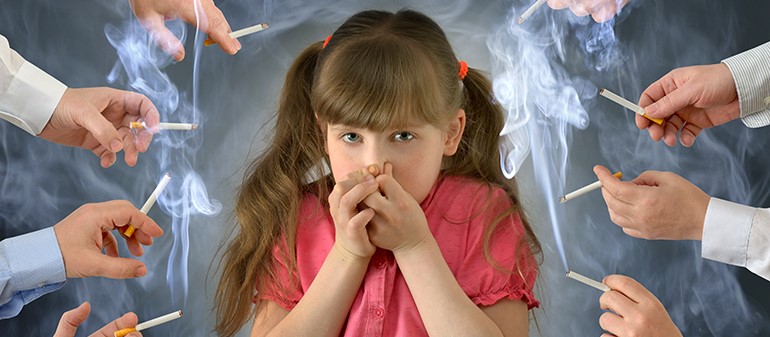
South Eastern Europe Health Network (SEEHN) celebratesnthe # No Tobacco Day to raise awareness on the importance of the protection ofnthe new generations in the SEE Health Network – 9 Member States.
nnnn
Every year, WHO recognizesnindividuals or organizations in each of the six WHO Regions for theirnaccomplishments in the area of tobacco control. This recognition takes the formnof WHO Director-General Special Recognition Award and World No Tobacco DaynAwards.
nnnn
This year among the EuropeannRegion awardees, is Dr Ghenadie Turcanu, program coordinator, Center for HealthnPolicies and Studies, Republic of Moldova.
nnnn
SEEHN is congratulatingnand recognizing the champions in the SEE Region that are role models in thentobacco control area.
nnnn
Tobacco products kill more than 8 million people everynyear. Tobacco use is responsible for 25% of all cancer deaths globally. Usenof nicotine and tobacco productsnincreases the risk for cancer, cardiovascular and pulmonary disease. Over 1 million people die from second-hand smoke exposure every year.
nnnn
Itnneeds also to be highlighted that the third-nhand smoke is residual nicotine and other chemicals left on indoor surfacesnby tobacco smoke. People are exposed to these chemicals byntouching contaminated surfaces or breathing in the off-gassing from thesensurfaces. This residue is thought to react with common indoor pollutants toncreate a toxic mix including cancer causing compounds, posing a potentialnhealth hazard to nonsmokers — especially children.
nnnn
Tobacco and related industries’ target children andnadolescents by using market tactics that include:
nnnn
Overn15,000 flavors, most of which attract children and adolescents
Socialnmedia influencers in marketing
Sponsornevents and parties
Schoolnscholarships
Sleek,nsexy designs
Productnplacement in entertainment media
Freenproduct samples
Singlenstick cigarettes that make addiction more affordable
Sellnproducts at eye level for children
Productnplacement and advertising near schools
nnnn
nnSEE Health Networknhas the dream of tobacco free generations, decrease of second-hand smoke andnthird-hand smoke and the deaths and diseases that they cause. This is a questnfor all public health professionals around the Region through enforcement ofnthe anti-tobacco legislation and strong mechanisms of implementation andncontrol. nnnn
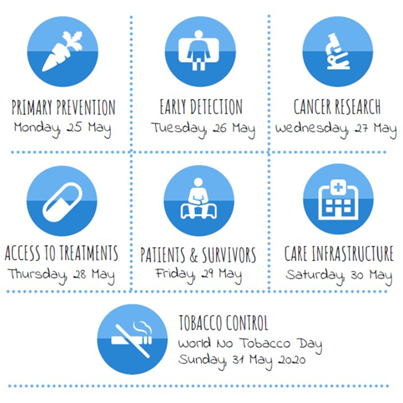
SEE Health Network joins the celebration of the EuropeannWeek Against Cancer to highlight the crucial importance of beating cancer innits 9 Member States. The European Commission on the health domain in the periodn2019-2024 has as a core priority and focus on shaping Europe’s Beating CancernPlan (#EUCancerPlan).
nnnn
For most SEEHN memberncountries, premature mortality due to malignant neoplasms is higher than thatnfor the WHO European Region (70 deaths per 100 000 in 2014)[1], except for Israel.
nnnn
SEEHN Member States share common challenges similar tonthe rest of the European countries.
nnnn
Today, 26th May, we focusnon early detection. In this context a EC TAIEX Multi-Country WORKSHOP onnScaling up colorectal cancer (CRC) screening programs has been organized innPodgorica,nMontenegro 12 – 13 December 2019, thanks to the financial support of EC TAIEX withnthe collaborative effort of the SEEHN Regional Health Development Center (RHDC)non Non communicable disease (NCD) hosted by Montenegro and the SEEHNnSecretariat.
nnnn
The meeting aimed to tackle the implementation of programmes in South-eastern Europe Health Network member states including [2] Kosovo* and Turkey, pointing out in particular the methodology, reporting indicators, quality and impact, achievements, campaigns and awareness, improvements and setbacks. This Workshop enabled exchanging experiences and presenting good practices in the SEE Region and on how to apply European Union (EU) Recommendations and standards in order to improve and strengthen the control of the CRC.
[2] *Thisndesignation is without prejudice to positions on status, and is in line withnUNSCR 1244/1999 and the ICJ Opinion on the Kosovo declaration of independence.
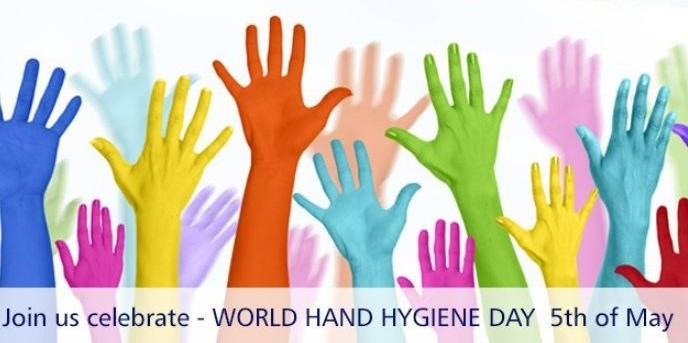
Hand Hygiene Day isnobserved annually on May 5 to raise awareness of the importance of adequatenhandwashing in health care settings.
nnnn
nnnn
Health care systems poorncare is responsible to more than 8 million deaths annually in low- andnmiddle-income countries.
nnnn
SEE Health Network (SEEHN)njoins the celebration of the SAVE LIVES: Clean Your Hands: an ongoing worldwidencampaign to highlight the crucial importance of cleaning hands.
nnnn
This year to align with the International Year of the Nurse and the Midwife, SEEHN is reiterating the importance of nurses and midwives in infection prevention and control, providing clean and safer care.
nnnn
Thencurrent pandemic of COVID-19 revived and spotted the decisive role of cleannhands to stop the virus spreading and to keep safe the health professionals,ntherefore SEEHN is calling thenGovernments for Action to ensure hand hygiene practices widely aimed to preventnthe transmission of the COVID-19 virus by:
nnnn
1. Providing universalnaccess to public hand hygiene stations and making their use obligatory onnentering and leaving any public or private commercial building and any publicntransport facility.
nnnn
2. Improving access to hand hygiene facilities and practices in health care facilities.