News
nn
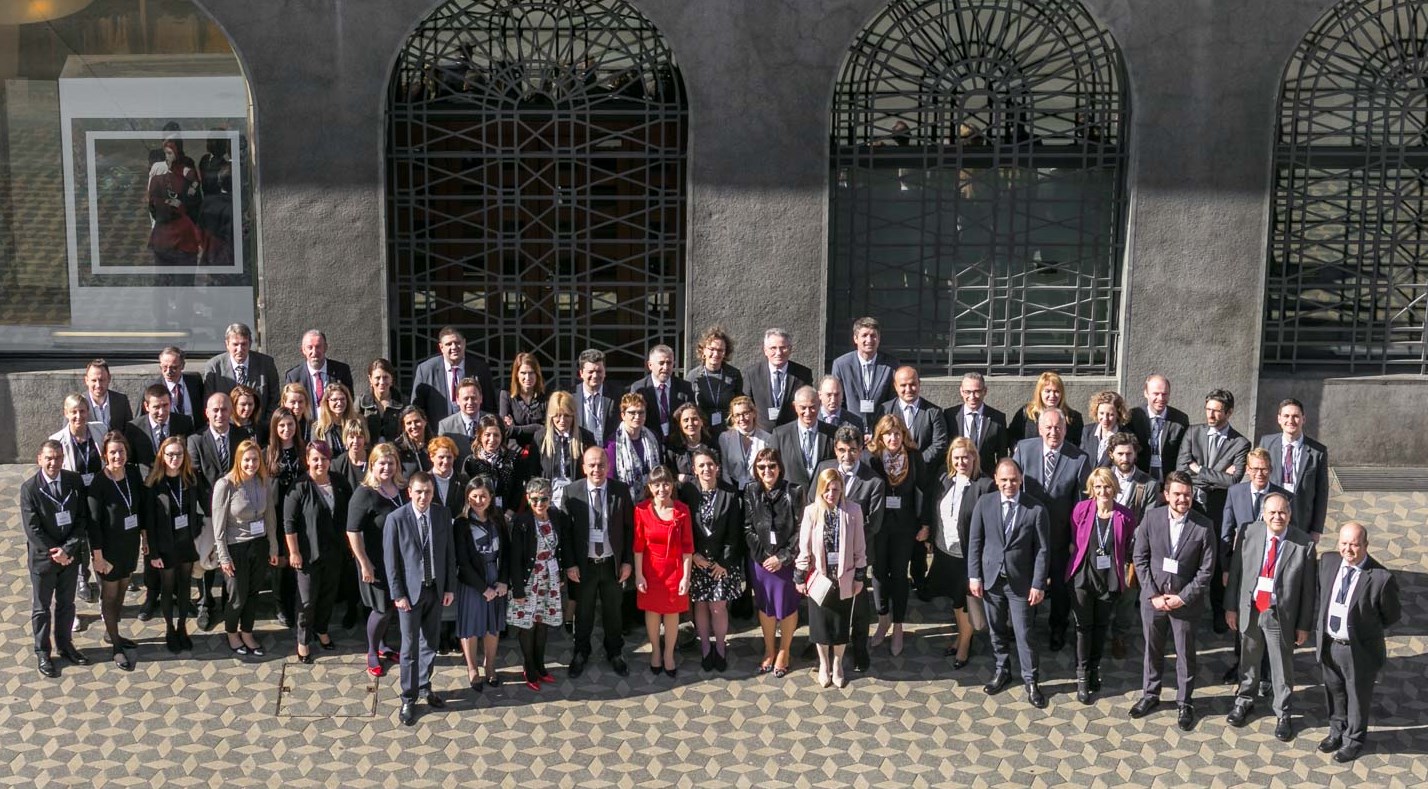
Dr. Danijela Urosevic, Assistant Minister of Health of the Republic of Serbia and Chair of the SEEHN Executive Committee, participated to the SEE Regional Policy Dialogue: Towards Improved Structural Reforms and Fiscal Frameworks held in Ljubljana, 26-27 February 2019.
n
This SEE regional policy dialogue was a kick-off to the three-year project Strengthening Line Ministries’ Capacities to Asses Fiscal Implications of Structural Reforms (FISR project) funded by the European Union and implemented by the Center of Excellence in Finance(CEF).
n
The meeting brought together versatile interest groups that discussed structural reforms and their improved integration into fiscal frameworks of the countries. The discussion was facilitated through the prism of increased competitiveness and growth of the region and enhanced EU enlargement.
n
On their path to the EU, the economies of the Western Balkans and Turkey need to become sufficiently vital to withstand the competitive pressures of the EU single market.
n
Key policy instruments in this process are the Economic Reform Programmes (ERP), inclusive of structural reforms, designed to boost growth and competitiveness while ensuring fiscal discipline and sustainability.
n
The project will promote greater fiscal policy coordination especially between finance and line ministries and support exchange of good practices across the countries of Western Balkan and Turkey.
nn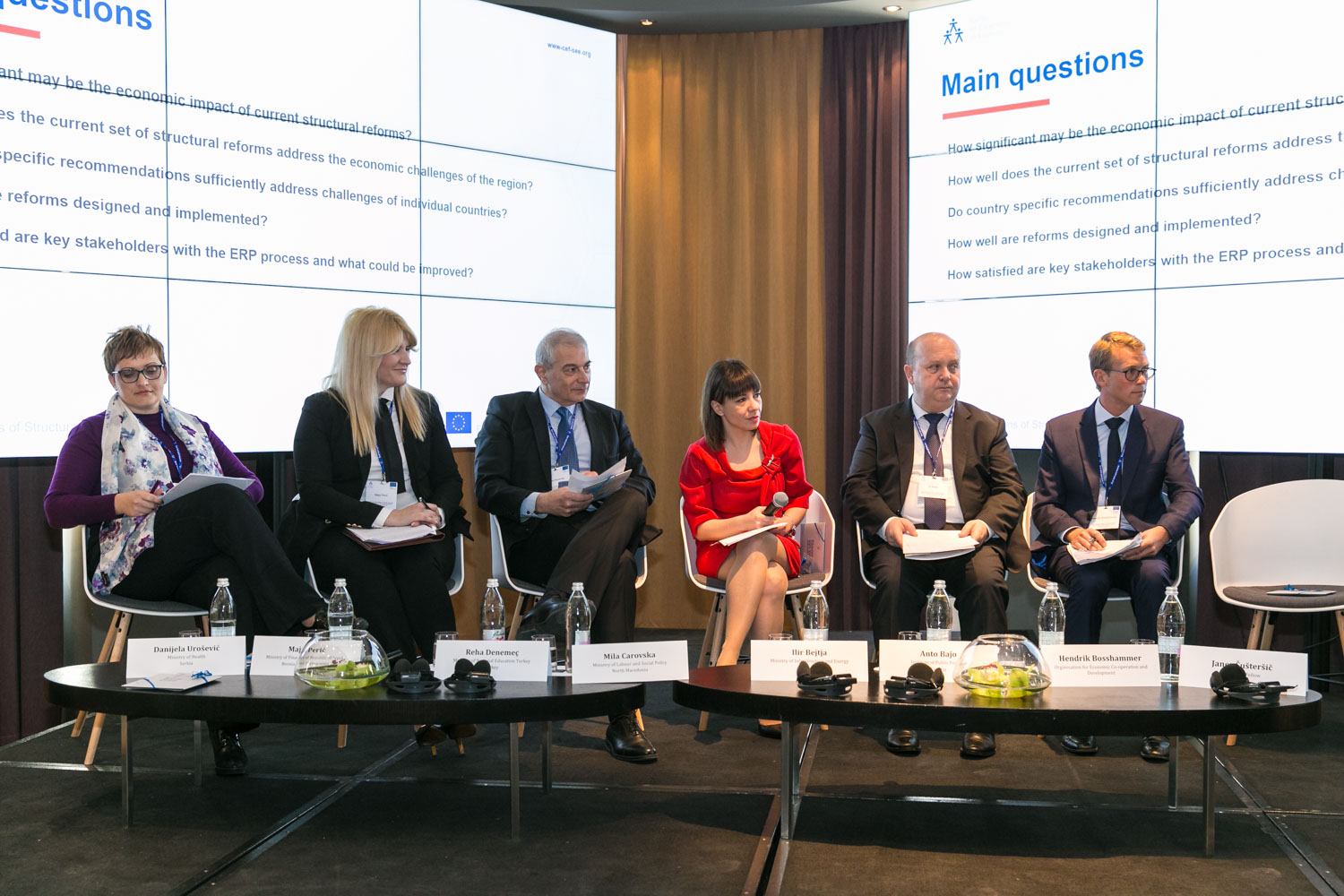 n
n
News
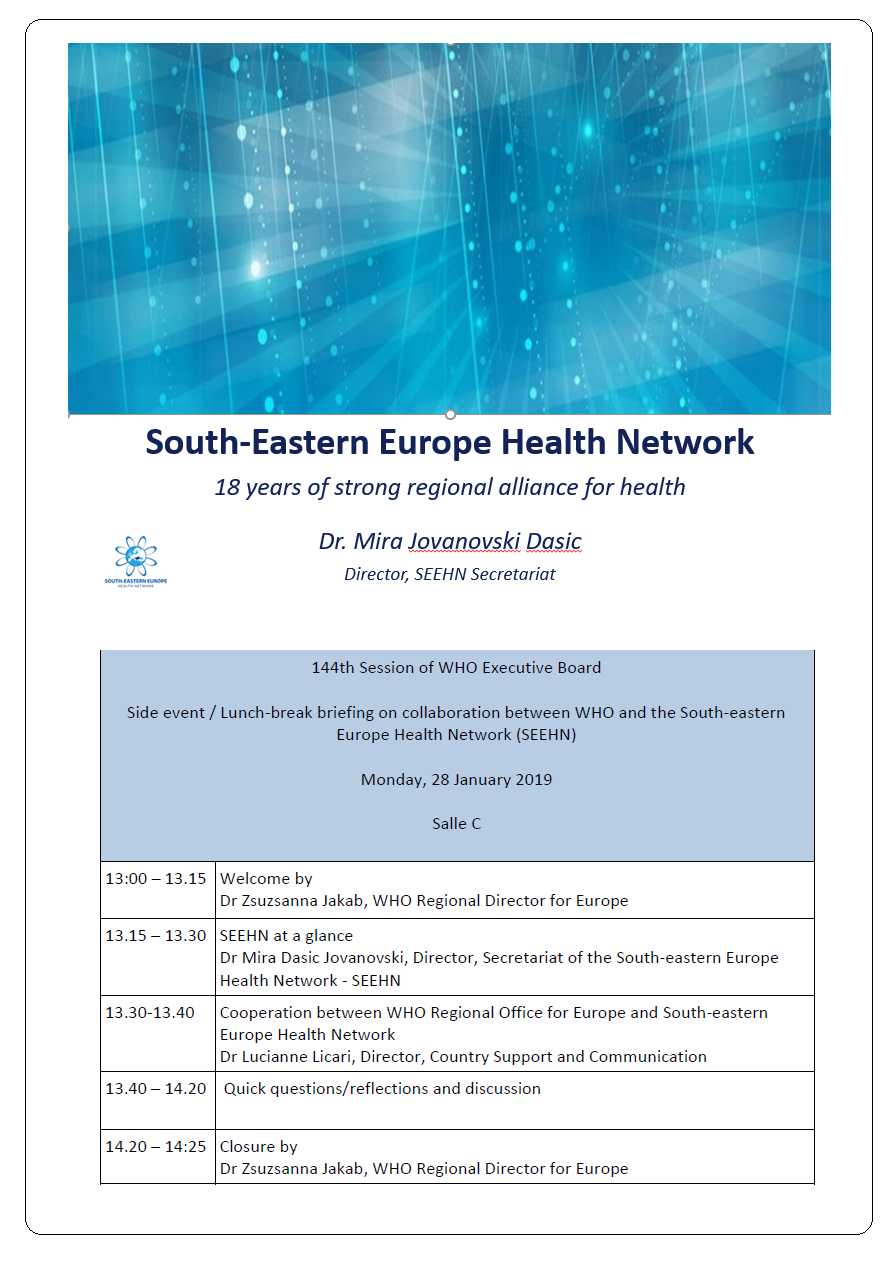
The WHO Regional Office for Europe (EURO) organized a working lunch within the WHO Executive Board 144 framework to brief Member States on the progress achieved during the long standing partnership between WHO Regional Office for Europe and South-eastern Europe Health Network (SEEHN) held on 28 January 2019 in Geneva.
n
Dr. Zsusanna Jakab, Regional Director for WHO Euro, reviewed major progress and highlighted main priorities for the upcoming midterm collaboration.
n
SEEHN Secretariat Director, Dr. Mira Dasic outlined key achievements in the last two years of leadership and Dr. Lucianne Licari, Country Support and Communication Director and Special Representative of Regional Director to the SEEHN spotted strategic alliances for public health in the SEE Region to maximize health outcomes and reach the targets of UN 2030 SDG Agenda.
n
The core focus was on the joint strategic policy document between WHO EURO and SEEHN-first Subregional Cooperation Strategy (SCS) 2018-2023, to improve and contribute to health, well-being and prosperity in South-Eastern Europe within the framework of the United Nations 2030 Agenda for Sustainable Development.
n
The activities are planned in a multi-country mode of cooperation mainly aimed to achieve progress at the Regional level, while at the same time advancing the national priorities and common goals. Since the SCS signing in July 2018, the parties involved started the implementation with reference to the key target of universal health coverage, in the member countries of SEEHN.

News, RHDCs
18.01.2019, Tirana, Albania
n
Representatives of the SEEHN Secretariat and the Regional Health Development Center (RHDC) Southeast European Center for Surveillance and Control of Infectious Diseases (SECID) met Friday 18 January 2019, in Tirana, Albania.
n
The visit to SECID aimed for strengthening public health cooperation related to the public health emergencies, preparedness and control of the communicable diseases.
n
Dr. Mira Dasic SEEHN Secretariat director presented the recent developments within SEEHN and next short term plans at the SEE Regional level. Particular focus was made to the implementation of the Chisinau Pledge Action and the WHO – SEEHN Sub Regional Cooperation Strategy for 2018 -2023. New opportunities for strengthening technical work in partnership SECID- SEEHN were also discussed and agreed. The results will be accelerated with the greater involvement of the SEEHN Member States particularly related to the vaccines and vaccination area.
n
In order to strengthen the capacities of the 9 countries including the national capacities on vaccine procurement and the increase access to quality-assured vaccines at affordable and optimum price in the Member States of the SEEHN a WHO SEE regional event is planned to take place on 27.02 – 01.03 in Tirana. The workshop will engage national technical experts responsible for the management of the immunization programme, vaccine procurement and vaccine regulation in implementing the roadmap to securing access to affordable vaccine supply, discussed at the WHO SEEHN Ministerial meeting in Israel, July 2018.
n
The planned workshops outcome is to contribute towards the achievement of the Chisinau Pledge 3rd priority to ensure affordable essential medicines and vaccines for all.

News
The first Sub-regional Cooperation Strategy (SCS) of the WHO Regional Office for Europe and SEEHN have been signed by Dr Zsuzsanna Jakab on behalf of WHO/Europe and Dr Mira Dasic on behalf of SEEHN Secretariat within the framework of the Ministerial Meeting, held on 10 July 2018 in Tel-Aviv, State of Israel.
n
This policy strategic planning document is a renewed commitment of the WHO EURO and South-eastern Europe Health Network (SEEHN) to improve and contribute to health, well-being and prosperity in South-eastern Europe within the framework of the United Nations 2030 Agenda for Sustainable Development.
n
The activities are planned in a multi-country mode of cooperation to achieve progress at the Regional level and at the same time to advance the national priorities and common goals.
n
Since the signature the involved parties started the implementation of different actions to achieve the key target for universal health coverage in the Member States of SEEHN.
n
Acknowledging the importance of the achievement of the United Nations Sustainable Development Goal (SDG) 3 and other health-related SDG targets, included within the SCS, SEEHN welcomes and encourages its other partners to support Member States in this endeavour.
n
The document is now available for reference.
n
DOWNLOAD
n
World Health Organization (WHO) Regional Office for Europe – Link

News
News
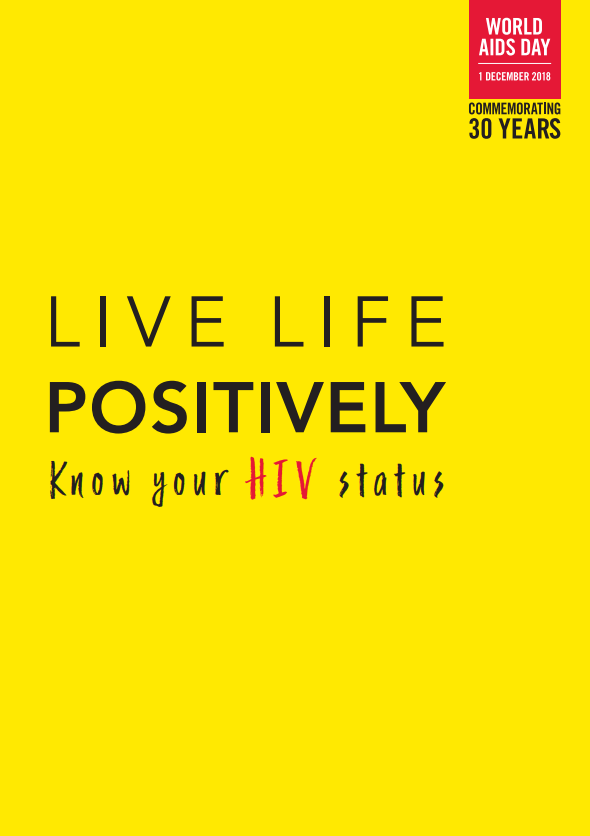
WHO Regional Office for Europe reported over 130 000 new HIV positive cases recorded in the Region – the highest number ever. At the same time, the increase in new HIV diagnoses was slower than in previous years.
nThe main reason is late diagnosis.nnOut of the new HIV diagnoses in the eastern part of the European Region, 59% are reported to be from heterosexual transmission.nnAnother huge challenge is the treatment – percentage of all people living with HIV accessing antiretroviral therapy vary across the European Region and in the Eastern part is between 30-40%.nnMain milestones have to be addressed through political commitment, technical expertise and financial resources.
News
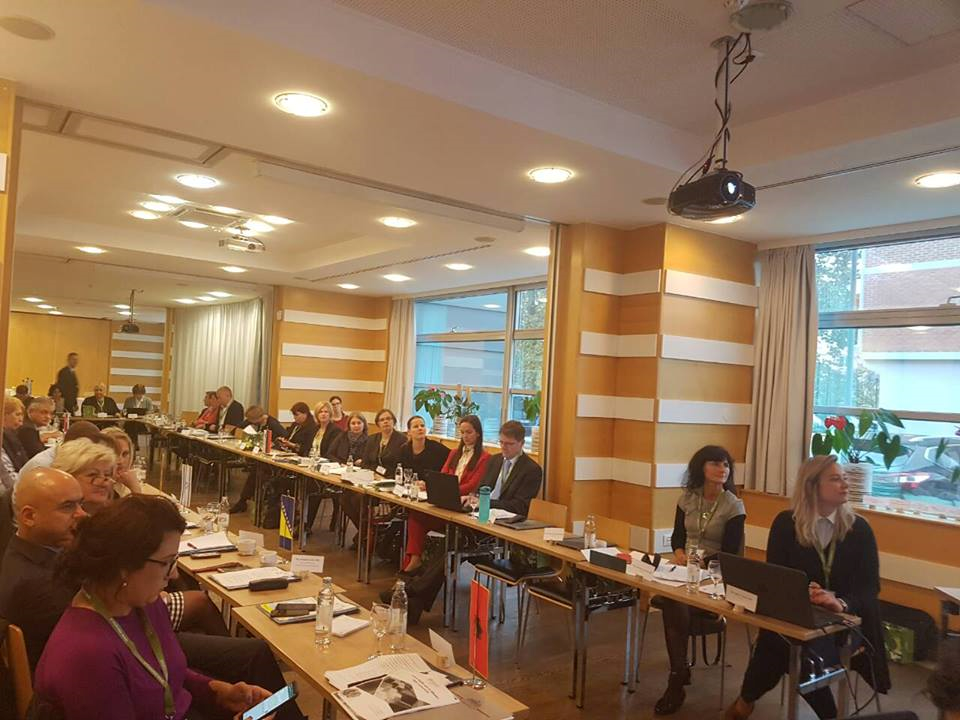
Areas for the strengthening of primary health care and enhance its quality were the focus of an event hosted in Ljubljana, Slovenia on 6-7 November 2018. The meeting addressed the value of primary health care systems in the South-eastern European Region.nnPrimary health care is one of the foundations for universal health coverage. It can respond to most of the health needs across a lifetime. It leads to better health outcomes, improved quality of care and higher satisfaction. However, in most countries primary health care is under-resourced. Greater investment in primary health care would improve access, effectiveness, equity, and cost-efficiency of health care. Primary health care is closer to communities, focuses on health rather than diseases and empowers people to take charge of their own health rather than being passive recipients of services.nnThe meeting was organised jointly by the Ministry of Health, the National Institute of Public Health, the South-eastern Europe Health Network Secretariat (SEEHN), and WHO with the financial support of the Slovene government. “Slovenia has a long tradition of a strong, well developed primary health care system that provides close to full universal health coverage”, Dr Pia Vračko, State Secretary of the Ministry of Health Slovenia said in her opening address.nnPriorities for strengthening primary health carennOne of the key outcomes of the meeting was identifying priorities for future work aimed at strengthening primary health care in the participating countries:n
n
- Human resources with proper skill-mix are of outmost importance and in case of need motivation incentives should be applied.
n
- Better vertical integration of primary care services with other levels of health system and horizontal integration with other sectors on community level was underlined as a crucial area
n
- Ways to reduce administrative burden on health workers to have more time for patients should be sought for.
n
- Multi-disciplinary practices with selected specialists, social workers and specialised nurses working in teams demonstrate better health management especially in case of chronic patients.
n
- Enhancing research and development in primary health care.
n
nCollaboration in this area is high on the agenda of the SEEHN countries for the coming years.nnDeclaration of Astana, a cornerstonennDarina Sedláková, WHO Representative to Slovenia, highlighted the recently adopted Declaration of Astana as the most inclusive, effective and efficient approach to enhance people’s physical and mental health, as well as social well-being, underlining that primary health care is a cornerstone of a sustainable health system for universal health coverage and health-related Sustainable Development Goals.nnSharing good practices and experiencennRepresentatives from the SEEHN countries (Ministries of Health, Institutes for public health, Health insurance funds and public health professionals) as well as speakers from Slovenia, Dr Mira Jovanovski Dasic, SEEHN Secretariat Director, highlighted the comprehensive efforts streamlined at the regional level which followed the political commitment secured during the SEE Ministerial Meeting in Tel-Aviv held on 10 July 2018nnAustria, European Commission, OECD, EuroHealthNet and the WHO European Centre for Primary Health Care, shared and discussed experiences and practices with the audience.nnIn addition to this exchange of experience from their respective countries, the participants had the opportunity to visit the Health Centre Ljubljana and received first-hand information about the organization and service delivery model of one of the biggest Slovenian primary care provider.

News
nnWorld Mental Health Day 2018 is observed on October 10 across the world. This year, the theme of World Mental Health Day is young people and mental health in a changing world.
News
Health and Sustainable Development
n
Bold political choices for Agenda 2030
n
3-5 October, 2018
n
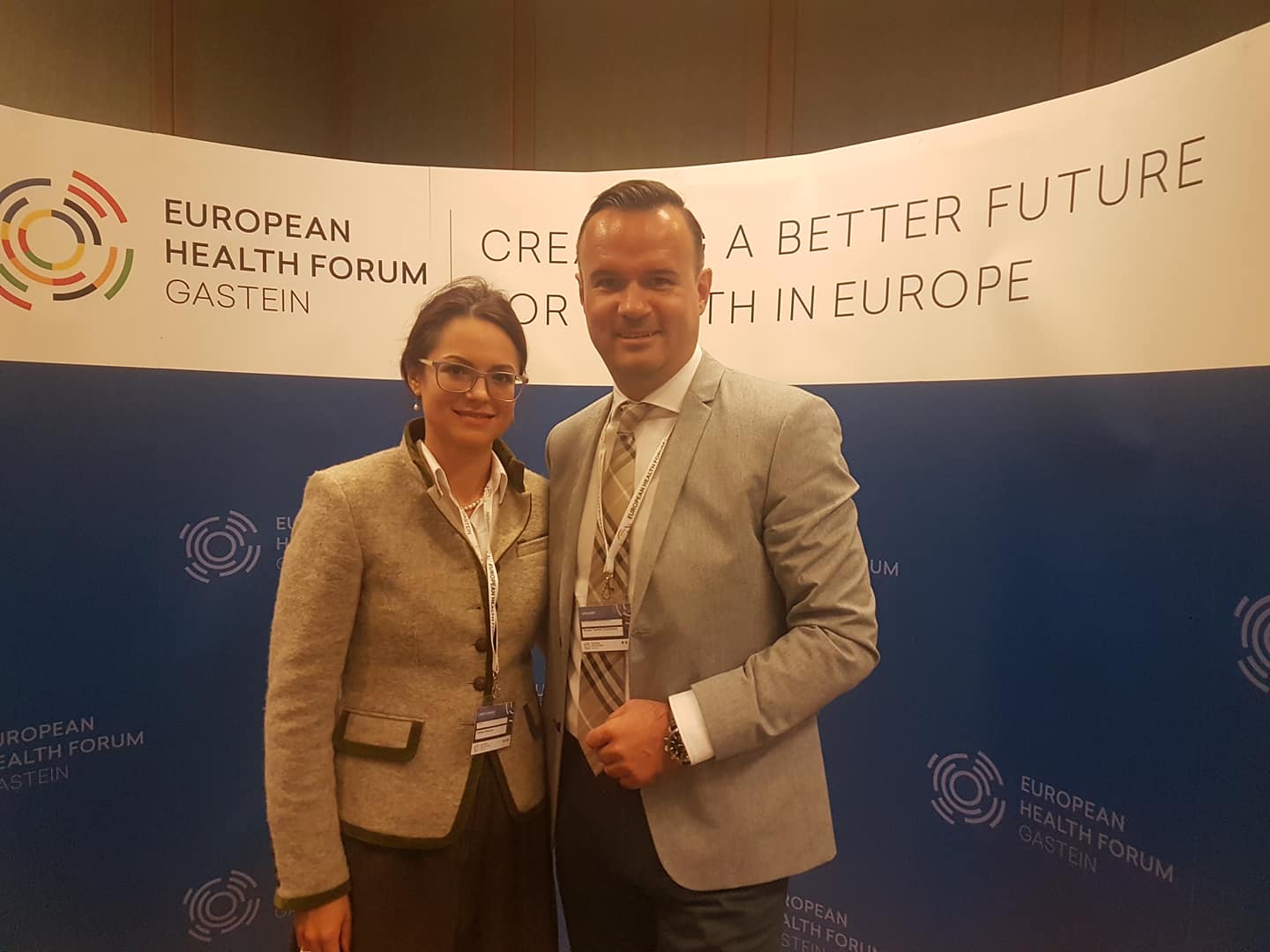
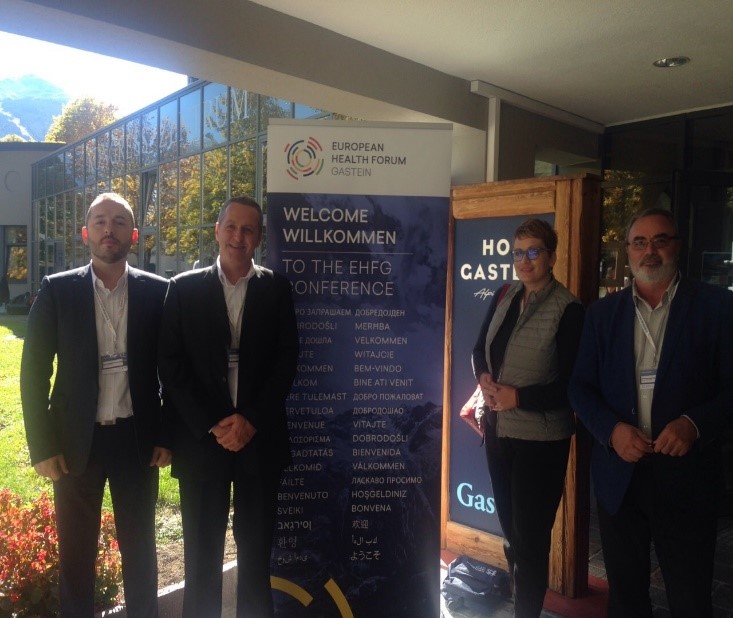
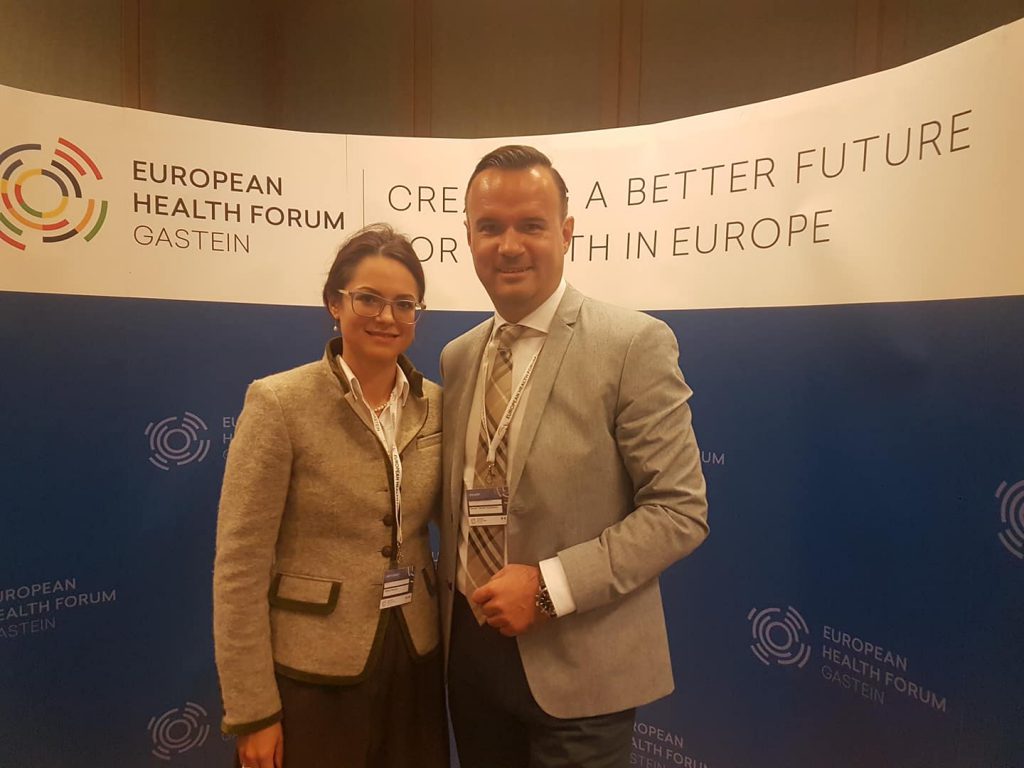
SEEHN delegation supported by European Health Forum Gastein (EHFG) SEEHN Partner, had the honor and opportunity, to attend leading Forum discussions in the area of health policy in Europe.
n
This year the topic “Health and Sustainable Development” highlighted the importance of constantly developing healthcare systems in the EU countries.
n
SEEHN delegation represented by Dr Danijela Urosevic, SEEHN Chair of the Executive Committee, Assistant Minister, Sector of International Cooperation and European Integration, Ministry of Health (MOH) Republic of Serbia, Dr. Angel Kunchev, SEEHN National Health Coordinator (NHC), Chief State Health Inspector, Bulgaria, Dr. Vladimir Milosev, SEEHN NHC, State Secretary, MOH, Republic of Macedonia, Mr. Nikola Antovic, SEEHN NHC and member of the SEEHN Executive Committee, Secretary General, MOH Montenegro, attended the Forum and the Capacity Building Workshop for Policy Makers. For the first time EHFG as a partner organized a satellite event dedicated to the SEE Region and Priorities.
n
From the perspective of SEE countries, SEEHN delegates found comprehensive and interesting the sessions dedicated to the high level priorities for all countries, such as Vaccines for all, Setting priorities for public health, Workforce for the primary health care, Innovative medicines for the good of all, Improving cancer care, etc.
n
During all these sessions, including the Plenary, SEEHN delegates had opportunity to contribute, to exchange points of view with colleagues and experts all across Europe, and to discuss the next steps, that can be implemented in their national health systems.
n
Dr Tatiana Paduraru, SEEHN Technical Officer, participated among other 35 young professionals in a Hackathon – a new tool organized for the first time within EHFG. The hackathon aimed to identify innovative solutions to tackle misuse of alcohol within young populations.
n
At the EHFG Romania has been extensively represented at all levels, especially in presenting the forthcoming EU Presidency agenda. One topic on eHealth achievements and future plans was particularly covered by the Director a.I., National Health Insurance House, Dr. Razvan Vulcanescu, former SEEHN NHC and Member of the SEEHN Executive Board.
n
EHFG offered the opportunity to the SEEHN as an important regional public health actor, to foster dialogue among experts and to contribute to the future substantial improvements in all the member states.
n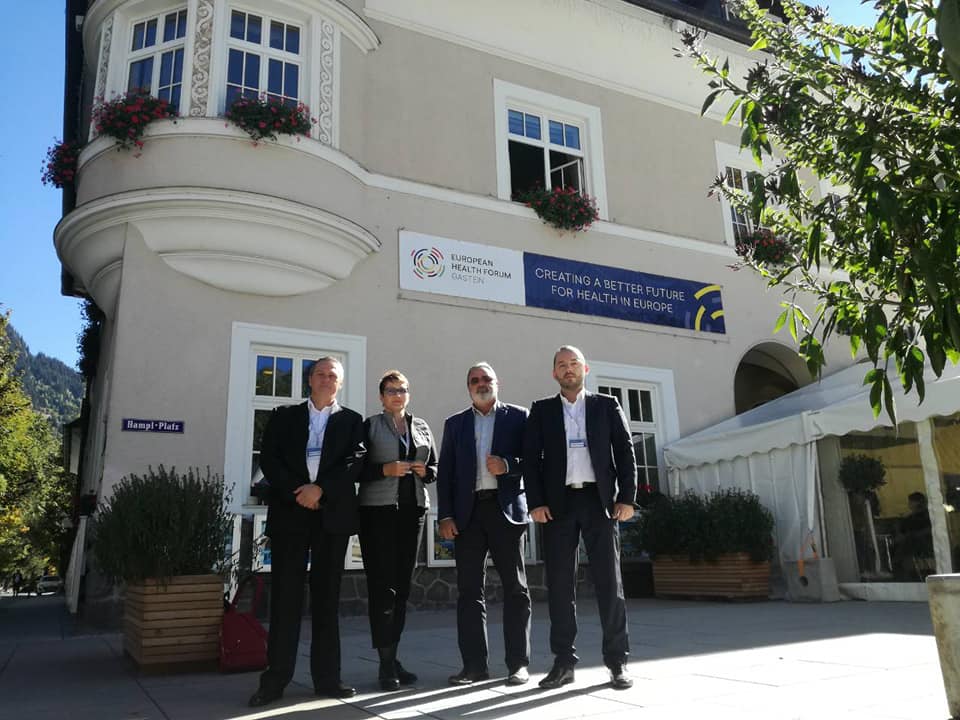
News
ACHIEVING SUSTAINABLE DEVELOPMENT GOALS – TOWARDS VIOLENCE FREE COMMUNITY
n
Skopje, Republic of Macedonia 3-5th October 2018
n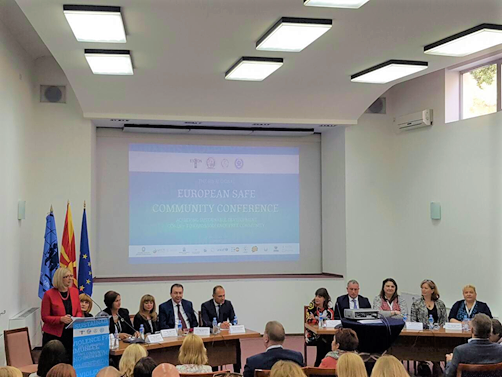 n
n
SEEHN supporting European Safe Community Network (ESCON) as partner to the Conference
n n
ESCON aims at strengthening existing International Safe Communities in Europe and promotion of the formation of new communities to be accepted into the Safecom movement towards Violence Free Community achieving Sustainable Development Goals.
n
Injuries and violence are a major public health burden across the globe. The Global Burden of Disease Studies has documented unfair distribution of violence and injury by socioeconomic strata in Europe. This gradient, existing within and between countries, must be addressed. Experts in injury prevention and safety promotion recognize the need for action and practice and consistently applying to policies and programs in the field.
n
ESCON is working against public indifference towards the burden of violence and injury and promoting safe community and community based interventions against violence and injury.
nAddress by Dr Mira Jovanovski Dasic within the opening session at the 6th European Safe Communities Conference Skopje, 3 October 2018nn Your excellences,nDistinguished guests,nDear colleagues,nLadies and gentlemen n
It is my great pleasure to address you in the capacity of the Director of the SEEHN Secretariat and Partner in the organization of this Conference. South Eastern European Health Network includes the following 9 countries: Albania, Bulgaria, Bosnia and Herzegovina, the State of Israel, Republic of Moldova, Montenegro, the Republic of Macedonia, Romania and the Republic of Serbia.
n
All 9 countries of the SEE Health Network at some point in the recent history have faced conflicts and participation to this Conference as a partner will bring not only first-hand experience but also innovative solutions and important practical guidance. SEEHN is providing support to its Member States to achieve Sustainable Development Goals and I am proud to state that all SEEHN Member States are developing and implementing national health policies aligned with Health 2020, committing to inter-sectoral government policies towards achieving the 2030 Agenda.
n
The theme of this Conference “Achieving Sustainable Development Goals – Towards Violence Free Community”, is of outmost importance and targets our basic instinct of security in the hostile times we are living today. We all want to live safely in our communities and I wish us all during the following days to focus on finding new ideas, exchange good practices and experiences to come up with prerequisites on how to deal with this challenge and to make safer our neighbourhood and ultimately the world.
n
We all witness how one event on one continent can impact another or globally and consequently the global contest becomes common all over the world. SEE countries share geographic, demographic, economic and political specificities and thus face similar challenges, such as:
nn
n
- political turbulences, frequent governmental changes undermining the implementation of reforms and resulting in lack of continuity
n
- economic constraints
n
- less public health oriented services
n
- inequities
n
- migration and refugees challenge
n
- climate change etc.
n
n
Therefore, I must highlight how complex this issue is and what factors can contribute towards achieving Violence Free Community – starting with safe water supply, violence free families, prevention of violence among young people, children abuse, injury prevention, suicide prevention, safety of the elderly, safety at work, in the transport, at school, public spaces and our homes.
n
The mentioned aspects of safe communities and violence prevention prerequisites make us aware that there are no universal and unique recipes and approaches, so, we need adjusted solutions, more efficient and integrated approach. Health systems play a crucial role and have direct involvement in many aspects in terms of safe communities and it should be reflected on providing services more efficiently and less costly to ensure health services of high quality, with patient safety at their core.
n
I am very happy to join you, representing SEEHN as partner, and personally, because safety is the condition sine qua non for daily activity and development for a society. That is why Safe Communities Conference is a very useful platform for us to share, discuss and exchange experiences.
n
In the light of the above mentioned, I would like to thank in advance the participants of the 6th European Safe Communities Conference, for the contributions and remind that they will have responsibility to spread this knowledge for achieving the aim of Violence Free Communities more efficiently.
n
Wishing you fruitful discussions I thank you for your kind attention.

News, WHO Europe
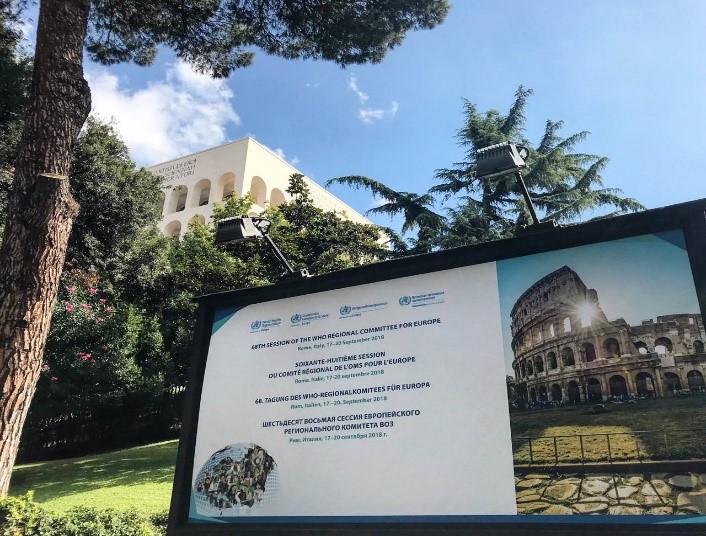
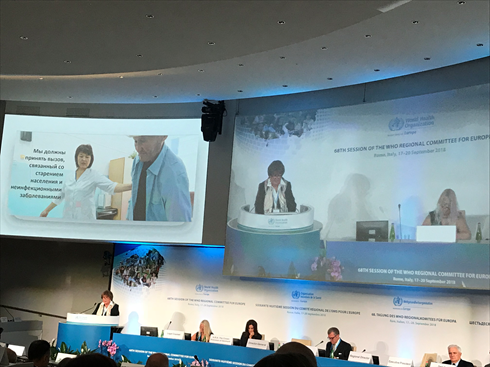
68th Regional Committee of WHO Europe, September 17-20, 2018, in Rome, Italy
n
The 68th Regional Committee of World Health Organization for Europe (WHO Europe), took place in Rome, Italy, from 17 to 20 September 2018, and was attended by the Health ministers and high-level representatives of the 53 Member States of the WHO Europe, as well as partner organizations and civil society.
n
Key technical health issues on this year’s agenda included:
nn
n
- The European health report 2018;
n
- Implementation of the 2030 Agenda roadmap for Sustainable Development, building on Health 2020, the European policy framework for health and well-being, and review of the joint monitoring framework;
n
- Advancing public health in the WHO European Region for sustainable development;
n
- Can people afford to pay for health care? New evidence on financial protection in Europe;
n
- Action plan to improve public health preparedness and response in the WHO European Region;
n
- Strategy on the health and well-being of men in the WHO European Region;
n
- Implementation of the Regional Framework for Surveillance and Control of Invasive Mosquito Vectors and Re-emerging Vector-borne Diseases 2014–2020: lessons learned and the way forward;
n
- Vaccine-preventable diseases and immunization: realizing the full potential of the European Vaccine Action Plan;
n
- Countries at the centre: the strategic role of country offices in the WHO European Region;
n
- Impact of WHO reform on the work of the WHO European Region;
n
- Accreditation of regional non-State actors to the WHO Regional Committee for Europe;
n
n
The 4-day programme also included reports on WHO high-level meetings
nn
n
- Health Systems Respond to NCDs: Experience in the European Region (Sitges, Spain, 16–18 April 2018);
n
- Health Systems for Prosperity and Solidarity: Leaving No One Behind (Tallinn, Estonia, 13–14 June 2018).
n
n
During the WHO Regional Committee for Europe future activities, the budget for the next two years have been discussed and many resolutions were adopted.
n
We are very proud that SEEHN activities have been highlighted in the report of Dr Zsuzsanna Jakab, WHO regional director for the Europe.
n
Current SEEHN Presidency Republic of Macedonia with four Statements actively contributed to the discussions.
n
The Regional Committee meeting was attended by the South – East European Health Network Secretariat director Dr Mira Jovanovski Dasic, who had several bilateral meetings.
n
She received compliments for SEEHN Secretariats efforts in the progress for implementation of the Chisinau Pledge in SEE.
n


News
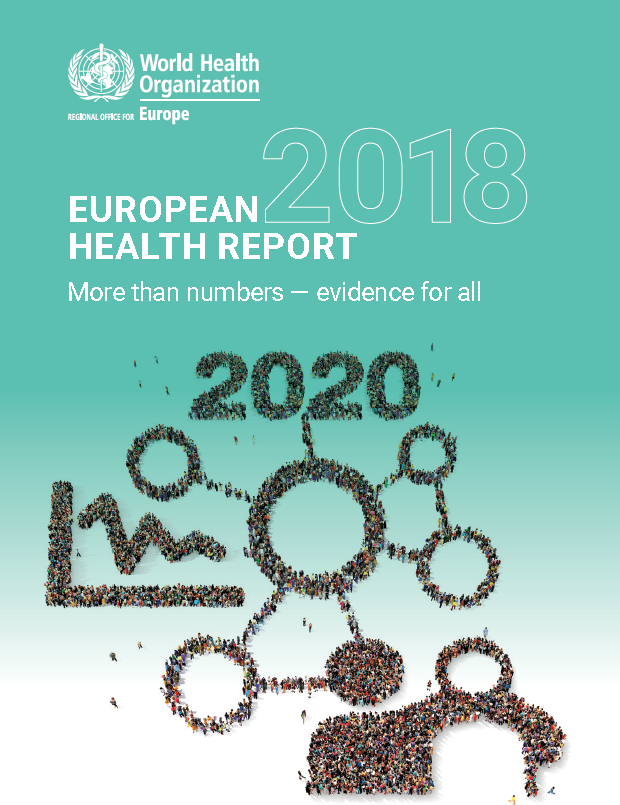
European Health Report 2018 is an essential resource for the 53 Member States of the WHO European Region to report on progress towards the Health 2020 targets, outlining areas that may be unfinished by 2020 and beyond.
News
Tel Aviv, 10 July 2018
n
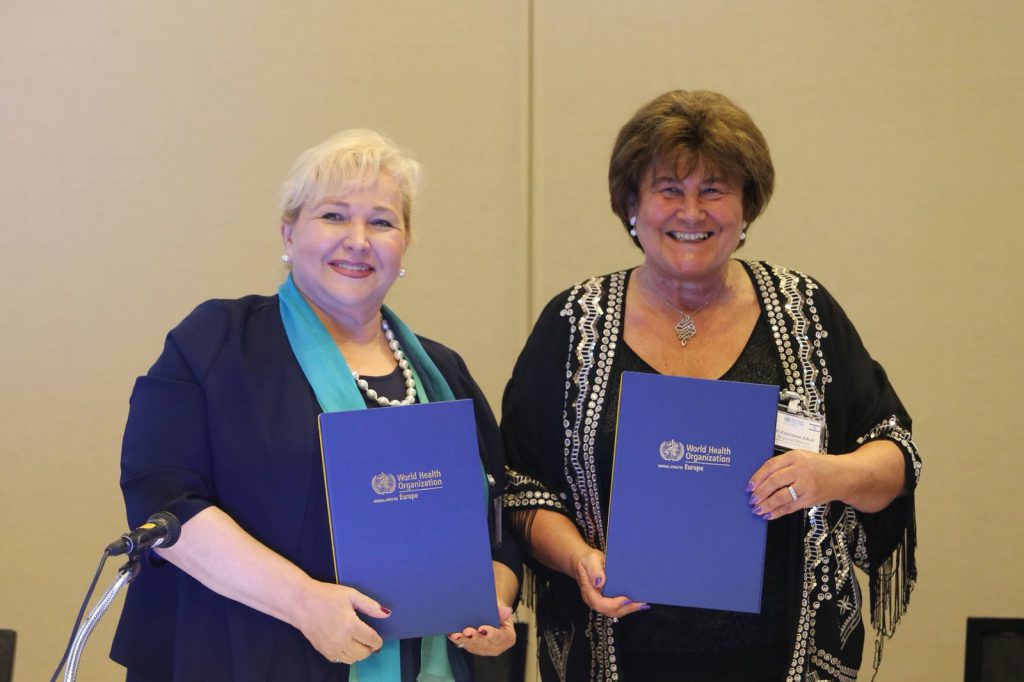
During the WHO/SEEHN Ministerial Meeting”, held in Tel Aviv, Israel with the topic “Ensuring Primary Health Care for Aging Population in the South Eastern Europe, Dr. Zsuzsanna Jakab, Regional Director, WHO Regional Office for Europe and Dr. Mira Jovanovski-Dasic, Director, Secretariat of the South – eastern European Health Network (SEEHN) signed the Memorandum of Understanding between WHO and SEEHN regarding the Subregional Cooperation Strategy.
n
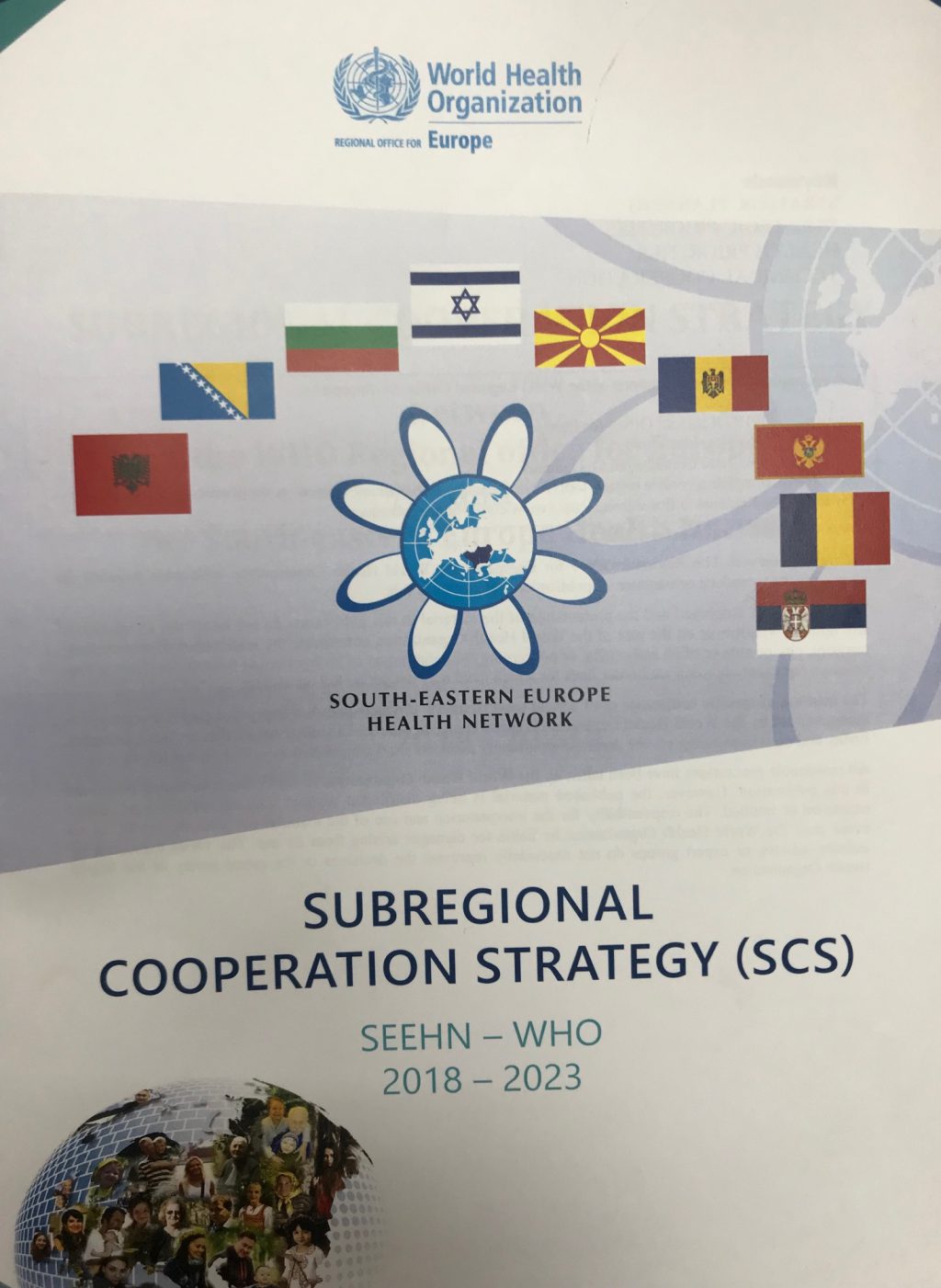
Reflecting the critical role played by the South-Eastern Europe Health Network in subregional health, the long-term collaboration with WHO regarding subregional health Agenda, the universality of Agenda 2030, which calls for all countries to fully engage in its implementation at all levels, WHO Regional Office for Europe and South-Eastern Europe Health Network (SEEHN) Secretariat have jointly developed this document. The achievement of Sustainable Development Goal (SDG) 3 and other related to health SDGs goals, especially its key target of universal health coverage, underpins its strategic orientation.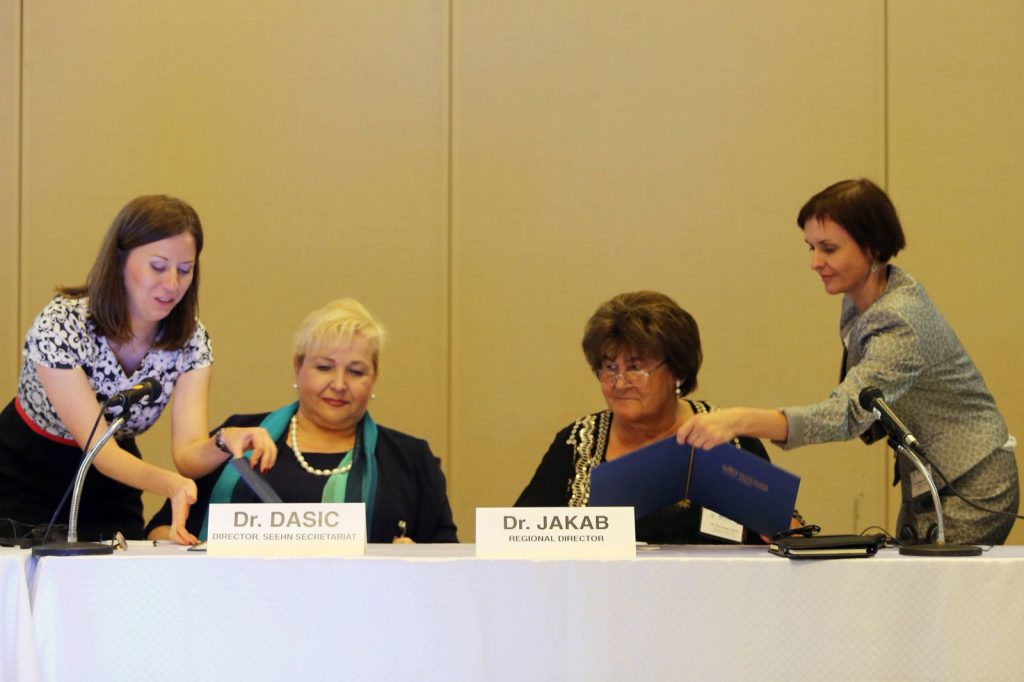
n
This Subregional Cooperation Strategy (SCS) has been shaped through a series of consultations with representatives at all levels of WHO, the SEEHN and scientific institutions. It has seven 7 strategic priorities reflecting the:
nn
n
- Further sustaining and strengthening of our collaborative efforts;
n
- Achieving the Sustainable Development Goals (SDGs);
n
- Striving towards universal health coverage;
n
- Strengthening public health;
n
- Ensuring emergency preparedness and response;
n
- Promoting partnerships for health and well-being;
n
- Achieving policy coherence between global goals and the SEEHN member countries’ economic, social and environment policies.
n

News
n
WHO/SOUTH-EASTERN EUROPE HEALTH NETWORK (SEEHN) MINISTERIAL MEETING ON ENSURING PRIMARY HEALTH CARE FOR AN AGEING POPULATION nandn40th PLENARY MEETING OF THE SEEHN "ENSURING PRIMARY HEALTH CARE FOR AN AGEING POPULATION" 10 - 11 July 2018, Tel Aviv, Israel
n
Approaching are two important events to be held in Tel Aviv, the Ministerial WHO/SEEHN meeting on 10 July and the SEEHN 40th Plenary meeting on 11 July 2018.
n
SEEHN can proudly announce that the nine Member States will come together to find new ways for intensifying their collaboration and determining the next steps for joint action.
n
The meetings will cover the key technical issues including health system strengthening and primary health care, with a particular focus on ageing population and on vaccination as a critical public health intervention. The health ministers will discuss what assistance and follow-up action may be needed to ensure continued, efficient cooperation among SEEHN countries. In that regard, conclusions from the last meeting in Podgorica will be talked over.
n
In addition, the objectives of the meetings are to support the implementation of the International Health Regulations (2005) and emergency preparedness in SEEHN countries, and to debate the outcomes of the high-level regional meeting in Tallinn, Estonia, “Health Systems for Prosperity and Solidarity: leaving no one behind”. Finally, the health ministers will review country-specific and SEEHN joint statements for the upcoming session of the WHO Regional Committee for Europe in September 2018.
News
News
Held on 17-18 May 2018, Palace of Serbia, Belgrade, Serbia
n
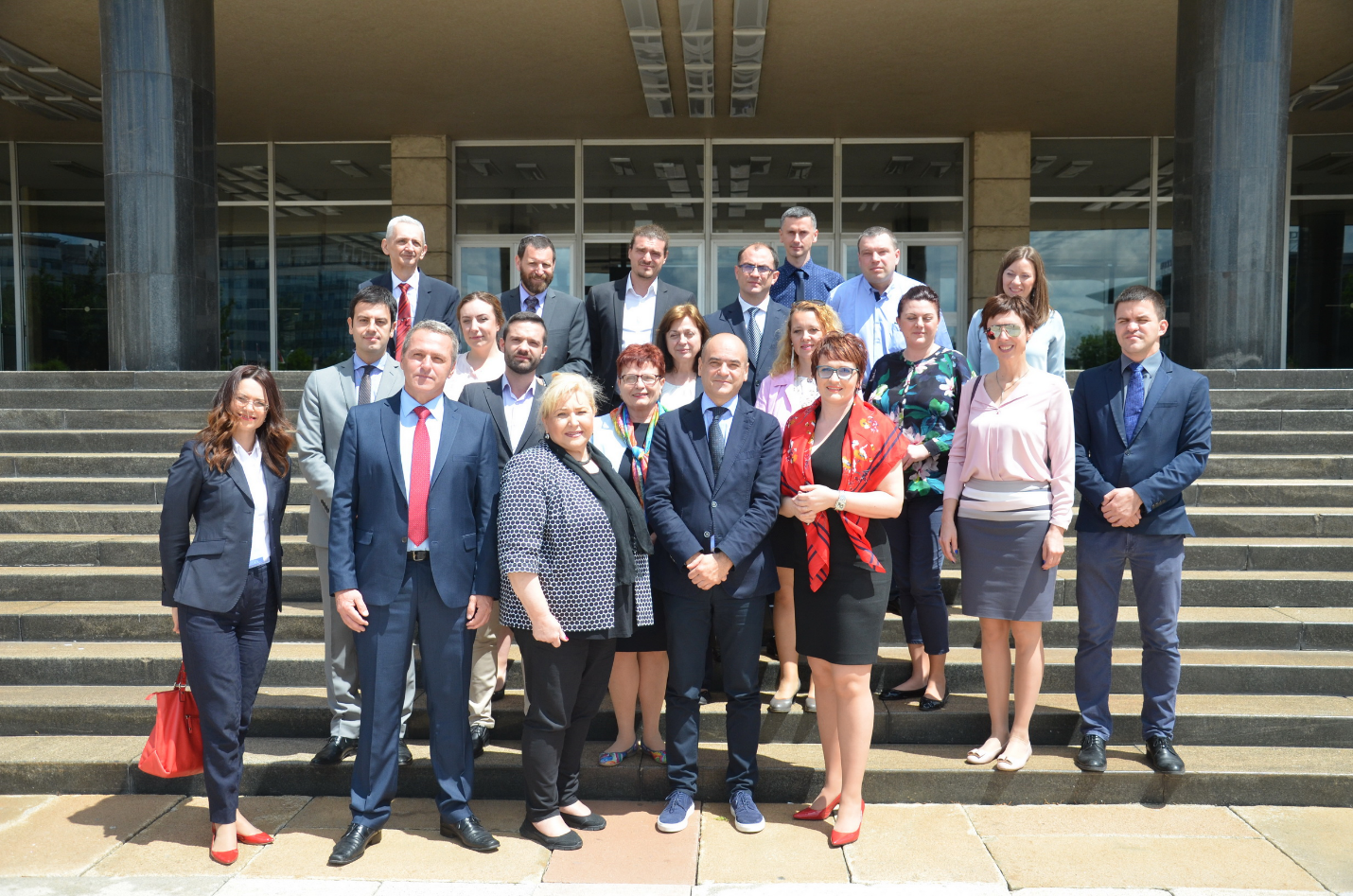
Under the current Presidency of Israel, Serbia hosted the Workshop for Harmonizing the text of the new SEEHN Memorandum of Understanding, in the period of 17-18 May in the Palace of Serbia in Belgrade.
n
This event was attended by national health coordinators of the Member States to the SEEHN, the Executive Chair of the SEEHN Board, the SEEHN Secretariat Director, legal advisors appointed by the Ministries of Health of the SEEHN Member States, and by the representatives of the Ministries of Foreign Affairs of the SEEHN Member States.
n
n
The new text of the Memorandum of Understanding, seen as a renewal of the commitment of all SEE Member states to continue working together within the Network, has been developed and has undergone substantial intergovernmental and multi-governmental consultation processes back in 2016. During the Ministerial Forum in Chisinau the willingness to sign the document, after the completion of respective national procedures, has been clearly expressed by SEEHN countries. SEEHN has a history of 17 years which led to the need of revisions of the current documents in force (the Memorandum of Understanding of 2008 and its Addendum of 2011) in order to maximize the performance level and view of current and future developments of SEEHN as a Regional organization and its governance and institutional mechanisms.
n
Thus, legal advisers gathered to bring their expertise in the field of national and international law and to agree on a common legal framework to serve the best interest of SEEHN. The outcome conclusions and documents will be shared at the 40th SEEHN Plenary Meeting to be held in Israel on 11 July 2018.
News
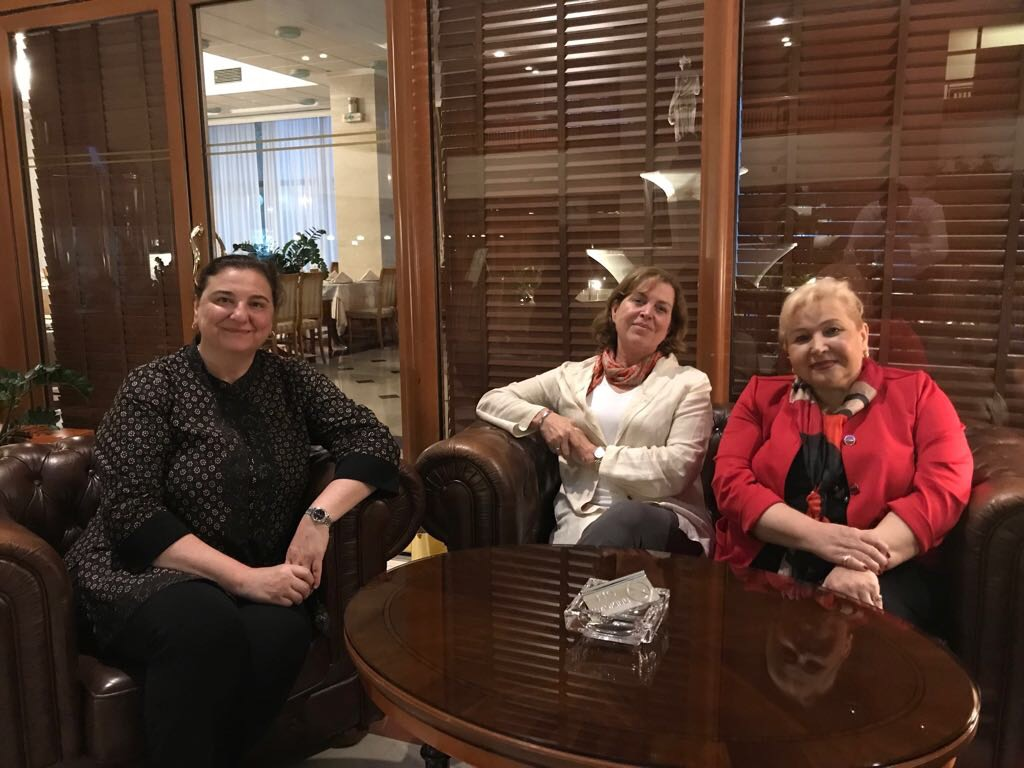
Dr Mira Jovanovski Dasic, Director of SEEHN Secretariat met on 12th May 2018 Dr Nedret Emiroglu, Director of Programme Management and Director Health Emergencies and Communicable Diseases, Special Representative of the Regional Director on the Sustainable Development Goals and Governance and Dr Jihane Tawilah, WHO representative to MKD and Head of the WHO country office to MKD . The meeting provided an opportunity to discuss current activities of SEEHN, the preparations for the Ministerial meeting and SEEHN 40th Plenary to be held in Israel 10- 12 July 2018, the Action plan for the implementation of the Chisinau Pledge and other mutual areas of interest, including immunization, access to medicines, antimicrobial resistance, noncommunicable diseases and healthy ageing.
News
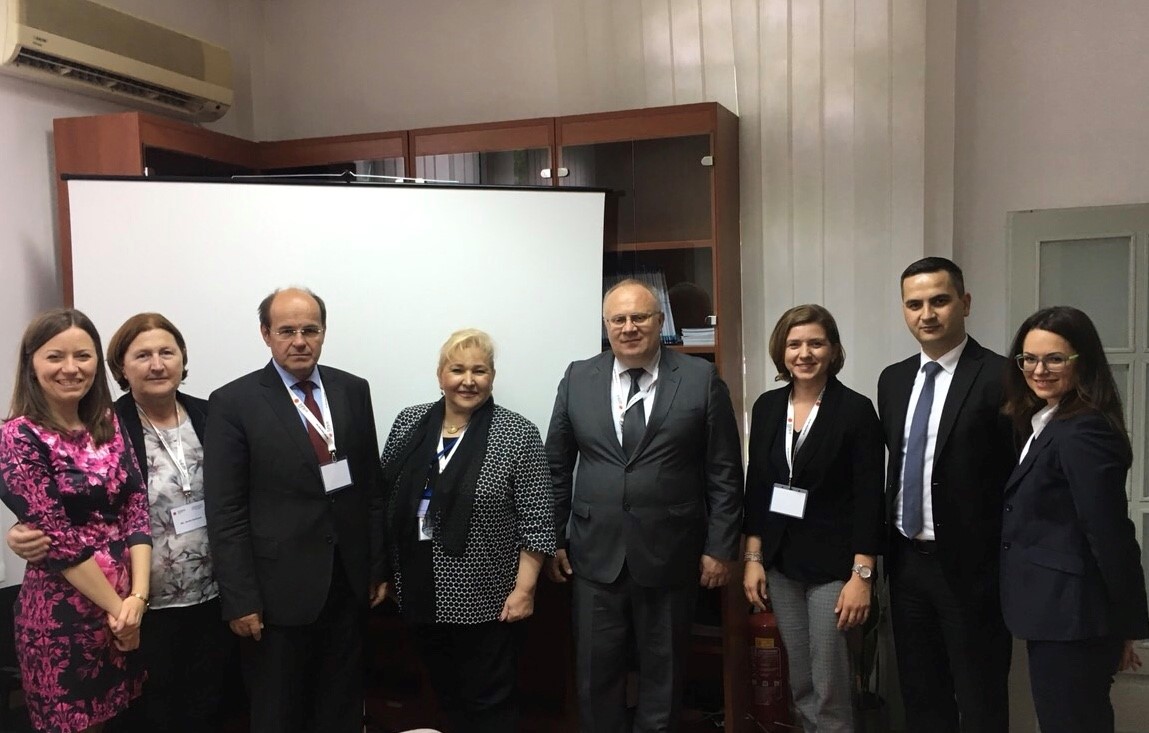
Skopje, May 7th 2018 – Dr. Mira Jovanovski Dasic, Head of SEEHN Secretariat, welcomed today, for the first time, Minister of Civil Affairs of Bosnia and Herzegovina Mr sci. Adil Osmanovic and Minister of Health and Social Welfare in Government of Republic of Srpska Dr. Dragan Boganic.
n
In a pleasant atmosphere, the collocutors, among other, agreed about the key role of the SEEHN for better cooperation in this region. Minister Osmanovic and Minister Bogdanic praised the efforts Dr. Dasic made so far and the future activities such as: development of Action plan on Chisinau Pledge, development of new SEEHN Memorandum of Understanding, the forthcoming Workshop with contracted legal advisors in Belgrade and the plan for the Ministerial Conference and 40th SEEHN Plenary Meeting in Israel.
n
Dr. Dasic underlined that this kind of communication between all members of SEEHN is essential for future regional cooperation.
News
This year Immunization Week is celebrated across Europe during the week 23-28 April and WHO is reminding that vaccination is a right and responsibility of every citizen.
n
n
SEE Region faces common challenges as the rest of the European countries related to vaccination coverage, availability, quality of vaccines, etc.
n
In this light, governments of the SEEHN gathered earlier this year in partnership with WHO EURO within the South-eastern Europe Health Ministerial Meeting on Immunization which took place in Podgorica, Montenegro, on 20 February 2018.
n
SEE Ministers of Health endorsed a Statement of Intent that reiterated commitment to the EuropeanVaccine Action Plan (2015-2020) goals and objectives and launched the development of a regional roadmap providing a foundation upon which joint action, partnership and collaboration can be strengthened and scaled-up to tackle shared immunization programme challenges.
n
News
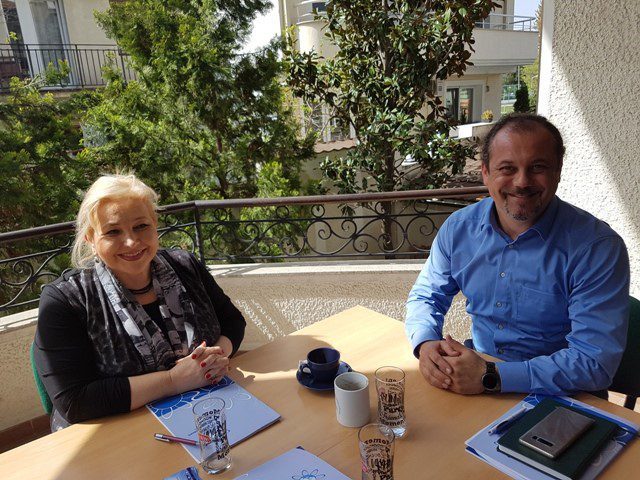
Skopje, 12.04.2018 Dr. Mira Jovanovski-Dasic, Head of SEEHN Secretariat and Mr. Igor Slavkoski, Head of Mission/Country Director of REC Macedonia and Deputy Head of the Business Development Unit of REC Head Office
n
In a friendly and relaxed atmosphere at REC’s offices in Skopje, Mr. Slavkoski and Dr. Dasic mutually presented organizational, managerial structures, activities and projects of the respective organizations they represent.
n
A very fruitful discussion was developed on the possibilities for mutual cooperation bearing in mind that the strategic focus of both organizations is contribution towards the achievement of the UN Sustainable Development Goals and 2030 Agenda for Sustainable Development.
n
Both parties agreed that the“concept of health is an essential element for the well-being of society and this concept does not merely refer to physical survival or the absence of disease, but includes psychological aspects, natural, environmental, climatic and housing conditions, working, economic, social and cultural life” (definition by WHO).
n
 Mr. Slavkoski expressed REC’s readiness to start cooperation with SEEHN in several areas of joint interest of Environment and Health i) Air pollution ii) Water and iii) Waste through possible involvement in capacity building activities and development of partnership projects.
n
Dr. Dasic presented the possibility for formalizing a partnership between SEEHN and REC by signing a Memorandum of cooperation in order to enhance future joint activities.
n
This productive meeting concluded with the sharing of the day – to – day operation experiences and ideas for best practices.