Preparing health professionals to meet the expanding health and social needs of ageing societies while enabling them to pursue rewarding career paths in their country of origin is a rising priority for governments in South-eastern Europe, whose health sectors have been weakened in recent years by external and internal migration. To discuss strategies for strengthening the technical capacity of the region’s health workforce through transformative education and solutions to the geographic imbalance, a high-level meeting organised by WHO Regional Office for Europe in collaboration with the South-eastern European Health Network (SEEHN) and hosted kindly by the Medical University of Varna, Bulgaria, took place on 9-10 November in Varna.
Attended by representatives of health and education ministries, national public health institutions, and universities from Albania, Bosnia and Herzegovina, Bulgaria, Croatia, and the Republic of Moldova, and by WHO experts, the meeting outlined the need for improved alignment between health workforce education and training curricula on the one hand and evolving professional competencies required by new models of health care and changing public health needs on the other. Participants discussed solutions to existing barriers to cooperation between the health and education sectors and highlighted the need to establish a systematic process for health workforce planning with shared responsibility between ministries of health, employment and finance.
Other priorities emphasised in the course of the meeting included the need to shift towards evidence-based professional education and to retain faculty who can deliver it, to secure political support for enhanced teaching and training modalities, and to increase intersectoral cooperation by initiating policy dialogues on planned curriculum reforms with all stakeholders.
The vision of transformative education includes development of competencies and skills – both through basic health workforce education and through continuing professional development – that are linked to nationally and contextually relevant needs, as well as to global standards of excellence. Such education aims to maximise the contributions of all health workers.
Translating this vision into practice is essential to implementing Health 2020, the European policy framework for improving the health of populations and reducing health inequities, in which health professionals play a central role. It is also essential to implementing the SEE 2020 Strategy “Jobs and prosperity in an European Perspective”. To operationalize this vision, countries need strengthened sub-regional collaboration, continued technical support and cooperation, and greater alignment between educational institutions and the systems that are responsible for health service delivery.
The meeting in Bulgaria followed the WHO Regional expert consultations on transformative health professionals’ education and training in support of Health 2020 and a series of sub-regional technical meetings on health workforce mobility and retention in 2013 in the Republic of Moldova and in 2014 in Slovenia , which drew commitment by members of SEEHN to build a sustainable health workforce responsive to the current and future health needs of their populations.
The Jubilee Scientific Conference celebrating the 10th anniversary of the Faculty of Public Health in Pleven took place on 1-3 October 2015 under the title of “Public Health Policy and Practice”.
Divided into three plenary sessions, various conference topics were tackled in the context of both the negative public health trends that Bulgaria faces and the urgency to find appropriate solutions. Bringing into focus the epidemiology of infectious and chronic non-infectious diseases, the ethics of public health and clinical practice as well as health promotion and management, quality of health care and medical rehabilitation and ergotherapy, the Jubilee Conference has provided health professionals and managers with the opportunity to exchange valuable experience and ideas and to enhance their professional connections in the field of public health research and practice for prevention and control of public health processes.
The abstracts of the Jubilee Scientific Conference comprise the latest edition of the Journal of Biomedical and Clinical Research, issued by the Medical University – Pleven twice per year. Entirely dedicated to conference itself, this edition also features the Rector of the Medical University Prof. Dr. Slavcho Tomov who describes the Faculty of Public Health as the “leading structure within our university and a solid educational center for training of public health professionals and managers”.
Ministers from ten countries in the South-Eastern Europe Health Network (SEEHN) met in Belgrade on 22-23 June 2015, and agreed on joint regional and national actions towards securing universal health coverage. In addition to promoting an equitable Europe free of impoverishing health expenditures, the Belgrade Statement, endorsed by the ministers, also commits countries to promote and scale up political commitment to implementing Health 2020, and agree on more specific regional actions for strengthening human resources for health and coordinating cross-border support in public health emergencies, among other tasks.
“A year ago I promised the Regional Committee that I would continue to work for improved health outcomes and to link health to equity and also to sustainable development. This is happening more and more in our Region, and our decision-makers are increasingly obliged to take a wider perspective in their work. Coherent, inter-connected government policies – with a strong intersectoral component – are the way forward. This also applies to the SEEHN and individually to your countries” said Dr Zsuzsanna Jakab in her opening speech.
Ministers welcomed the opportunity to exchange views, experiences and lessons learned on the top common priorities for collaboration between the countries. Health systems strengthening, disease prevention, sustainable health financing, health information systems, information exchange, health literacy and intersectoral partnerships, implementing the international health regulations (IHR 2005), immunization rates, and preparation and response in emergencies such as the 2014 floods in the Balkans, were issues raised by countries. Discussions also included enhancing the network’s governance structures at both political and technical level.
Jointly organized by Dr Zlatibor Lončar, Minister of Health of the Republic of Serbia and current President of SEEHN, and Dr Zsuzsanna Jakab, WHO Regional Director for Europe, the meeting brought together ministers, deputy ministers and state secretaries from the 10 Member States of the South Eastern Europe Health Network.
In view of the need for further strengthening of both regional collaboration for public health and the governance structures of the South-east Europe Health Network, an ad-hoc Meeting of the Ministers of Health of the SEEHN Member Countries titled “Further Steps to Strengthening the SEE Regional Collaboration for Public Health” will be held on 21-23 June 2015 in Belgrade.
Jointly organized by the Regional Director of the WHO Regional Office for Europe, Dr. Zsuzsanna Jakab and the Minister of Health of the Republic of Serbia and current President of the SEEHN, Dr. Zlatibor Lončar the Ministerial Meeting will precede the 35th Plenary Meeting of the SEEHN to take place on 23-24 June 2015 in the same venue.
During these two important events, relevant stakeholders shall exchange views, experience and lessons learned on the top common priorities of the SEEHN Member States, including the implementation of WHO Europe Health2020 and the Health dimension objectives and measures of the SEE 2020 Strategy. By determining the next intersectoral actions for health, the high-level representatives of the SEEHN Member States and the WHO Regional Office for Europe will have an excellent opportunity to reaffirm their countries’ political commitment for strengthened intergovernmental and inter-sectoral collaboration towards health and health systems improvement in the Region.
[column width=”3/5″ title=”” title_type=”single” animation=”none” implicit=”true”]
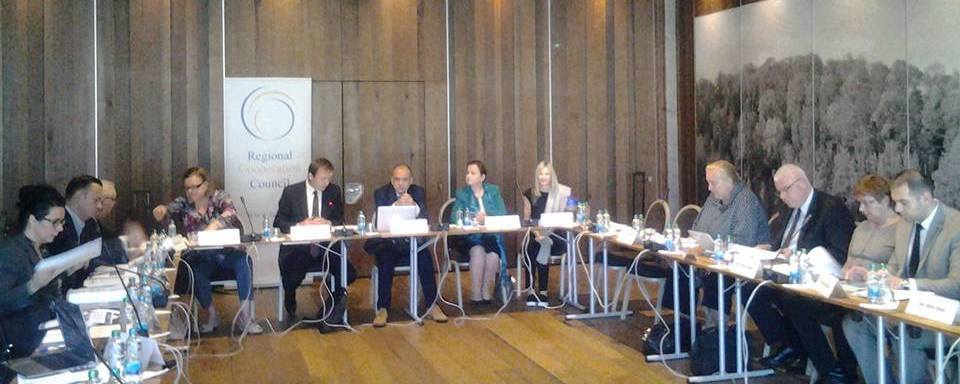
On May 14-15, 2015 the National Health Coordinators, Executive Committee members and technical experts of the SEE Health Network got together with the WHO Regional Office for Europe technical experts in the Preparatory Meeting of the SEE Health Network, met in Jahorina, Sarajevo, Bosnia and Herzegovina to finalize preparations towards the Ad-hoc meeting of the Ministers of Health of the Members States of the SEE Health Network, and the 35th SEEHN Plenary session, to be held back to back between 21-25 June, 2015 in Belgrade, Serbia. The Ministerial meeting of the SEEHN Member States is jointly called and organized by the Minister of Health of the Republic of Serbia and current President of the Network, Dr. Zlatibor Lonchar, and WHO Regional Director for Europe, Dr Zsuzsanna Jakab.
The Preparatory meeting was kindly organized and financed by the Regional Cooperation Council (RCC) in cooperation with the SEEHN Executive Committee. WHO Regional Office for Europe provided substantial political and technical support to the meeting.
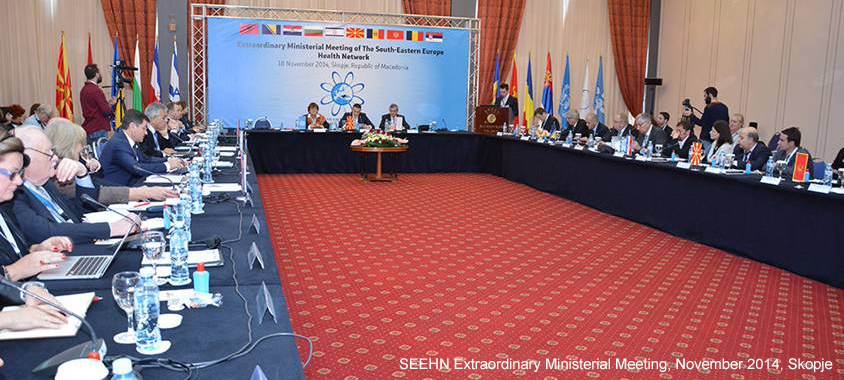
Preparatory meeting scoped panel and group work over all the issues that will be taken aboard the SEEHN Belgrade event, and among others: discussing the implementation of WHO Europe Health2020, the Health dimension objectives and measures of the SEE 2020 Strategy, developing project proposals and revising the implementation report 2014; 4th SEE Health Ministers Forum, to be held in 2016; strengthened governance of the SEE Health Network; follow-up on the Ministers’ decisions from the Skopje Ministerial meeting in November, 2014; follow-up to the EC TAIEX and WHO Europe technical multi-country workshops in 2015, and many others.
[/column]
Years 2014 and 2015 have been and will be extremely intensive years for the regional collaboration for health, particularly with regards to the implementation of the Banja Luka Pledge (2011), the SEE 2020 Growth Strategy recently endorsed (22 November 2013) by the SEE Ministers of Economy, and embedding health as separate dimension contributing to the economic development and growth; the EU 2020 Strategy and the WHO Europe Health 2020 Policy Framework (2012) as well as the European Action Plan for Strengthening Public Health Capacities and Services (2012).
Because of the above and in view of the current political, economic, social and health changes that have taken place in the region since the endorsement of the SEE Health Network Memorandum of Understanding in 2008, it is of utmost importance that this Ministerial meeting is conducted accordingly in order to provide for strengthened leadership, managerial and technical opportunities for the Network and the regional cooperation in public health in SEE to develop further.
Recognizing the seriousness of the health workforce migration in recent years and the negative effects of brain drain and brain waste, the Republic of Moldova implemented the project “Better Managing the Mobility of Health Professionals” under the coordination of the World Health Organization.
Financially supported by the European Union, the project aimed to strengthen the capacity of the Republic of Moldova to manage the migration of Moldovan health professionals and to build up a better framework for the legal migration of health workers between Moldova and the EU in order to reduce or mitigate the negative impacts of migration on the Moldovan health system as well as to ease the reintegration of returning health workers.
Engaging a big team of WHO staff, experts, national authorities, medical institutions and medical education institutions both in the Republic of Moldova and from EU countries, the project incited and contributed to a 3-year-long fruitful collaboration that provided for substantial change in the HRH area in the country.
Achievements
One of the main project achievements is the development of a national information system (SIERUSS) to monitor the mobility of health professionals and the training of approximately 800 people in HRH governance and management and in using the SIERRUS database.
Furthermore, the project provided for the development of a relevant legislative framework and drafts of new regulations related to the employment and remuneration of health workers, improvement of both curricula for medical colleges and various postgraduate training programs, accreditation of the School of Public Health and Management as well as for the development of an e-learning platform at the University of Medicine and Pharmacy “Nicolae Testemitanu”.
An overview of all project activities, including the series of studies conducted in several European countries and the organization of dozens of policy dialogues, workshops and an information campaign, was given during the project closing conference held in March 2015. Also presented was a 20-minute movie summarizing the context, the challenges, the results and the lessons learned through views and opinions of Moldovan health professionals and WHO official representatives.
The Republic of Moldova as a SEEHN member
The example of the Republic of Moldova, one of the 10 member States of the SEE Health Network is to be commended. That was one of the reasons why the Republic of Moldova was authorized by the SEE Health Network to lead and coordinate the regional efforts on health workforce and its mobility through its designated Regional Health Development Centre in Chisinau.
Similar activities could and should be followed by the other SEE countries in either national and/or regional way. Health workforce is a major challenge for 9 of the 10 SEE Health network countries and is one of the four health objectives of the SEE 2020 Growth Strategy “Jobs and Prosperity in a European Perspective” which is currently in implementation with the support of the Regional Coordination Council, the European Commission DG Enlargement and many more international partners.
(Croatian Ministry of Health – Institute for Transplantation and Biomedicine)
The SEEHN RHDC in Croatia is organizing jointly with TAIEX (Technical Assistance and Information Exchange Instrument of the European Commission) on April 9 and 10 in Zagreb, another important technical meeting to address key issues in deceased organ donation process (Identification and referral of potential donors; Brain death diagnosis; Donor assessment and evaluation; Family approach).
The TAIEX meeting will bring together 67 professionals from Albania, Bosnia and Herzegovina, Bulgaria, Croatia, Israel, Kosovo, Former Yugoslav Republic of Macedonia, Moldova, Montenegro, Romania, Serbiaand Turkey, as well as experts from EU Member States, to share best practises and improve knowledge and skills in this important health care field.
Extensive training of throughout the SEEHN Region will take place under the leadership of Croatian experts and invited experts from Italy, Spain and SEE countries.
Croatia is one of the leading countries in organ donation and transplant medicine not only in Europe but even beyond. Recently, in the beginning of April, during Easter weekend, in only 24 hours nine patients (from Croatia, Hungary and Austria) have received liver transplants and kidney transplants.
This remarkable achievement was enabled by a multidisciplinary work and efforts of coordination and transplantation teams and by the generosity of seven deceased persons and their families who consented to organ donation.
Written by several key participants in the SEEHN operation, the article underlines the importance of inter-country alliances to the economic development and social progress in the past several decades through the example of the South Eastern Europe Health Network (SEEHN), summarising its main accomplishments and tangible improvements in the regional governance for health.
The third volume of the SEEJPH is available online at the following link.
A Multi-Country Workshop on Public Health Policies on Migration and Health was held in Tirana, Albania on 19–20 March 2015, gathering close to 60 participants from Member States of the SEEHN[1], Kosovo*[2] and Turkey.
Organized by the Technical Assistance Information Exchange instrument of the European Commission (TAIEX) in cooperation with the Regional Health Development Centre (RHDC) on Surveillance and Control of Infectious Diseases and Institute of Public Health, Albania, the Workshop brought together experts of different sectors from SEEHN countries, Kosovo*, Turkey, EU Member States and International organizations (including WHO Europe) who shared and discussed knowledge, experiences and challenges in terms of establishing a regional cross-sectorial and cross border practical approach to migration and public health policies.
The workshop resulted in developing the following steps for further regional actions to progress in this area, in particular at the SEEHN Regional level:
the need to define and agree on a “minimum” package of good health services to be provided for irregular migrants, who represent a particularly vulnerable group, in the countries of the SEEHN region;
the SEEHN should establish a working group to identify, define and agree on the key data essential for action at the Regional level; the Member States of the SEEHN should provide detailed information on the available data in their respective countries;
the SEEHN should, on the basis of the data provided, assess the situation, and propose, if appropriate, solutions, in particular cross-border solutions both within the SEEHN Region and with the neighbouring countries, in particular the EU Member States, in view of the vocation of the SEEHN countries to join the EU;
the SEEHN should facilitate an in-depth exchange of information on the health services provided by the “Asylum Centres” in the SEEHN Region as well as in the neighbouring EU Member States with a view to optimise these services both for the benefit of the users and of the health systems of the countries;
the SEEHN should request in particular Romania to present a health and economic benefits assessment of the use of “health mediators” with a view to develop possibly a common approach at the SEEHN level.
The need to develop strong partnerships within the SEEHN as well as with the neighbouring countries from which in particular irregular migrants (unplanned migration) originate is essential for a comprehensive and effective policy in this area in particular from the public health perspective. In this context the need to exchange experiences and to develop partnerships was stressed, including in relation to the possibility of impacting on the health services in the SEEHN countries as well as at Regional level.
[1] SEE Health Network: The SEE Health Network was established in partnership with the Council of Europe and the WHO Regional Office for Europe within the framework of the Stability Pact Initiative for Social Cohesion. It comprises of Republic of Albania, Bosnia and Herzegovina2, Republic of Bulgaria, Republic of Croatia, Republic of Moldova, Montenegro, Romania, Republic of Serbia, the State of Israel and The Former Yugoslav Republic of Macedonia
[2] Kosovo*: KS=Kosovo*; this designation is without prejudice to positions on status, and is in line with UNSCR 1244 and the ICJ Opinion on the Kosovo Declaration of Independence
[3] Ministry of Civil Affairs on the behalf of Bosnia and Herzegovina’s health authorities: Ministry of Civil Affairs of Bosnia and Herzegovina, Federal Ministry of Health, Ministry of Health and Social Welfare of the Republic of Srpska and Department of Health and Other Services of Brčko District
TAIEX Multi-country Workshop on PH policies on Migration and Health, March 2015, Tirana (photo credit: SECIDS)
Organized under the 2014/2015 Biennial Collaborative Agreement (BCA) between the Ministry of Health and the World Health Organization, the Workshop successfully introduced and established the basic guidelines for the self-assessment process in the presence of Dr. Elke Jakubowski, Programme Manager for Public Health Services at WHO Europe, Dr. José María Martín Moreno, WHO consultant and professor of public health at high ranking European universities and Dr. Maria Ruseva, WHO consultant.
The video made to summarize the pleasant and highly productive atmosphere during the workshop
In advance of the 18thEuropean Health Forum Gastein (EHFG), this year themed “Securing Health in Europe – Balancing priorities, sharing responsibilities” which will take place in Austria´s Gastein Valley from 30th September to 2nd October 2015, the International Forum Gastein is welcoming applications for the European Health Award 2015. The Award of €10,000 will be sponsored by the Austrian Federal Ministry of Health and FOPI, the association of research-based pharmaceutical and biotechnology companies in Austria.
Designed to honour initiatives aiming to improve public health or healthcare in Europe, the European Health Award was established in 2007 to promote cross-border cooperation, multi-country working and the development of sustainable, innovative and transferable initiatives which address current challenges such as disparities in health status, access to services and the provision of treatment within Europe.
The Country Day aims at improving WHO Europe’s interactions with and relevance for the member states of the South-Eastern Europe Health Network (SEEHN). It aims to build upon the ongoing collaboration and ensure a more coordinated approach to the existing opportunities. Objectives of the Day are also to highlight the issues faced by the sub-region and to discuss the provision of policy advice and targeted technical assistance that address the networks needs by fulfilling sub-regional as well as national commitments so to ensure the delivery of agreed results.
The Country Day is designed to provide a forum for in-depth discussion on the health issues and priorities of the sub-region, the importance of the network to the WHO as well as an analysis of the technical programs’ implementation in the selected priority technical areas. It will address previous successes and future opportunities on working in and with the SEEHN at both strategic and operational levels.
Organization and all preparatory work for the SEEHN Country Day are coordinated by the Strategic Relations with Countries unit (SRC) in the Regional Directors Office.
The Country day is open to all staff members and will specifically involve Divisional Directors, Program Managers and the SEEHN Co-Opted Member and founder of the SEEHN, Dr Maria Ruseva. Heads of WHO Offices will also be linked in to participate directly in the discussions by sharing their experiences with members of the SEEHN at country level, and to contribute to the discussion on future collaboration. The meeting will be held in a plenary session with presentations and round table discussion.
The Regional Health Development Center on Mental Health in SEE, based in Sarajevo, Bosnia and Herzegovina, published its 4th Newsletter.
Product of fruitful cooperation in the area of mental health between the SEEHN Member States and its partner countries and organizations, as Mr. Sredoje Nović, Minister of Civil Affairs of Bosnia and Herzegovina, says in the Editorial, the fourth issue begins by presenting the achievements of the SEEHN Extraordinary Ministerial Meeting held in November, 2014 in Skopje under the Macedonian Presidency.
Overviewing the regional activities of the SEEHN in the area of mental health in 2014, including the development of the Regional Program 2014-2024 of the RHDC on Mental Health in cooperation with the SEEHN member countries, the Newsletter also describes the separate country activities undertaken in this area.
The fourth issue is available at the following link.
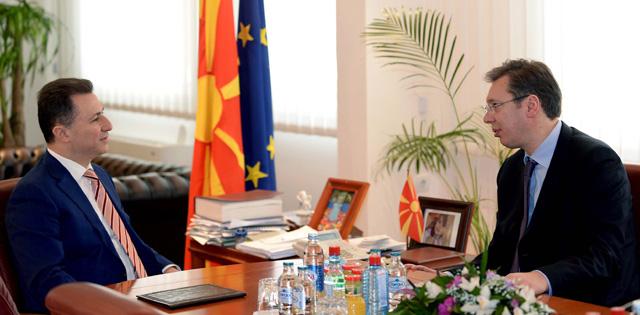
The governments of Macedonia and Serbia held a joint session in Skopje on Monday that ended with the two countries signing seven cooperation agreements. The two governments signed agreements on cooperation in business, tourism, science and education, culture, sustainable development and environmental protection, as well as an agreement on establishing border procedures for the Tabanovci-Presevo railway crossing and an agreement on holding foreign affairs consultations in 2015-16.
Prime Ministers of Macedonia and Serbia, Mr. Gruevski and Mr. Vucic
“We not only came up with seven agreements, but also with a number of projects that we must finalise, some this year, some in 2016. We have managed to establish mutual interests in all fields”, the Serbian Prime Minister Aleksandar Vucic said after the session which was attended by 10 out of 16 Serbian ministers.
The two countries discussed European integration, regional cooperation, new infrastructure projects, including a rail link to Greece, and gas supplies, as well as the idea of opening joint diplomatic and consular missions in some countries.
The Macedonian Prime Minister Nikola Gruevski said that the Serbian government visit was proof of good relations between the two neighbouring countries and a basis for closer economic cooperation. “We had a productive session and I believe that the contracts we have signed will bring benefits to both countries,” Gruevski said.
This was the second joint session held by the Macedonian and Serbian governments since the Progressive Party took power in Serbia in 2012. The first joint session was held in 2013 in Belgrade.
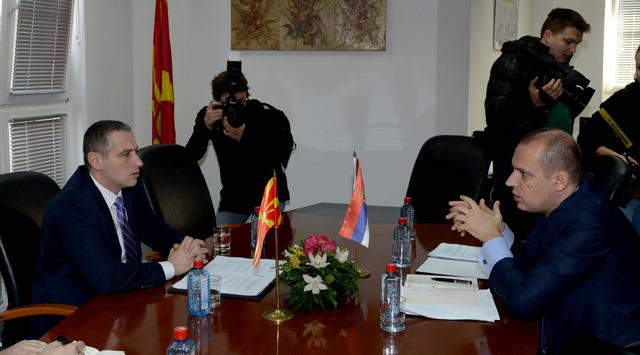
Highlight on health: The Governments of Macedonia and Serbia joint session was used for a separate bilateral meeting of the Macedonian Minister of Health, Mr. Nikola Todorov and his colleague, Dr. Zvonimir Lonchar, Serbian Minister of Health.
Macedonian and Serbian Ministers of Health, Mr. Todorov and Mr. Lonchar
The two Ministers discussed further improvement of the already good bilateral collaboration, in a friendly atmosphere. Minister Lonchar emphasized their commitment to introducing e-health, the area where Macedonia has already very much advanced. They agreed that the Serbian technical experts visit next week Macedonia over technical discussion with their Macedonian colleagues on the e-health topic and presentation of the Macedonian experience.
Minister Todorov informed his colleague of the interest in further education (specialization) and training in health abroad. Minister Lonchar supported this endeavor and offered 10 specializations for Macedonian doctors, under the same conditions for the Serbian doctors.
Minister Todorov further offered an initiative for joint participation at the pharmaceutical market (joint procurement of vaccines), which was accepted by Minister Lonchar and was also presented at the two Governments’ joint session.
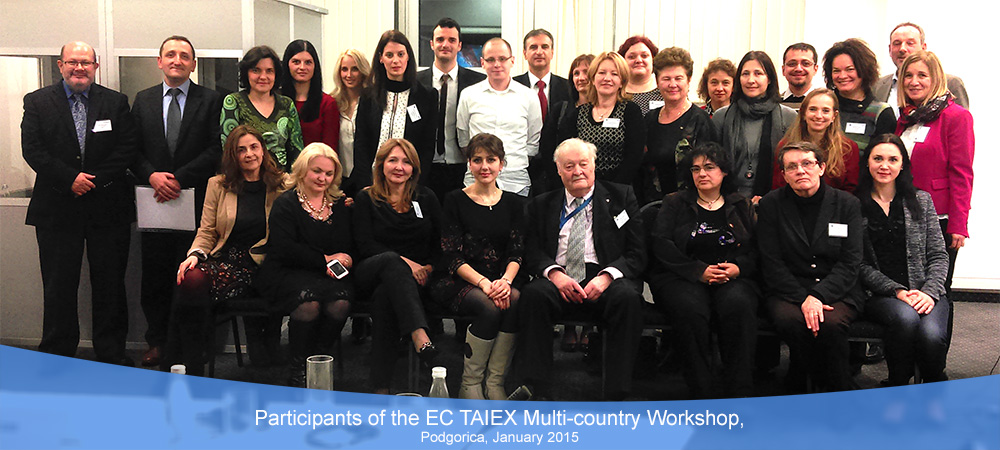
Organized by the Technical Assistance Information Exchange instrument of the European Commission (TAIEX) in cooperation with the Ministry of Health of Montenegro on behalf of SEEHN and the Regional Health Development Centre (RHDC) on NCDs of Montenegro, the Multi-country Workshop on Monitoring Non-communicable Diseases and Health Inequalities related to Non-communicable Diseases took place in Podgorica, Montenegro on 29–30 January 2015.
The workshop had close to 80 participants from the Member States of the SEE Health Network[1], Kosovo[3] and Turkey.
Part of a series of capacity-building activities led by the RHDCs in Podgorica supported by EC TAIEX, the Workshop aimed at identifying and proposing minimal set of indicators on NCDs and related health inequalities to be implemented and reported by all SEEHN countries, Kosovo* and Turkey.
The EC TAIEX Workshop Report summarizes the conclusions made by key experts from the International organizations, including WHO Europe, and considers the experiences of representatives of the EU Member States and of the SEEHN countries as well as Kosovo and Turkey in the field of monitoring NCDs and health inequalities related to NCDs. It also provides recommendations for further action in terms of developing uniform NCDs’ monitoring system for all SEEHN countries.
[1]SEE Health Network: The SEE Health Network was established in partnership with the Council of Europe and the WHO Regional Office for Europe within the framework of the Stability Pact Initiative for Social Cohesion. It comprises of Republic of Albania, Bosnia and Herzegovina[2], Republic of Bulgaria, Republic of Croatia, Republic of Moldova, Montenegro, Romania, Republic of Serbia, the State of Israel and The Former Yugoslav Republic of Macedonia;
[2]Ministry of Civil Affairs on the behalf of Bosnia and Herzegovina’s health authorities: Ministry of Civil Affairs of Bosnia and Herzegovina, Federal Ministry of Health, Ministry of Health and Social Welfare of the Republic of Srpska and Department of Health and Other Services of Brčko District
[3]Kosovo*: KS=Kosovo*; this designation is without prejudice to positions on status, and is in line with UNSCR 1244 and the ICJ Opinion on the Kosovo Declaration of Independence
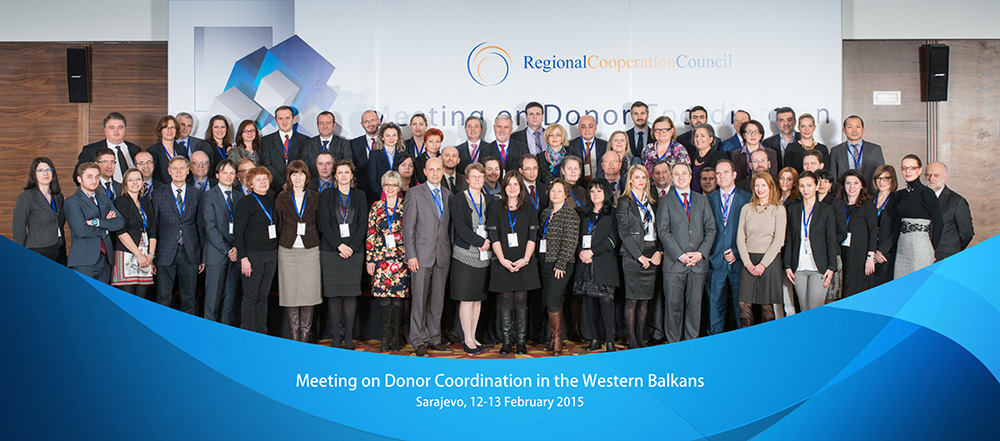
A two-day meeting on Donor Coordination in the Western Balkans was held in Sarajevo, Bosnia and Herzegovina under the auspices of the Regional Cooperation Council (RCC). Gathering nearly hundred participants from major donor countries and organizations, the meeting focused on the mapping and coordination of donor activities in the Western Balkans, particularly in view of the implementation of the SEE 2020 Strategy “Jobs and Prosperity in a European Perspective”
Furthermore, it was agreed that RCC would host an annual donor coordination conference for the Western Balkans which would provide not only for a better alignment between regional development priorities, donors’ sectorial objectives and the priorities set out in the SEE 2020 Strategy but also for a more efficient use of the available funding.
Also adopted was the proposal to develop a single regional donor coordination database that will contribute to better prioritisation of actions, both nationally and regionally, and will help align the donor interventions with the needs of the region.
Leading structure at the Medical Faculty and a solid educational center for training of public health professionals and managers, the Faculty of Public Health in Pleven, Bulgaria invites all interested colleagues and public health professionals to join its Jubilee Scientific Conference and celebrate its 10th anniversary.
Titled “Public Health Policy and Practice”, the conference will take place on October 1-3, 2015. It will provide health professionals with the opportunity to exchange valuable experience and ideas as well as enhance their professional connections in the field of public health research and practice for prevention and control of public health processes, and health systems’ development.
The interested candidates can download the registration form here and learn more about the abstract submission guidelines and the preliminary program here.
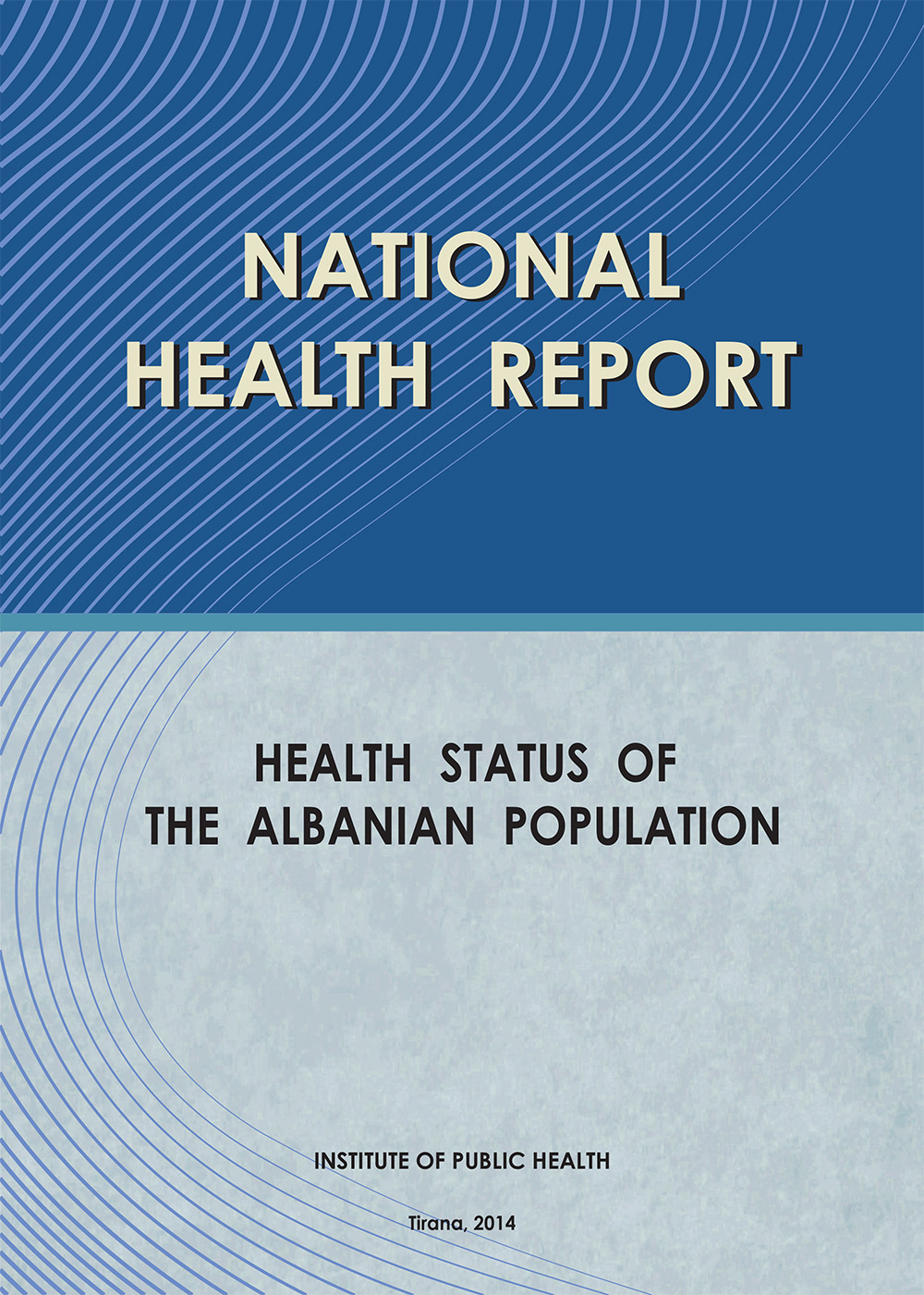
Titled “The Health Status of the Albanian Population”, the 2014 National Health Report of Albania was published by the Institute of Public Health of Albania with the support of the UNICEF country office.
Based upon a desk review of the official sources of information on health status and health care system in the country, the Report provides a broad overview of the current health status of the Albanian population by highlighting the mortality and morbidity patterns in the past twenty years as well as the major risk factors and other determinants of disease and death in the Albanian population. The Report also describes the health care resources, workforce distribution, health care utilization and the costs involved in the Albanian health sector.
Comparing certain aspects of the Albanian health system to the relevant ones in the neighbouring countries, the National Health Report provides solutions to the problematic issues, ultimately aiming at supporting better evidence-based health policy making and priority setting. Consequently, it may serve as a baseline document for a cross-national comparison at both regional and international level.
The complete 2014 National Health Report of Albania is available here.
An open-access international peer-reviewed journal involving all areas of health sciences and public health in particular, the South Eastern European Journal of Public Health (SEEJPH) recently published a review paper titled “The South Eastern Europe Health Network: A model for regional collaboration in public health”.
Written by several key participants in the SEEHN operation, the article underlines the importance of inter-country alliances to the economic development and social progress in the past several decades through the example of the South Eastern Europe Health Network (SEEHN) which has achieved tangible improvements in the regional governance for health.
Summarising the main accomplishments of the network and highlighting the keys to its success, the article follows the main milestones in network development, including its foundation under the Stability Pact’s Initiative for Social Cohesion and the three ministerial forums that have shaped its evolution, in order to show how it can constitute a model for regional collaboration in public health and thus provide several important lessons for public health leaders worldwide.