
News
Director of SEEHN Secretariat Dr. Mira Jovanovski Dasic had an interview for the National Television of Montenegro on 12 July 2017.
n
The aim of the interview was for her to explain the significance of SEEHN and to give a brief overview of the existing cooperation between the SEE countries.
n
The director said that being in charge of the SEEHN Secretariat is yet another professional challenge for her and that her main goal is to do as much as she can in this capacity in order to implement new initiatives for the benefit of all the member states within the SEE Health Network.
n
The SEE Health Network, as she explained, is a multi-government organization working to boost public health in SEE.
n
T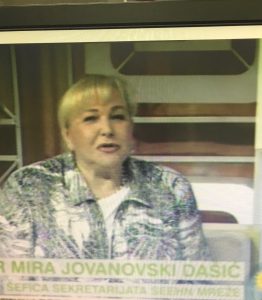 he Network acts as a regional resource, knowledge base and repository of expertise, with strong links to European and global organizations as partners.
n
South Eastern Europe Health Network (SEEHN) operates at both political level with ministries of health and technical with Regional Health Development Centers (RHDC).
n
In addition, the SEEHN Presidency rotates among the health ministries of Member States every six months, with now being presided by Bulgaria, and subsequently by Israel.
n
At technical level, RHDC provide technical support to specific health activities addressed at regional public health level. The RHDCs play a major role in coordinating essential public health operations, standardizing protocols and procedures, exchanging data securely and reliably and establishing joint training programmes for experts.
n
Organizing such initiatives at the regional level not only improve the quality of the processes, but involve substantial rationalization of resources. Accordingly SEEHN will make a roster of technical experts who belong to the SEE region and this will be used as technical resource.
n
As a first step towards upgrading the work of the RHDC, an event at the beginning of September 2017 will be organized in Skopje, Republic of Macedonia, where all RHDC directors and partners will gather.
n
And last, but not the least, Dr Jovanovski-Dasic stated that Health Systems are not perfect, but that the MS of SEEHN must try to improve their efficiency by reaching these main goals:
nn
n
- Sustaining and strengthening the regional cooperation in public health in South-eastern Europe
n
- Achieving the United Nations Sustainable Development Goals (SDGs)
n
- Striving universal health coverage (UHC) for every person
n
- Reinforcement of regional and national action preparedness and response to emergencies and related population movement and migration
n
News
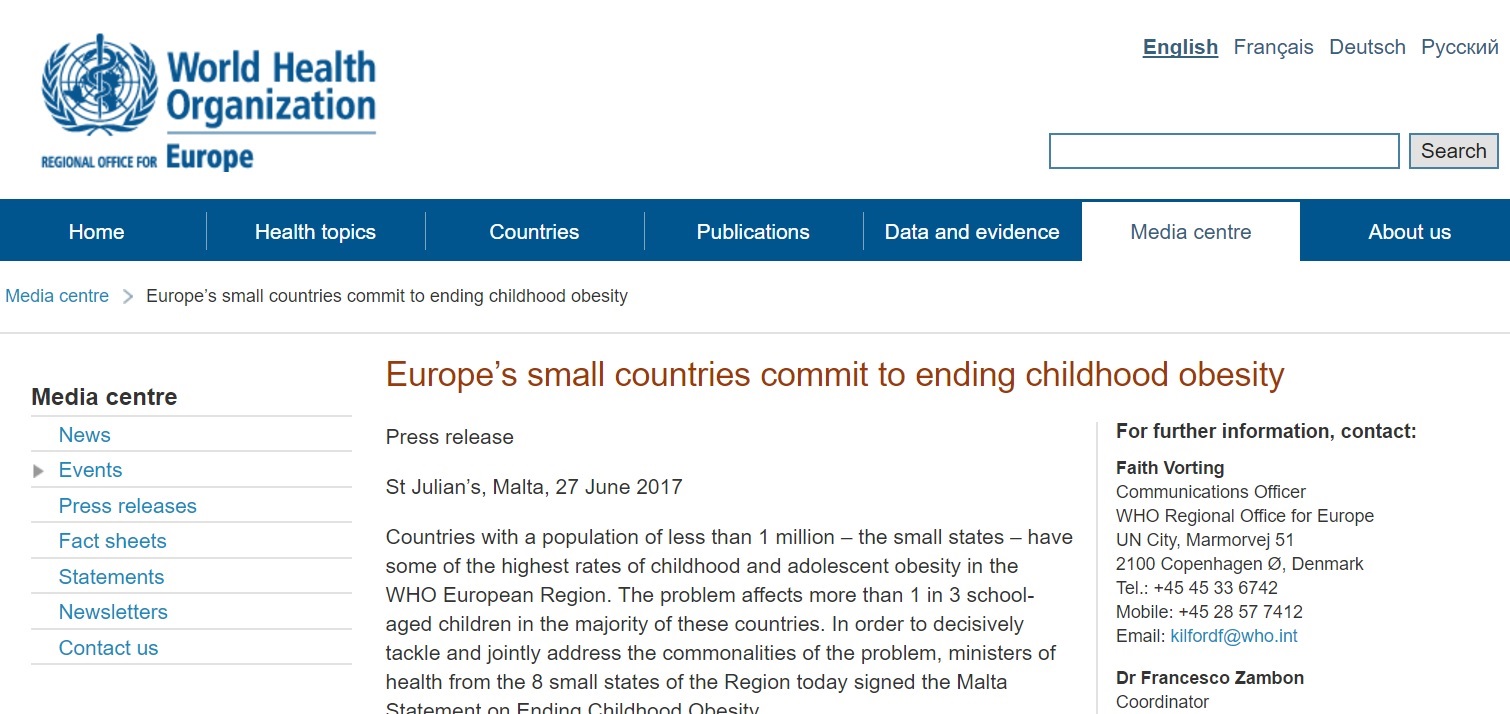
Countries with a population of less than 1 million – the small states – have some of the highest rates of childhood and adolescent obesity in the WHO European Region. The problem affects more than 1 in 3 school-aged children in the majority of these countries. In order to decisively tackle and jointly address the commonalities of the problem, ministers of health from the 8 small states of the Region today signed the Malta Statement on Ending Childhood Obesity.
n
“With almost a third of school-age children overweight or obese in many countries in Europe, we must boost children’s access to healthy food and opportunities to be physically active,” says Dr Zsuzsanna Jakab, WHO Regional Director for Europe. “Children deserve policies that protect them from obesity. Small countries, with their unique circumstances and reach, can innovate, transform and develop the recipe for success so society can address this challenge that threatens children’s futures.”
n
“Malta is aware of the need to tackle childhood obesity, and for the last 6 months has championed addressing childhood obesity, as one of the major themes of Malta’s EU Presidency. During these months Malta has launched a set of procurement guidelines for schools and other entities who work closely with children to procure healthy foods,” says the Maltese Minister for Health, Chris Fearne. “Let’s lead by example, let’s offer our children the healthy options for life.”
n
In the Statement, ministers agree to join forces and launch comprehensive initiatives to address obesity in children. They call on governments to ensure stronger restrictions on the marketing of foods high in saturated fat, free sugars and salt to children; to promote clear and easy-to-understand labelling; and to improve the nutritional composition of food products. These efforts are in line with the European Food and Nutrition Action Plan 2015–2020, the Physical Activity Strategy for the WHO European Region 2016–2025 and the recently adopted European Council conclusions on halting the rise in childhood overweight and obesity.
n
The Statement also acknowledges that governments can contribute to better diets and increased physical activity levels in populations through changes to the wider environments and contexts in which people make daily food and activity choices.
n
The Malta Statement was a key outcome of the 4th High-level Meeting of Small Countries, held in St Julian’s, Malta, on 26–27 June 2017. The WHO Regional Office for Europe and the Ministry of Health of Malta jointly organized the Meeting under the framework of the WHO Small Countries Initiative.
nn
Building resilient and healthy communities
n
The broad theme of the High-level Meeting was resilience at individual, community and system levels. Despite being vulnerable to many external threats, from financial to environmental, small countries have inherent capabilities to respond, bounce back and even thrive with innovative solutions. This resilience is a fundamental component of health systems, and essential for implementing Health 2020, the European policy framework for health and well-being. All 53 Member States of the Region endorsed Health 2020 in Malta in 2012.
n
On this theme, the Meeting saw the launch of the new publication “Building resilience: a key pillar of Health 2020 and the Sustainable Development Goals”, developed under the framework of the Small Countries Initiative. It presents the results of studies conducted in 3 small countries – Iceland, Malta and San Marino – that demonstrate how the effects of strengthening resilience at the individual level ripple through communities and society, and vice versa, impacting health.
nn
First WHO Collaborating Centre in Malta
n
WHO also designated the Islands and Small States Institute at the University of Malta as the WHO Collaborating Centre on Health Systems and Policies in Small States. The Institute will work with WHO as a centre of excellence to develop frameworks and policies for strengthening resilience in small-state health systems; co-organize capacity-building events on health system leadership and governance in the specific contexts of small states; support health information systems and evidence generation in small states; and develop appropriate performance assessment mechanisms for small-state health systems.
n
The Institute has a notable track record of high-level policy research on resilience, economy, environment and health in small states. Its Vulnerability Index, developed for small states, is acknowledged as a seminal work in the field. It has led to worldwide interest in and many quantitative studies on economic vulnerability and resilience.
n
WHO collaborating centres include research institutes and units of universities or academies designated by the WHO Director-General to carry out activities in support of the Organization’s programmes. There are currently over 700 WHO collaborating centres in 80 countries around the world.
nn
About the WHO Small Countries Initiative
n
In 2013, the WHO Regional Office for Europe launched the Small Countries Initiative as a platform for countries in the Region with a population of less than 1 million to share their knowledge on implementing Health 2020 and the Sustainable Development Goals. The 8 members of the initiative are: Andorra (host of the 2nd High-Level Meeting of the Small Countries), Cyprus, Iceland, Luxembourg, Malta (host of this year’s meeting), Monaco (host of the 3rd High-Level Meeting), Montenegro and San Marino (host of the 1st High-Level meeting and co-leader of the Initiative).
n
Two subnetworks operate within the Initiative: the Small Countries Health Information Network (SCHIN), which addresses the specific challenges that small countries face in health information systems and reporting; and a network of communication professionals and journalists, which focuses on communicating the 2030 Agenda for Sustainable Development and on media reporting on health inequities.
n
Source: http://www.euro.who.int/en/media-centre/sections/press-releases/2017/europes-small-countries-commit-to-ending-childhood-obesity

News, News from the SEEHN Member States
The Head of SEEHN Secretariat, Dr Mira Jovanovski – Dasic, hosted the 6th meeting of SEEHN Executive Committee on 26 June 2017 in the premises of the Secretariat in Skopje. The Bulgarian SEEHN National Health Coordinator and Chief Health Inspector from the Ministry of Health of Bulgaria, Dr Angel Kunchev, also attended the meeting, since the Bulgarian Ministry of Health will take over the next six-month SEEHN Presidency on 1st July. At the meeting, planned activities, meetings and events for that period were discussed. Important decisions were also taken with the aim of boosting and facilitating the work of the Secretariat and the projects of the Network.

News, News from the SEEHN Member States
Dr. Mira Jovanovski Dasic, Director of SEEHN Secretariat earlier this week had a meeting with H.E. Ms.Lepa Babic, Ambassador of Bosnia and Herzegovina to the Republic of Macedonia.
At the beginning, Dr. Jovanovski Dasic expressed her gratitude to Bosnia and Herzegovina for the strong support to SEEHN activities over the past 15 years. She also gave an insight into the recent accomplishments. Namely, she made an introduction to the newly adopted Chisinau Pledge as a direct result of the SEEHN Fourth Ministerial Forum on “Health, well-being and prosperity in South-Eastern Europe (SEE) by 2030 in the context of the 2030 Agenda for Sustainable Development”, she presented the structure of the Network, the ongoing activities and the road map for future ones. She also gave an overview of the work of the Regional Health development Centers (RHDCs) while particularly acknowledging their resilient work on Mental Health based in Sarajevo, BiH. She emphasized the importance of the SEEHN Secretariat continuing working on strengthening health systems and the Network’s performance throughout the SEE Region.
Madam Ambassador Babic congratulated Dr. Jovanovski Dasic on assuming the office and stressed out the significance of a joint initiative tackling contemporary health issues existing in the region thus offering her assistance in terms of diplomatic correspondence in the future.
Maintaining a strong relationship with the Republic of Macedonia as the host country as well as intensification of the connections with the diplomatic representatives of the SEEHN Member States with seat in Skopje was also recognized as a top priority by Dr. Jovanovski Dasic.
Information on mutual areas of interest and opinions regarding technical possibilities for the consolidation of the Network have also been exchanged in a friendly atmosphere.

News, News from the SEEHN Member States
Strengthening the partnership at local level June 21, 2017 Skopje, Republic of Macedonia – Director of the SEEHN Secretariat Dr Mira Jovanovski Dasic and International Organization for Migration (IOM) Head of Office in the Republic of Macedonia MSc.Sonja Bozinovska Petrusevska, met at the Seat of the SEEHN Secretariat, Skopje, Republic of Macedonia.
Future collaboration and possibilities for strengthening the partnership of the SEEHN and the IOM were discussed.
Within its Migration Health Division (MHD), the International Organization for Migration (IOM), in its role of United Nations Migration Agency, delivers and promotes comprehensive, preventive and curative health programmes which are beneficial, accessible, and equitable for migrants and mobile populations. The IOM’s Head of Office, Ms Bozinovska-Petrusevska has explained the activities implemented by IOM, as a support to the country in addressing the complex migration situation, but also pointed out to the longer-term activities related to renovation of hospitals and donation of medical equipment that contributed towards enhanced conditions for health assistance to migrants and refugees, but also for the local population inhabited in the areas affected by the migration flows. Ms. Bozinovska-Petrusevska pointed out to the future cooperation perspectives between IOM Skopje and SEEHN with focus on the health aspects of the human mobility, transfer of health related expertise, strengthening of the regional referral and cooperation mechanisms, as well as enhancing the overall capacities for provision of health assistance to the vulnerable categories.
Several SEEHN countries are facing an increased influx of migrants and refugees seeking to cross the SEE countries to reach their final destination Western European countries. These large – scale arrivals of refugees and migrants represent great public health challenge. Taking adequate measures for securing their health and safety, as well as securing public health safety of the SEE countries and their citizens is of key importance.
Dr Jovanovski Dasic highlighted that in order to have national and better regional and international response there is need to strengthen the collaboration with all relevant international stakeholders, WHO, UNHCR, UNFPA, IOM and other acters who can improve the mechanisms for providing urgent assistance to the countries in need.
This week IOM and UNHCR are organizing in Skopje a Conference on the global compact of migration and global compact of migrants. IOM invited Secretariat of SEEHN to participate to this event, as a first step for further collaboration and strengthening of the partnership.

News, News from the SEEHN Member States
Director of SEEHN Secretariat Dr. Mira Jovanovski Dasic met today at the Seat of the Secretariat in Skopje Prof. Dragan Gjorgjev, Director of the SEEHN Regional Health Development Center (RHDC) for strengthening public health capacities placed in the Institute for Public Health in Skopje, Republic of Macedonia.
Dr. Dasic made an overview of the current developments related to the SEEHN. She shared medium and long-term plans aiming to identify challenges and opportunities for strengthening technical work of the SEEHN, in the light of the implementation of the recently endorsed Chisinau Pledge. The role of the SEEHN Regional Health Development Centers is instrumental to that effect. The results will be accelerated with the greater involvement of the SEEHN partners Dr. Dasic emphasized.
The discussion highlighted the need to guide the work of Regional Health Development Centers towards implementation of the Chisinau Pledge and increasing and strengthening partnerships at the national and sub-national levels. It has been concluded that the Regional Health Development Centers should aim to fulfilling the WHO requirements to become WHO Collaborative Centers.

News, News from the SEEHN Member States
Director of SEEHN Secretariat Dr. Mira Jovanovski Dasic had today a meeting with H.E. Fatos Reka Ambassador of the Republic of Albania to Republic of Macedonia.
Dr. Dasic thanked for the support of the Republic of Albania to the SEEHN and partnership that already reached 15 years. She informed the Ambassador about the recent developments, namely the SEEHN Fourth Ministerial Forum “Health, well-being and prosperity in South-Eastern Europe (SEE) by 2030 in the context of the 2030 Agenda for Sustainable Development” concluded with the signing and approval of the Chisinau Pledge. Furthermore SEEHN Director presented the current SEE Network activities and future plans of SEEHN, including readiness to continue working on health issues in the Region and strengthening the role of the Secretariat itself.
Dr. Dasic emphasized the importance of the strong relationship with the host country Republic of Macedonia, as well as through connecting with the diplomatic representatives of the member states of SEEHN with seat in Skopje (Albania, Bosnia and Herzegovina, Bulgaria, Montenegro, Romania and Serbia), also with the ones with seat in Sofia for Moldova and in Zagreb for Israel, that is expected to facilitate flourish the regional partnership.
Ambassador congratulated the Montenegrin NATO accession, pointing out that this is the great achievement of Montenegro and important step for the entire region.
The interlocutors also exchanged opinions regarding technical and legal aspects with the view to allow Republic of Albania to prepare the ground for the adoption of the amended SEEHN Memorandum of Understanding.

News, News from the SEEHN Member States
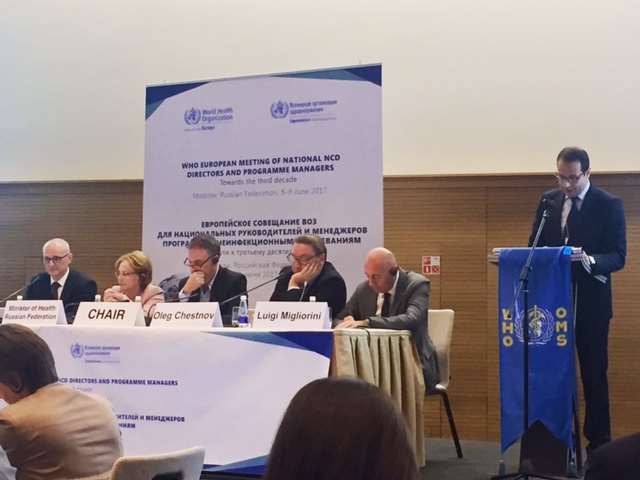
Delivered on behalf of the SEEHN by Mr. Andrei Cazacu, Head of the International Affairs and European Integration
News
Delivered on behalf of the SEEHN by Dr. Igor Spiroski the National Coordinator for Noncommunicable diseases from FYR of Macedonia

News, News from the SEEHN Member States

News, News from the SEEHN Member States
Sofia, Bulgaria – A one day workshop organized by the Ministry of Health with support of the World Health Organisation gathered together representatives of health, education, social affairs, foreign affairs, academia, World Bank, UNICEF, European Commission and civil society to discuss Bulgarian National Health Strategy (2014-2020) implementation towards achieving WHO Policy Framework for Health and Wellbeing – Health 2020 indicators and Sustainable Development Goals and Targets.
Director of the SEEHN, Dr. Mira Jovanovski Dasic has presented the SEEHN to the participants and informed of the ongoing and upcoming technical work of the SEEHN. She pointed out that all the SEEHN Member States have developed national health policies in line with the European policy framework for health and well-being – Health 2020, some of those have started localizing Sustainable Development Goals and Montenegro has committed to voluntary reporting on indicators that are relevant to Montenegro. She has also presented the Chisinau Pledge as the SEEHN policy framework aligned with international commitments. Dr Dasic emphasized the important role of WHO as the biggest partner of the SEEHN in support to policy developments in the Member States aimed to leave no one behind, as well as the role of the SEEHN to the same effect.
Rich discussion and open sharing, added value to the workshop conclusions. The workshop has demonstrated good capacities of the national public health community, interest of the international community present in Bulgaria to support and openness of the civil society for outcome-oriented policy making that will organize intersectoral efforts of the Government and the society to improve health and wellbeing of the population.

News, News from the SEEHN Member States
Seat of the SEEHN Secretariat Skopje, Macedonia
Today the Director of the SEEHN Secretariat Dr. Mira Jovanovski Dasic had a fruitful discussion on future activities with Dr. Doina Bologa, UNFPA Representative for Bosnia and Herzegovina, Country Director for Serbia, the Former Yugoslav Republic of Macedonia and Director for Kosovo and Senior Emergency Coordinator for Greece, in good partnership atmosphere.
It was highlighting that is necessary to improve our collaboration on activities of joint interest for the benefit of the SEEHN countries. The collaboration can benefit from UNFPA technical expertise and UNFPA as a partner in a common resource mobilization.
UNFPA Country Office in the Republic of Macedonia will organize on 28 June – 01 July 2017, in Skopje, a sub-regional ToT workshop for improving maternal and new-born health. The course will focus on the Review of all maternal deaths and severe complications for health professionals’ recommendations for implementation, periodic evaluation and actions.

News, News from the SEEHN Member States

News, News from the SEEHN Member States
Building resilient communities through planning for health and wellbeing at local level
Director of the SEEHN Secretariat Dr Mira Jovanovski Dasic and Program Manager, Program for National Health Policies, Division for Policy and Governance for Health and Wellbeing, Regional Office for Europe, Snezhana Chichevalieva, met in the Seat of the SEEHN Secretariat, Skopje, Republic of Macedonia. They discussed possibilities for collaboration of the SEEHN and the WHO, Regional Office for Europe for building resilient communities through planning for health and wellbeing at local level in the SEE. Joint initiative’ beneficiaries would be interested SEEHN Member States with already developed structures at local level to support such an initiative.
Local health policy planning is expected to channel intersectoral efforts of stakeholders at local level to improve health and wellbeing and build resilient communities. Providing support and guidance to local actors for health and wellbeing will ensure an effective integration of the national and local priorities within the contemporary policy context of WHO European policy framework for health and wellbeing- Health2020 and 2030 Agenda. Ministers of Health of the SEEHN member States in the recently adopted SEEHN Chisinau Pledge (March, 2016) have committed to achieve goals and indicators set up by both policy frameworks.

News, News from the SEEHN Member States
During the 70th World Health Assembly held in Geneva from 22 to 31 of May 2017, Mrs. Ruxanda Glavan, Minister of Health of Republic of Moldova in her capacity as President of the SEE Health Network, on behalf of 9 member states delivered a Joint statement on the Chisinau Pledge and defined commitments of the Network for interventions in the forthcoming period.nnThe full text of the Statement is available at: http://seehn.org/category/publications/jstatements/

News, News from the SEEHN Member States
After successful completion of the SEEHN Fourth Ministerial Forum “Health, well-being and prosperity in South-Eastern Europe (SEE) by 2030 in the context of the 2030 Agenda for Sustainable Development”, which concluded with signing and approval of the Chisinau Pledge, the SEEHN Secretariat continued its activities on organizing the signing by partners which did not attend the Forum.
In this framework, Centre for Regional Policy Research and Cooperation “Studiorum” expressed their commitment, through signing the Chisinau Pledge during a bilateral meeting, between Dr. Mira Jovanovski Dasic, Head of SEEHN Secretariat and Dr. Neda Milevska Kostova, Executive Director of CRPRC “Studiorum”, held on 11 of May 2017 in the premises of SEEHN Secretariat.
This meeting was also used for mutual exchange of information and discussion on possible areas of cooperation in the future. The willingness and readiness to develop and implement joint projects has been expressed and will be discussed in details, during the forthcoming meetings.
News, News from the SEEHN Member States
The SEEHN Fourth Ministerial Forum “Health, well-being and prosperity in South-Eastern Europe (SEE) by 2030 in the context of the 2030 Agenda for Sustainable Development” concluded with the signing and approval of the Chisinau Pledge.
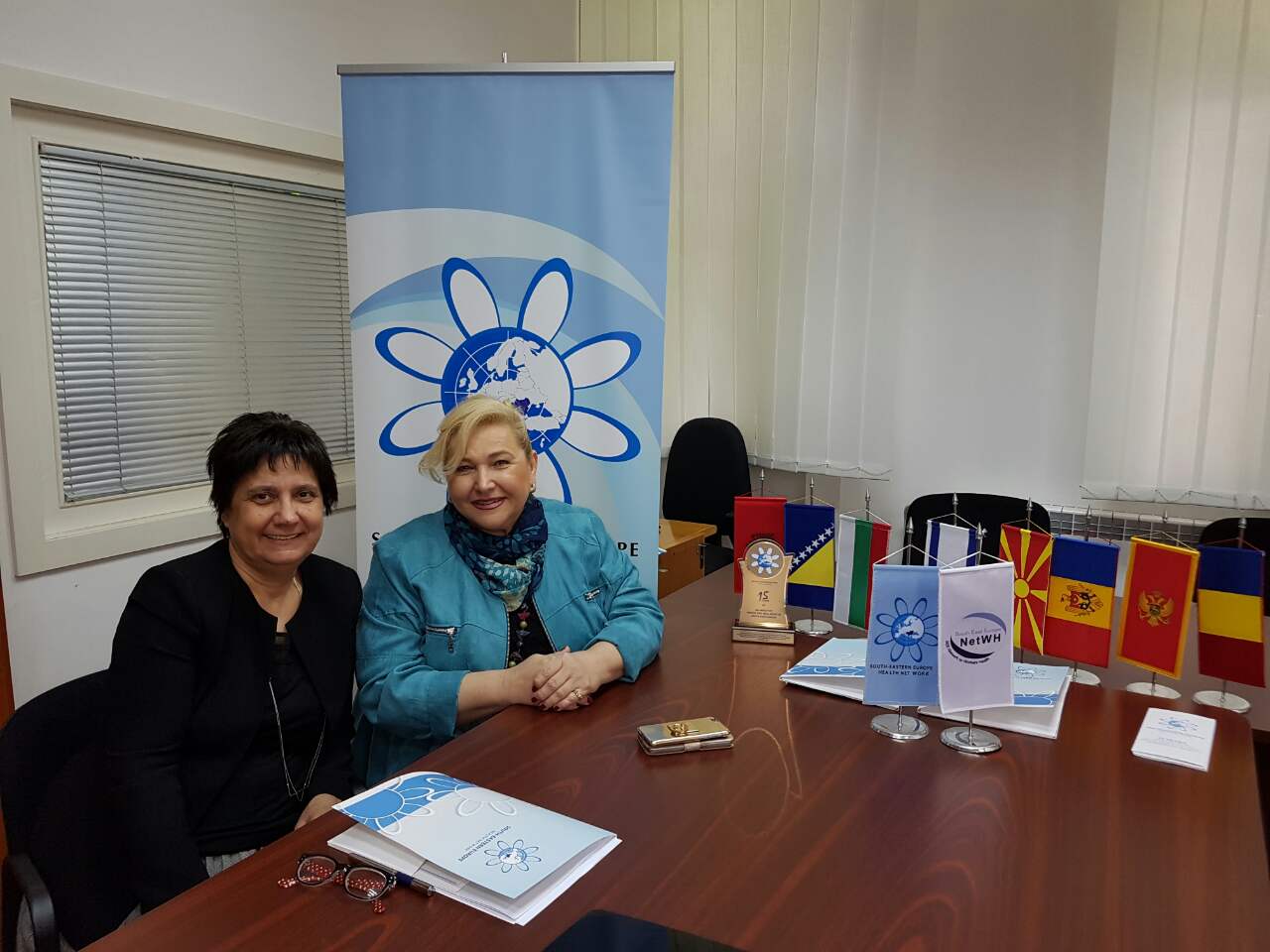
In this framework, SEE Network on Workers’ Health (SEENWH), WHO Collaborating Center expressed their commitment, through signing the Chisinau Pledge during a bilateral meeting held on 09 of May 2017 in the premises of SEEHN Secretariat between Dr. Mira Jovanovski Dasic, Head of SEEHN Secretariat and Prof. Dr. Jovanka Karadžinska-Bislimovska, Coordinator of SEENWH.
This opportunity was used to discuss possible areas for cooperation for the future period.
In addition, upon the request of the SEEHN director, Dr. Dragan Miakoski from Institute of occupational health of the Republic of Macedonia (IOHRM) delivered his presentation prepared for the World Health Day on “Occupational diseases associated with depression”. The presentation included data from a research conducted among health workers in the Republic of Macedonia, which showed shortages at different levels.
Ministerial Forum, News, News from the SEEHN Member States
 The Fourth Forum, under the theme “Health, well-being and prosperity in South-Eastern Europe by 2030 in the context of the 2030 Agenda for Sustainable Development” was held in Chisinau, Republic of Moldova on 3-4 April 20017.
The Forum was hosted by The Government of the Republic of Moldova and organized jointly by the South-eastern Europe Health Network in collaboration with the WHO Regional Office for Europe.
The high-level representatives of governments in the SEE region and beyond, discussed in an open and constructive atmosphere and identified common challenges, strategic achievements and priorities of the SEE regional cooperation in public health. They mutually introduced joint subregional and national actions in the SEE region, for implementing and achieving the United Nations Sustainable Development Goals (SDGs), with the objective of better health, equity and accountability, as high priority for underpinning political cooperation and economic development in the SEE region.
More than 15 years of SEE cooperation (2001–2016) is streamlining towards the global and European efforts, for achieving improved health, equity and accountability, building on major European resolutions, charters, communiqués, treaties, frameworks and action plans, including the new European policy framework for health and well-being, Health 2020.
The endorsement of the Chisinau pledge, by nine south-eastern European countries – Albania, Bosnia and Herzegovina, Bulgaria, Israel, Montenegro, Republic of Macedonia, Republic of Moldova, Romania and Serbia, on April 4th 2017, established the basis for the continuation of the cooperation in public health, in the forthcoming period.
*photos copyright – WHO/Igor Vrabie
nn*photos copyright – WHO/Igor Vrabie
News, News from the SEEHN Member States
The prevalence of depression in the SEEHN is growing, relatively following the pulse of the rest of the countries in Europe, which register an increase of more than 18% between the year 2015 and 2015.
Depression affects people of all ages, from all walks of life and it impacts on people’s ability to carry out even the simplest everyday tasks, with sometimes devastating consequences for relationships with family and friends and the ability to earn a living.
At worst, depression can lead to suicide, now the second leading cause of death among 15-29-year olds.
It is difficult to get precise data on the number of people suffering from depression in the SEE Countries because the reporting of depression disorders is underestimated.
It is affirmative that the perception of depression in the SEE Countries is changing and the knowledge that depression can be prevented and treated is creating better condition for undertaking measurements.
Today, on April 7th the World Health Organization, marked the World Health Day with the campaign theme Depression, aiming to better inform the general population about depression: its causes and possible consequences, including suicide, and what help is or can be available for prevention and treatment.
On this occasion, many events have been organized within the SEEHN Member Countries. Among them, we would like to highlight the press conference that has been held at the premises of the World Health Organization in Sarajevo, with the participation of representatives of the Federal Ministry of Health, the Swiss Agency for Development, a representative of the University Clinical Center in Sarajevo, a representative of user associations Phoenix and the Acting Director of the Regional Health Development Center (RHDC) on Mental Health, Dr. Dunja Smitran.
Since 2011 activities related to Mental Health have been widely covered by the RHDC on MH in Sarajevo
VIDEO LINK:
https://www.facebook.com/WHOBIH/videos/444041119273138/
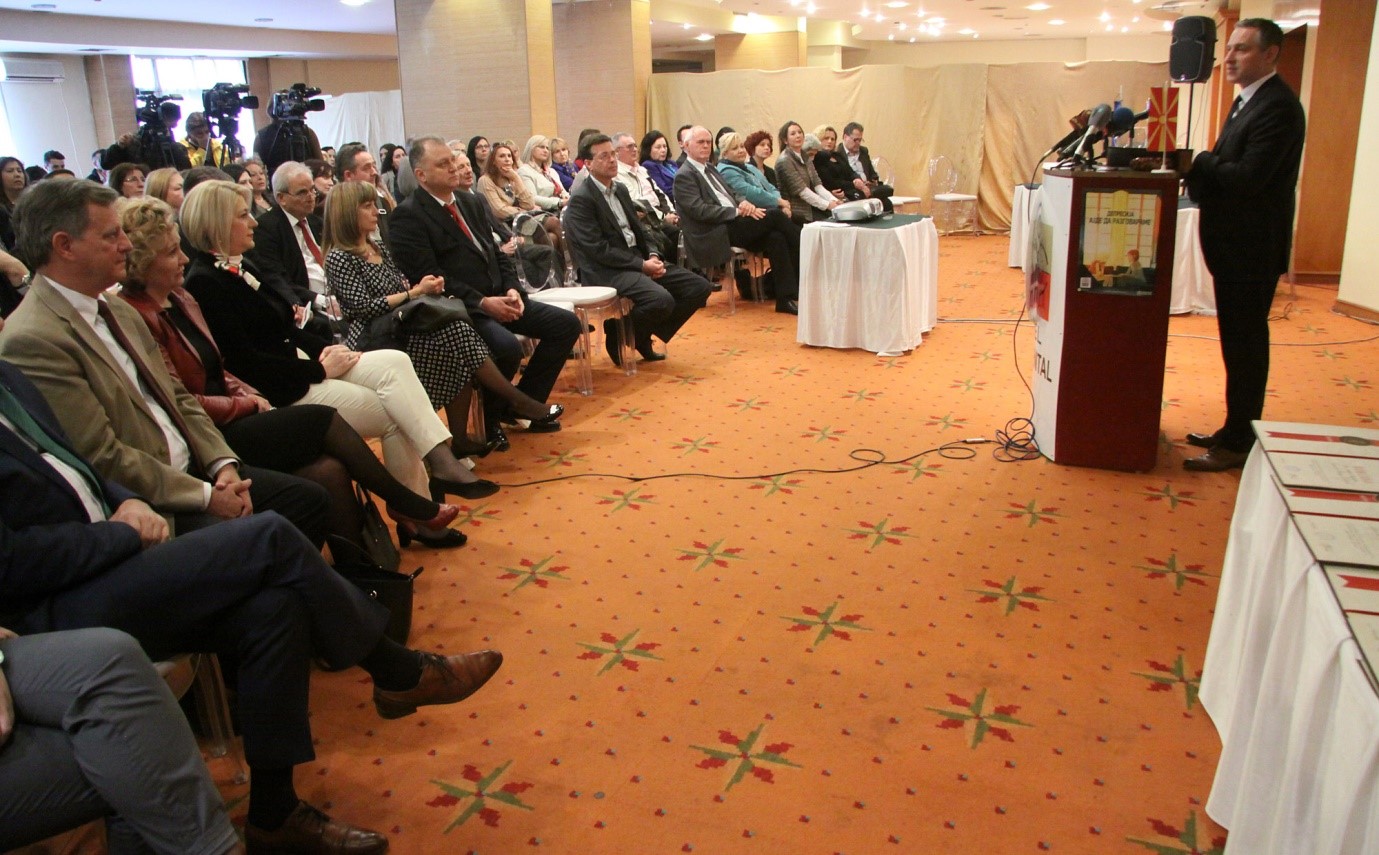
The Director of the SEEHN Secretariat, Dr. Mira Jovanovski Dasic, on April 6th attended the expert meeting on the theme Depression and Mental Health, organized by the Institute for Occupational Health – WHO Collaborating Center in Skopje and Partner of the SEEHN, in line with the campaign of the World Health Organization (WHO) to emphasize the importance of talking about depression as a vital component of recovery.
Dr. Dasic, together with the WHO and other UN representatives, took part at the Celebration of the World Health Day organized by the Macedonian Doctors Association, supported by the Minister of Health of the RM, Mr. Nikola Todorov and the President of the Doctors Association, Dr. Goran Dimitrov.
Depression can be prevented and can be treated. A better understanding of depression will contribute to reducing the stigma attached to this condition and encourage people who are faced with the problem to seek professional help. The campaign slogan is: Depression: let’s talk.

https://youtu.be/Yv_dvG_2VLI
https://youtu.be/hrvptToJnE0
http://kanal5.com.mk/vesti_detail.asp?ID=121337
News, News from the SEEHN Member States
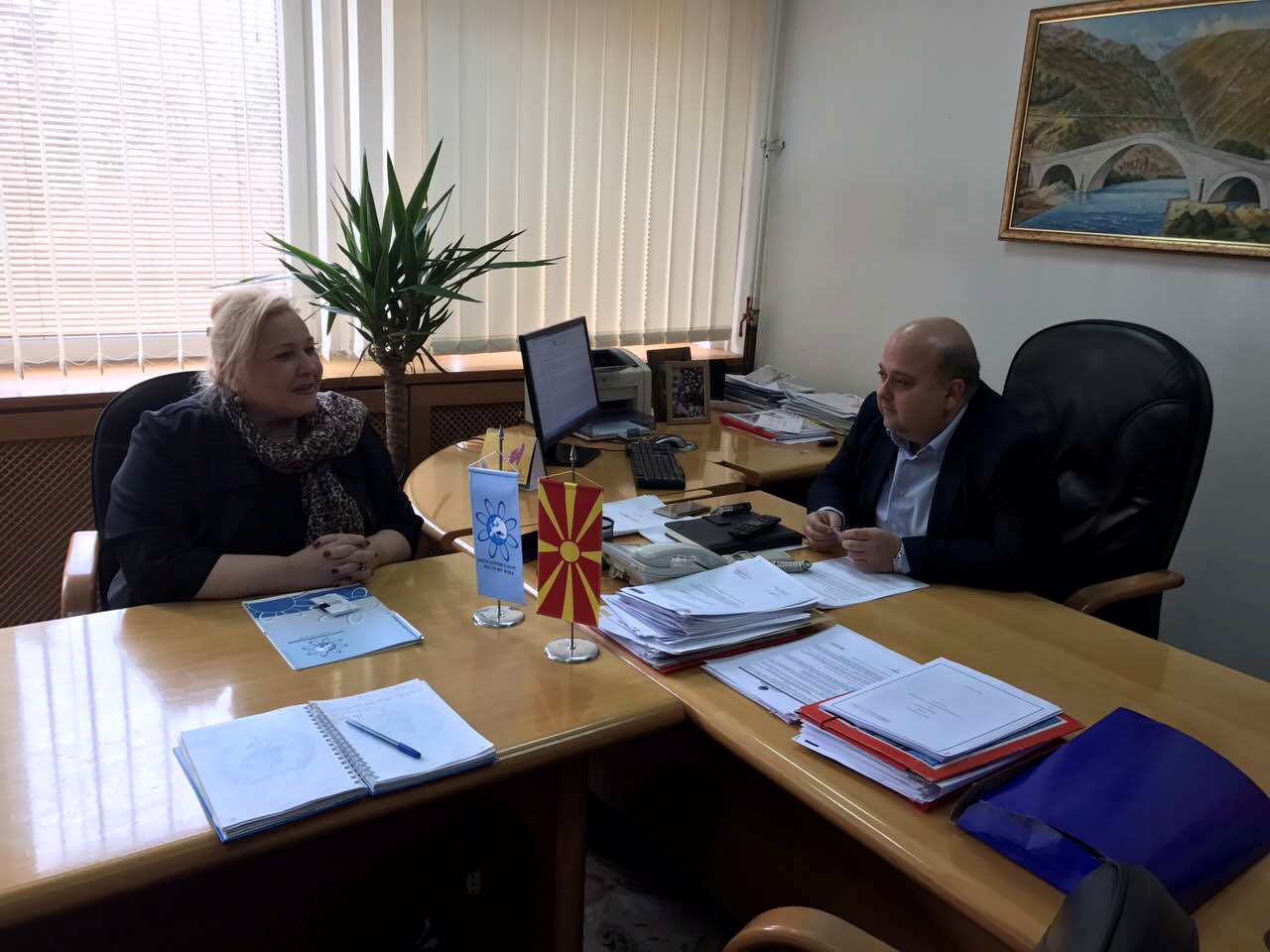
On 27 March 2017 the new Head of the Secretariat of the South-Eastern Europe Health Network (SEEHN) Dr. Mira Jovanovski-Dasic met with the Deputy Minister of Health of the Republic of Macedonia Mr. Jovica Andovski. This was the first official activity of Dr Jovanovski-Dasic in the capacity of the Head of the SEEHN Secretariat.
Deputy Minister Andovski pointed out that the Republic of Macedonia is fully committed to cooperation within the framework of the SEEHN as the key initiative for addressing health issues in the region.
Dr. Jovanovski-Dasic gave an insight into future plans for continuation of the successful collaboration and potentials for its further development. She also shared information about the 4th South-Eastern Europe Health Ministerial Forum which will take place in 3-4 April 2017 in Chisinau, Moldova.
Mr. Andovski and Dr. Jovanovski-Dasic agreed that there are many challenges in this region, in the field of health at different levels: political, technical and administrative. SEEHN in the past 15 years has proved to have huge potentials to be a sustainable initiative of regional ownership. It is expected that SEEHN through the establishment of its own Secretariat will particularly highlight these possibilities .

 he Network acts as a regional resource, knowledge base and repository of expertise, with strong links to European and global organizations as partners.

