News
n
n
n
n
| Vacancy Notice No: 1nnTitle: Administrative Assistantnn |
n
Date: 06 April, 2016nnApplication Deadline: 13 April 2016nnDuty Station: SEEHN Secretariat, Skopje Republic of Macedonia |
n
n
n
nPurpose of the post: The SEEHN secretariat is an institution of the Network that provides technical, managerial and administrative support to the activities of the Network. Under general supervision of the Head of the Secretariat and the direct supervision of the Finance Officer, the incumbent of the post is responsible for the efficient management of the administrative and operational functions involved in the day-to-day running of the Secretariat of SEEHN and the optimal utilization of financial and human resources.nn Objectives of the post:n
n
- To ensure efficient and continuous administration and operation of the SEEHN secretariat.
n
nImplement the SEEHN operational plans agreed at the plenary meetings of the network, within a road map of activities.n
n
- Ensure timely reporting to the Network and the Executive Committee on program implementation activities.
n
nDescription of duties:nProvide support to the SEEHN staff for the management and control of all administrative services and operations. Such services and operations include, procurement, human resources conference, workshops and events management, and office space and equipment arrangements;nReception duties:n
n
- Answer telephone calls, send, receive and file faxes and office mail
n
- Provide information in response to visitor or telephone inquiries
n
- Call the appropriate office to obtain information on specialized and technical questions
n
- Direct authorized visitors to the proper offices, verify and arrange appointments
n
- Preparing/organizing the office for scheduled group meetings.
n
nFile Management:n
n
- Receive and send project mail
n
- Maintain employee contact files
n
- Photocopy materials as required
n
- Assist in office supply procurement.
n
- Perform written translation of various materials, including incoming and outgoing mail;
n
- Assist with logistics for Activities, seminars and other events (request offers from vendors, lodging and travel arrangements, rental equipment, interpreters etc. in coordination with the respective member states staff);
n
- Arrange travel for employees and transportation and accommodation for visitors and consultants;
n
nMeeting Administrationn
n
- Arrange, coordinate and lead administrative preparation for meetings, seminars, workshops, including letters of invitation, costs
n
- calculation and travel requests; assisting with preparation of documents, dispatching of materials and liaising with participants and
n
- others involved.
n
- Prepare presentations using PowerPoint and other software packages on own initiative or on the basis of instructions.
n
- Schedule weekly team and ad hoc meetings, according to schedules and need; taking and preparation of minutes.
n
- Obtain briefing and background materials for meetings, seminars, workshops, etc. to be attended by the team’s professional
n
- staff, checking their availability and ensuring they have the appropriate briefing files and documents.
n
nEducation: nnEssential: University degree in public or business administration, finance or a related field. Desirable: Qualifications in management and/or administration, experience in WHO activity, or in other international organizations.nnFunctional Skills and Knowledge: n
n
- Essential: Sound knowledge of office management, administration, human resources, finance/accounting and budget.
n
- Excellent spreadsheet and writing skills with Microsoft Office TM Word, Excel, PowerPoint, Office, Internet applications and strong communication skills are required.
n
- Desirable: Specialized knowledge of international organizations administrative rules, procedures and practices is an asset.
n
nLanguages: n
n
- Essential: Fluent knowledge of English (both written and verbal);
n
- Desirable: Good knowledge of the languages of the 10 SEEHN countries and other European languages
n
nExperience: n
n
- Essential: At least 1 year of experience preferably at international level in office management and general administration.
n
n The position will be a short-term, three to six months with a possibility of extension. All details such is duration of the contract and remuneration will be discussed with the most successful/qualified candidate.nnCandidates are invited to submit their candidacy letter accompanied by their CV and any other proves of their skills and competences to the SEEHN Secretariat to Maria Ruseva at rusevamaria33@gmail.com and Natasha Lazovska at natasha@on.net.mknn nn
News
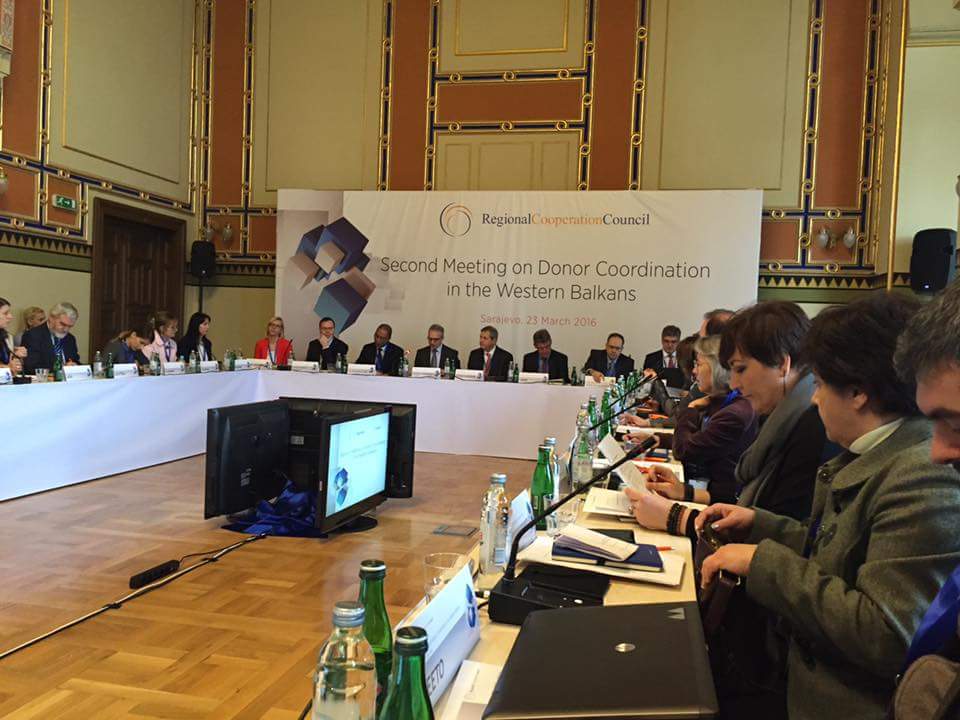
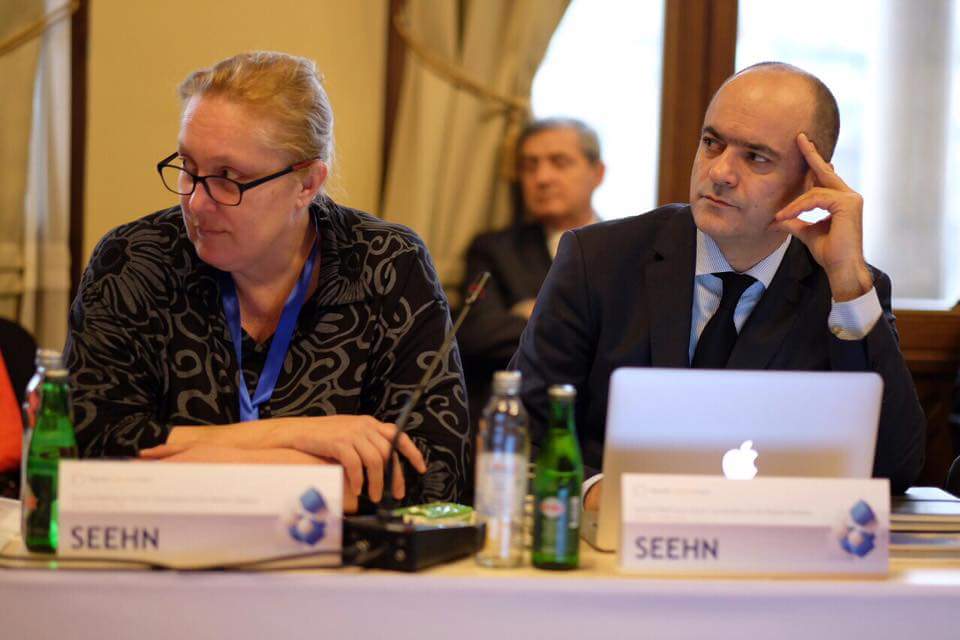
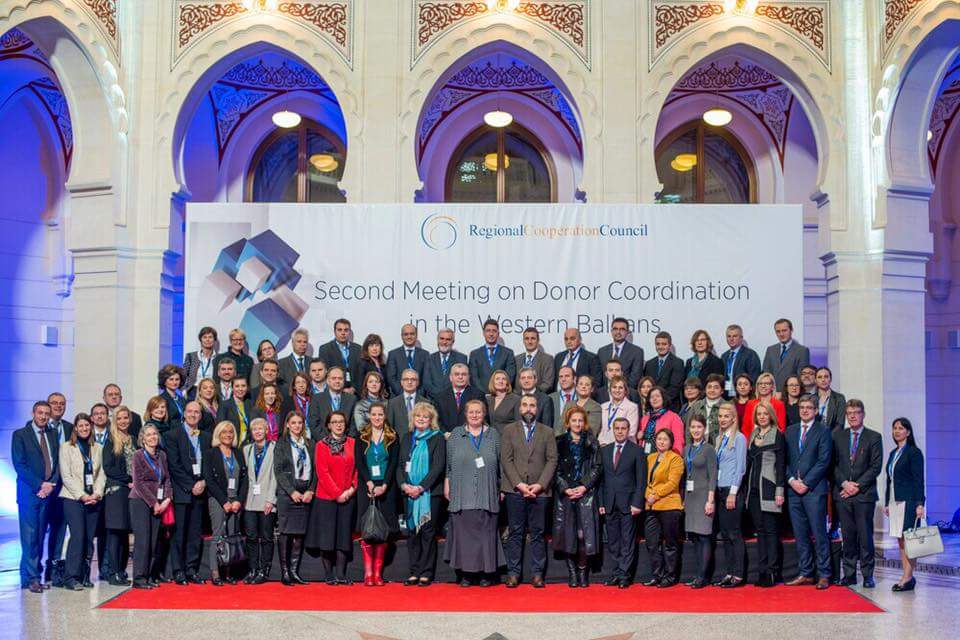
On 23 March the SEE Health Network participated at the Regional Cooperation Council (RCC) Second Donors Conference held in Sarajevo, Bosnia and Herzegovina. It was represented by its current Presidency of Bosnia and Herzegovina (BIH) by its two leading Bosnian representatives, the National Health Coordinators (NHC) Dr. Amela Lolic and Dr. Goran Cerkez.
n
The RCC Second Donors Conference discussed various important issues related to the implementation of the SEE 2020 Strategy “Jobs and Prosperity in a European Perspective” endorsed in October 2013. For the first time in the history of the region and beyond health has found its appropriate place and visibility in the “Inclusive Growth” Pillar with four health objectives and respective measures.
n
During the Confer ence plenary sessions the SEEHN Senior Representatives pointed out that:
nn
n
- The network has both its political and technical dimensions and mechanisms responsible for implementing regional health actions of common interest often called as “multisectorial project”, such as health and tourism, health and education, E-health or health and security;
n
- The region and Europe live in time of terrorism, threats and bioterrorism in that context;
n
- Health has an important role to play in implementing the SEE 2020 Strategy particularly in the time of the global and European refugee crisis with the movement of thousands of migrants to the EU; health has an important role;
n
n
The SEE ministries of health do work in line with the SEE Growth Strategy 2020 as well as for achieving the goals of the WHO European health policy framework 2020 and the EU “Health in All Policies” approach.
n
The SEEHN Senior Representatives highlighted that by reducing the funding for health care and public health actions the region reduces funding for development, prosperity and progress as health is a contributor for health, wealth, well-being and prosperity rather than only a consumer, which is usually the general understanding. A sick person consumes significant resources and often mobilizes the public, family and social services.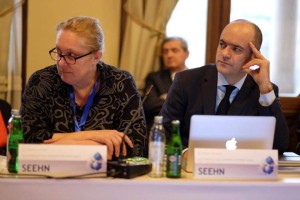
n
For all above reasons, the SEEHN Senior Representatives and the Bosnian Presidency appealed to the RCC and the donors present in Sarajevo to support several important health and public health areas that are already part of the SEE 2020 Strategy as follows:
nn
n
- Cross-border Public Health and Emergencies preparedness including communicable diseases surveillance and control, antimicrobial resistance, emergencies and joint actions to mitigate natural disasters, man-made disasters as well as the issue of the huge influx of migrants to the SEE region;
n
n
n
- Strengthening the health systems and public health capacities to fight the epidemics of noncommunicable diseases and mental health disorders in the region (including improving quality of health services and introducing high technologies such as transplantations and improved donor collection and exchanges as started already) that are the main factor contributing to improving health and well-being and, thus, contributing to better productivity of the human/labor capacities in the region;
n
n
n
 Working on the health workforce outstanding issues and their mobility as the health sector is one of the biggest “employers” of the region with close to 10% of its workforce.
n

News
The South Eastern European Journal of Public Health (SEEJPH) published the “Ten years onwards: Comparison of the South Eastern European regional public health strategy 2004 and the South Eastern European 2020 strategy” article, written by Christiane Wiskow, Maria Ruseva and Ulrich Laaser, which strives to show the ongoing regional collaboration that has continuously contributing to the development of the public health in the South Eastern Europe (SEE) region since 2000 when the public health collaboration in SEE (PH-SEE) was initiated.nnThis article gives an overview of the two frameworks for regional collaboration in the area of public health, such is the framework developed in 2004 by a network of public health professionals and academics, and another one developed by the SEE Health Network as an integral part of the SEE 2020 strategy, both with reviewed situation analysis using the SWOT methodology.nnThe comparison is made regardless the differences in structure and wording, showing that both strategies are consistent in the majority of their goals and actions which includes improving equity in health with a focus on vulnerable and low-income groups, hence improving health for all, strengthening human resources for health and public health, respectively and strengthening and improving intersectoral cooperation and governance. In addition to the commonalities, there are also apparent differences between the two strategies in the aspects of social participation, regional public health information, the cross-border public health and the quality improvement.nnNevertheless, despite the time lag of nearly ten years, the commonalities of the strategies for regional public health collaboration are very significant and the differences between them are partially due to the different development context. The authors of this article are giving conclusion that the collaboration between the two networks, FPH-SEE and SEEHN particularly in the area of public health education, could be of mutual benefit and will contribute in further strengthening for the improvement of regional health information.nn nnOn the link below you can read the full article published on the SEEJPHnnTen years onwards: Comparison of the South Eastern European regional public health strategy 2004 and the South Eastern European 2020 strategy