News
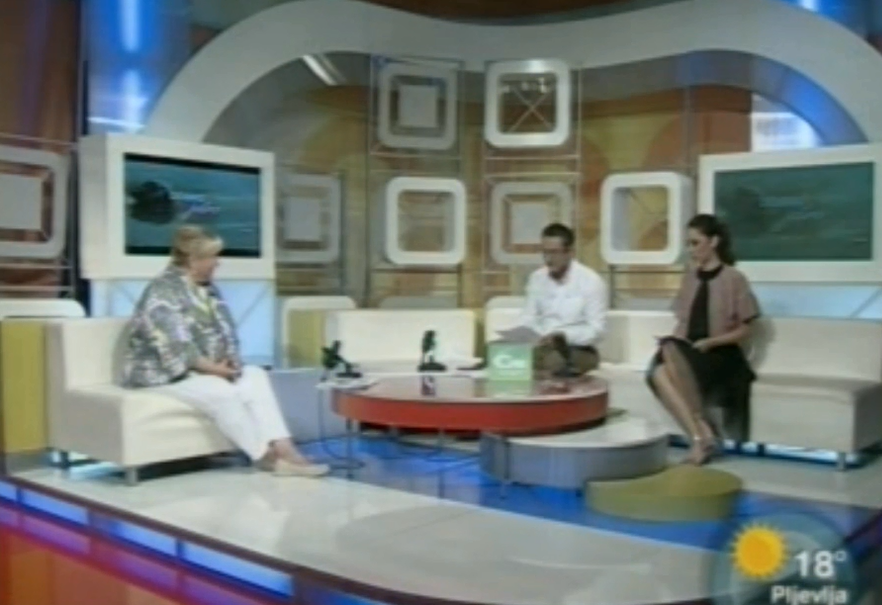
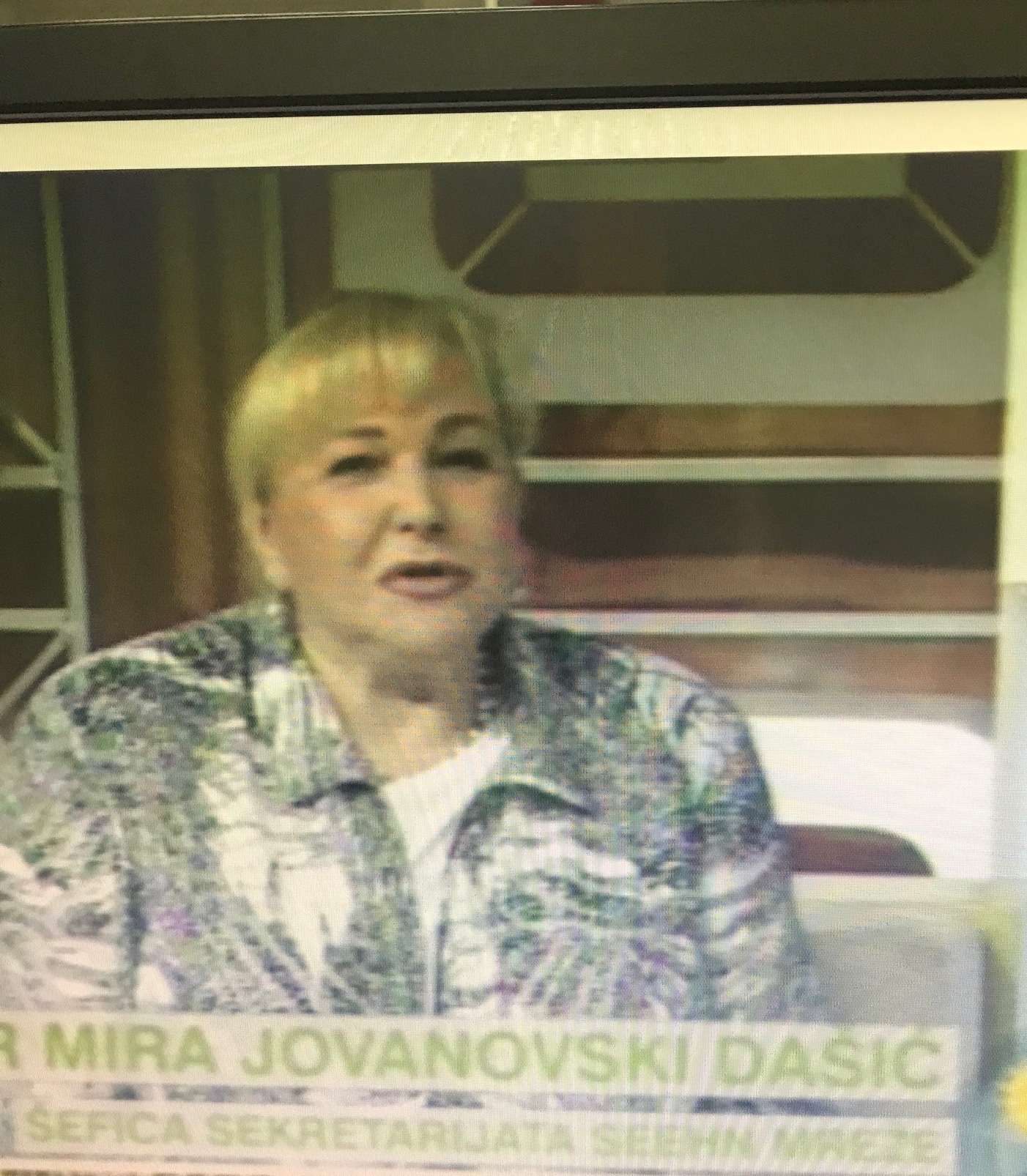
Director of SEEHN Secretariat Dr. Mira Jovanovski Dasic had an interview for the National Television of Montenegro on 12 July 2017.
n
The aim of the interview was for her to explain the significance of SEEHN and to give a brief overview of the existing cooperation between the SEE countries.
n
The director said that being in charge of the SEEHN Secretariat is yet another professional challenge for her and that her main goal is to do as much as she can in this capacity in order to implement new initiatives for the benefit of all the member states within the SEE Health Network.
n
The SEE Health Network, as she explained, is a multi-government organization working to boost public health in SEE.
n
T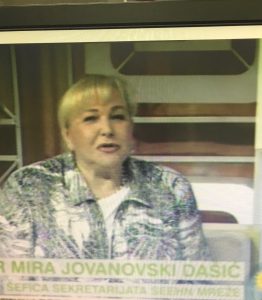 he Network acts as a regional resource, knowledge base and repository of expertise, with strong links to European and global organizations as partners.
n
South Eastern Europe Health Network (SEEHN) operates at both political level with ministries of health and technical with Regional Health Development Centers (RHDC).
n
In addition, the SEEHN Presidency rotates among the health ministries of Member States every six months, with now being presided by Bulgaria, and subsequently by Israel.
n
At technical level, RHDC provide technical support to specific health activities addressed at regional public health level. The RHDCs play a major role in coordinating essential public health operations, standardizing protocols and procedures, exchanging data securely and reliably and establishing joint training programmes for experts.
n
Organizing such initiatives at the regional level not only improve the quality of the processes, but involve substantial rationalization of resources. Accordingly SEEHN will make a roster of technical experts who belong to the SEE region and this will be used as technical resource.
n
As a first step towards upgrading the work of the RHDC, an event at the beginning of September 2017 will be organized in Skopje, Republic of Macedonia, where all RHDC directors and partners will gather.
n
And last, but not the least, Dr Jovanovski-Dasic stated that Health Systems are not perfect, but that the MS of SEEHN must try to improve their efficiency by reaching these main goals:
nn
n
- Sustaining and strengthening the regional cooperation in public health in South-eastern Europe
n
- Achieving the United Nations Sustainable Development Goals (SDGs)
n
- Striving universal health coverage (UHC) for every person
n
- Reinforcement of regional and national action preparedness and response to emergencies and related population movement and migration
n
News
Countries with a population of less than 1 million – the small states – have some of the highest rates of childhood and adolescent obesity in the WHO European Region. The problem affects more than 1 in 3 school-aged children in the majority of these countries. In order to decisively tackle and jointly address the commonalities of the problem, ministers of health from the 8 small states of the Region today signed the Malta Statement on Ending Childhood Obesity.
n
“With almost a third of school-age children overweight or obese in many countries in Europe, we must boost children’s access to healthy food and opportunities to be physically active,” says Dr Zsuzsanna Jakab, WHO Regional Director for Europe. “Children deserve policies that protect them from obesity. Small countries, with their unique circumstances and reach, can innovate, transform and develop the recipe for success so society can address this challenge that threatens children’s futures.”
n
“Malta is aware of the need to tackle childhood obesity, and for the last 6 months has championed addressing childhood obesity, as one of the major themes of Malta’s EU Presidency. During these months Malta has launched a set of procurement guidelines for schools and other entities who work closely with children to procure healthy foods,” says the Maltese Minister for Health, Chris Fearne. “Let’s lead by example, let’s offer our children the healthy options for life.”
n
In the Statement, ministers agree to join forces and launch comprehensive initiatives to address obesity in children. They call on governments to ensure stronger restrictions on the marketing of foods high in saturated fat, free sugars and salt to children; to promote clear and easy-to-understand labelling; and to improve the nutritional composition of food products. These efforts are in line with the European Food and Nutrition Action Plan 2015–2020, the Physical Activity Strategy for the WHO European Region 2016–2025 and the recently adopted European Council conclusions on halting the rise in childhood overweight and obesity.
n
The Statement also acknowledges that governments can contribute to better diets and increased physical activity levels in populations through changes to the wider environments and contexts in which people make daily food and activity choices.
n
The Malta Statement was a key outcome of the 4th High-level Meeting of Small Countries, held in St Julian’s, Malta, on 26–27 June 2017. The WHO Regional Office for Europe and the Ministry of Health of Malta jointly organized the Meeting under the framework of the WHO Small Countries Initiative.
nn
Building resilient and healthy communities
n
The broad theme of the High-level Meeting was resilience at individual, community and system levels. Despite being vulnerable to many external threats, from financial to environmental, small countries have inherent capabilities to respond, bounce back and even thrive with innovative solutions. This resilience is a fundamental component of health systems, and essential for implementing Health 2020, the European policy framework for health and well-being. All 53 Member States of the Region endorsed Health 2020 in Malta in 2012.
n
On this theme, the Meeting saw the launch of the new publication “Building resilience: a key pillar of Health 2020 and the Sustainable Development Goals”, developed under the framework of the Small Countries Initiative. It presents the results of studies conducted in 3 small countries – Iceland, Malta and San Marino – that demonstrate how the effects of strengthening resilience at the individual level ripple through communities and society, and vice versa, impacting health.
nn
First WHO Collaborating Centre in Malta
n
WHO also designated the Islands and Small States Institute at the University of Malta as the WHO Collaborating Centre on Health Systems and Policies in Small States. The Institute will work with WHO as a centre of excellence to develop frameworks and policies for strengthening resilience in small-state health systems; co-organize capacity-building events on health system leadership and governance in the specific contexts of small states; support health information systems and evidence generation in small states; and develop appropriate performance assessment mechanisms for small-state health systems.
n
The Institute has a notable track record of high-level policy research on resilience, economy, environment and health in small states. Its Vulnerability Index, developed for small states, is acknowledged as a seminal work in the field. It has led to worldwide interest in and many quantitative studies on economic vulnerability and resilience.
n
WHO collaborating centres include research institutes and units of universities or academies designated by the WHO Director-General to carry out activities in support of the Organization’s programmes. There are currently over 700 WHO collaborating centres in 80 countries around the world.
nn
About the WHO Small Countries Initiative
n
In 2013, the WHO Regional Office for Europe launched the Small Countries Initiative as a platform for countries in the Region with a population of less than 1 million to share their knowledge on implementing Health 2020 and the Sustainable Development Goals. The 8 members of the initiative are: Andorra (host of the 2nd High-Level Meeting of the Small Countries), Cyprus, Iceland, Luxembourg, Malta (host of this year’s meeting), Monaco (host of the 3rd High-Level Meeting), Montenegro and San Marino (host of the 1st High-Level meeting and co-leader of the Initiative).
n
Two subnetworks operate within the Initiative: the Small Countries Health Information Network (SCHIN), which addresses the specific challenges that small countries face in health information systems and reporting; and a network of communication professionals and journalists, which focuses on communicating the 2030 Agenda for Sustainable Development and on media reporting on health inequities.
n
Source: http://www.euro.who.int/en/media-centre/sections/press-releases/2017/europes-small-countries-commit-to-ending-childhood-obesity

News, News from the SEEHN Member States
The Head of SEEHN Secretariat, Dr Mira Jovanovski – Dasic, hosted the 6th meeting of SEEHN Executive Committee on 26 June 2017 in the premises of the Secretariat in Skopje. The Bulgarian SEEHN National Health Coordinator and Chief Health Inspector from the Ministry of Health of Bulgaria, Dr Angel Kunchev, also attended the meeting, since the Bulgarian Ministry of Health will take over the next six-month SEEHN Presidency on 1st July. At the meeting, planned activities, meetings and events for that period were discussed. Important decisions were also taken with the aim of boosting and facilitating the work of the Secretariat and the projects of the Network.

 he Network acts as a regional resource, knowledge base and repository of expertise, with strong links to European and global organizations as partners.

