News
Organized and hosted by the Macedonian presidency of the South-eastern Europe Health Network, the 34th Plenary Meeting will be held on 19-20 November 2014 in Skopje, Republic of Macedonia.
This event will be attended by the national health coordinators of the SEEHN Member States, the partner countries and partner international organizations, directors of the SEEHN Regional Health Development Centers (RHDC) and other key important actors.
Following the Extraordinary Ministerial Meeting of the SEEHN which will take place the day before in Skopje, the 34th Plenary Meeting will follow up on the SEEHN Ministers’ meeting and discuss the SEEHN key strategic areas of work for 2014-2020 and beyond in implementing the SEE 2020 Strategy “Jobs and prosperity in an European Perspective” under the auspices of the Regional Cooperation Council (RCC). The accent will also be put on both the H2020 integration into the SEEHN policies and developments, and the outcome of the major developments, activities and challenges during the term of the Macedonian Presidency (SEEHN Presidency Report July – December 2014).
Discussing and deciding upon the future long-term SEEHN health strategy is the first crucial strategic issue to be addressed during this Plenary Meeting. Expected to be ready for the forthcoming 4th SEE Ministerial Forum in 2016, this strategy will cover primarily all SEEHN countries and will hence represent the contribution of the Network to the achievement of the objectives of the WHO Europe Health 2020 Framework Policy and the European Action Plan on Strengthening Public Health Capacities and Services.
The second important issue to be tackled is the commencement of a policy dialogue so to provide an overview of the regional efforts and cooperation towards enhancing inter-sectorial governance of health and achieving inclusive growth.
In addition, the Plenary Meeting will discuss and take important decisions regarding the preparations for the 4th Ministerial Forum and the SEEHN Secretariat establishment. Finally, it will represent the TAIEX achievements in 2014 as well as the Road Map for the SEEHN activities and the SEEHN Calendar of Events in 2015 under the Serbian Presidency of the SEEHN (01 January – 30 June 2015).
News
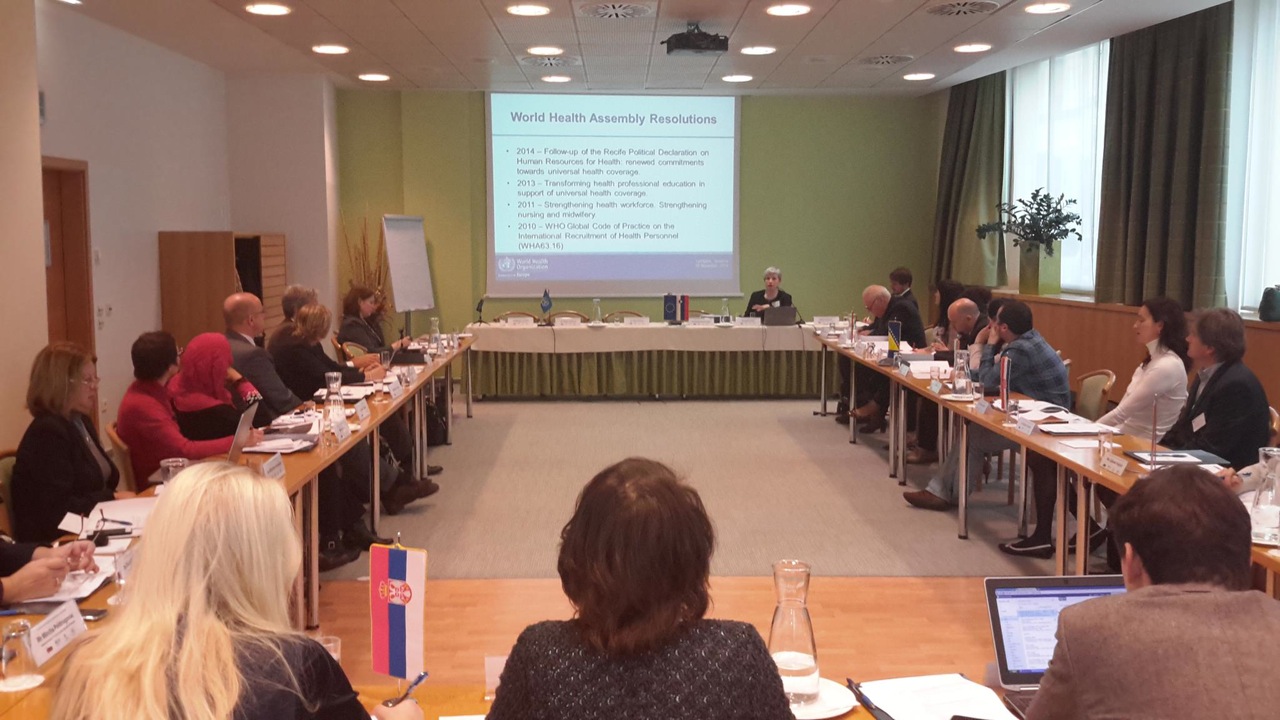
Recognizing the fundamental importance of a sustainable and well-performing health workforce which is the backbone of an effective health system, as well as the need to address health workforce challenges in countries and introduce mechanisms to improve and promote relevant health workforce policies, the SEEHN Regional Health Development Centre on Human Resources for Health (HPH), established in 2013 in the Republic of Moldova, organized a Multi-country Workshop titled “Health Workforce – from Challenges to Solutions”.
Implemented in collaboration with and under the technical guidance of the WHO Regional Office for Europe, the workshop took place on November 10-11, 2014 in Ljubljana, Slovenia.
Gathering national focal points on HRH, policy-makers and researchers dealing with health workforce issues, the workshop aimed at shaping the agenda for action in the SEEHN countries. More precisely, its purpose was to take stock of recent evidence on effective health workforce strategies in order to increase technical capacity in SEEHN countries and to strategize their collaborative efforts to support effective and sustainable health workforce development in the SEE region.
Therefore, the workshop participants used the opportunity to review the current progress and challenges in the health workforce development in SEEHN countries, including the implementation of the WHO Code of Practice, and shared their experiences and lessons learnt in addressing health workforce challenges in Europe with a focus on health workforce mobility.
Also presented were a methodology and a questionnaire for assessing the situation in the SEE countries regarding the harmonization and mutual recognition of health professionals’ qualifications in Europe to be performed with EC TAIEX support. The general concept of the First SEE Forum of Health Educational Institutions in South East Europe to take place in Varna, Bulgaria in 2015 as well as drafting outline of a SEEHN strategy and action plan on strengthening human resources for health (2014-2020) in line with the SEEHN Decision and the SEE 2020 Strategy were part of the workshop agenda as well.
The workshop encouraged strengthened political commitment in SEEHN countries which is essential to effective and sustainable health workforce development, one of the key strategic actions of the health dimension in the Inclusive Growth Pillar of the recently approved SEE 2020 Strategy “Jobs and Prosperity in the European Perspective.”
The workshop was funded by the Ministry of Foreign Affairs and the Ministry of Health of Slovenia and co-sponsored by the Technical Programme on Human Resources for Health (HRH) at the WHO Regional Office for Europe in Copenhagen.
News
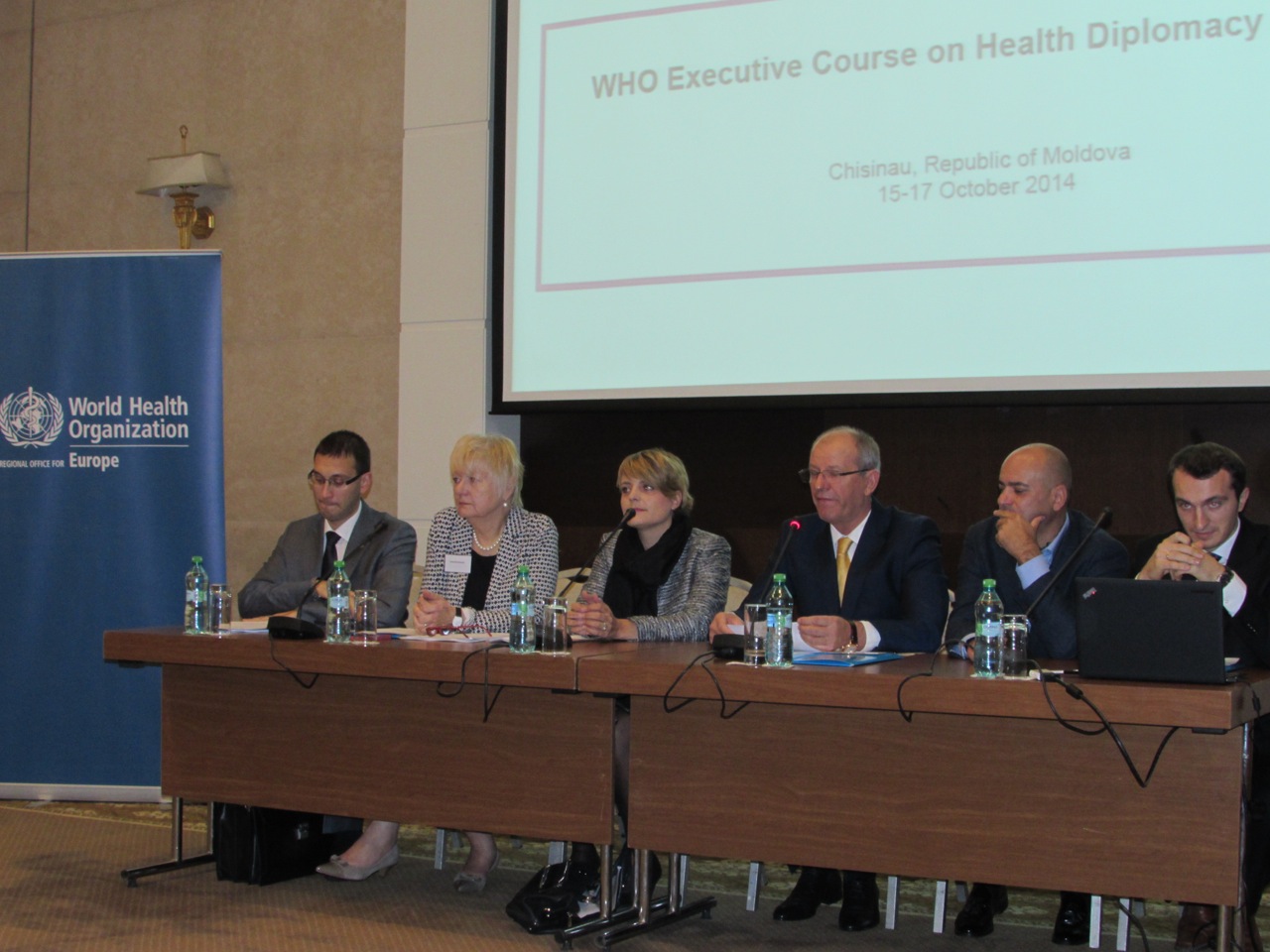
Having become a strong partner in health collaboration at European level and having obtained a growing influence on the European health policy agendas in the past 10 years, the South-Eastern Europe Health Network together with the World Health Organization (WHO) Regional Office for Europe and the Global Health Programme at the Graduate Institute of International and Development Studies in Geneva, Switzerland organized an executive course on health diplomacy in action on October 15-17, 2014 in Chisinau, Republic of Moldova.
Global health diplomacy (GHD) is considered important since it brings together the disciplines of public health, international affairs, management, law and economics and focuses on negotiations that shape and manage the global policy environment for health.
Hence, the course on health diplomacy in action aimed at capturing and further developing the capacities and skills required to achieve health improvement in the South Eastern European Region at different levels.
Comprised of lectures, roundtables and group activities, this three-day long training course provided insight into the concept and principles of global health diplomacy, the selected priority areas of current GHD negotiations, the possible SEEHN approaches applicable to the current situation in the Region and the new instruments, methods and systems of diplomacy.
It gathered over 40 high-level representatives from the SEEHN member countries and a variety of lecturers and experts who discussed the diplomatic and security challenges in the Region and the importance of policy coherence for health diplomacy. By fostering interaction and communication between the participants in mixed working groups, the course helped the diplomatic and health professionals understand their common interests in health as a foreign policy issue, and thus provided for a stronger regional cooperation in public health in the SEE.
Furthermore, it contributed to capacity building in achieving better global and national health performance, and provided instruments and mechanisms for multilateral negotiations for health in both health and non-health organizations towards achieving and holding positions in boards, assemblies and reconciling global health and national interests.
This course was implemented with technical and financial support by WHO/EURO as part of the project “Developing and sustaining the institutional capacities for regional cooperation in public health in SEEHN”, and kindly donated by the Swiss Agency for Development and Cooperation (SDC).
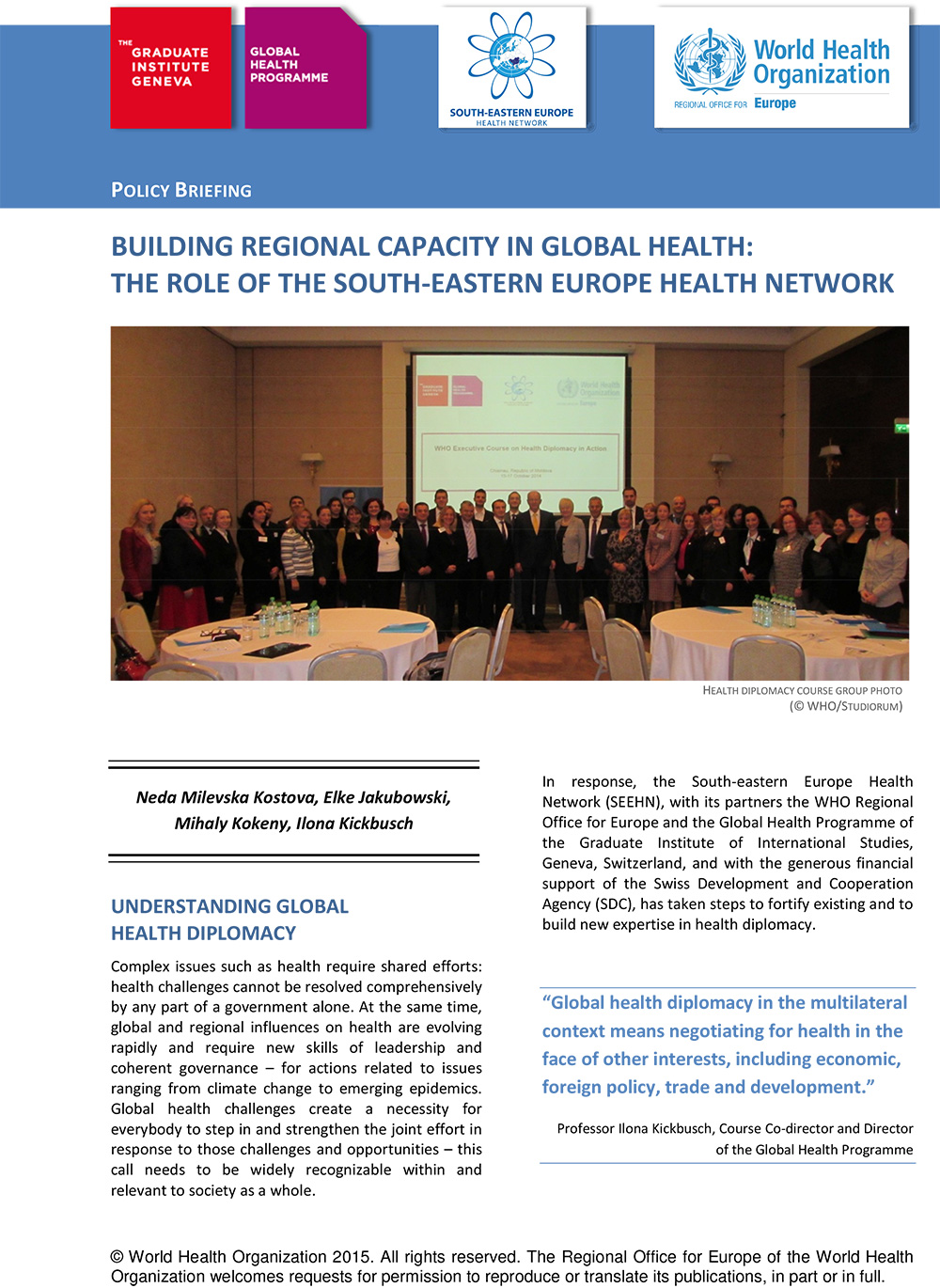
The course policy briefing for SEEHN, titled Building Regional Capacity in Global Health: The Role of the South-Eastern Europe Health Network, is available at the following link.