EC TAIEX Report of the Multi-country Workshop on Monitoring NCDs and Health Inequalities related to NCDs
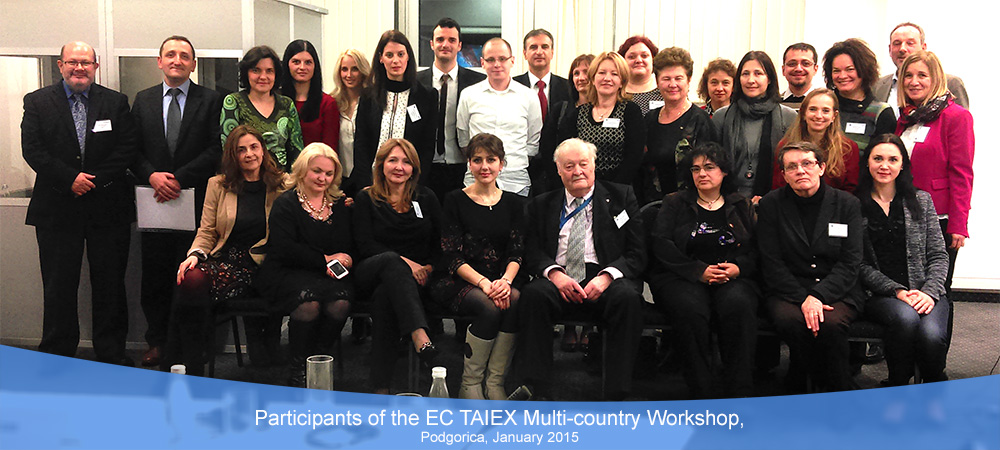
Organized by the Technical Assistance Information Exchange instrument of the European Commission (TAIEX) in cooperation with the Ministry of Health of Montenegro on behalf of SEEHN and the Regional Health Development Centre (RHDC) on NCDs of Montenegro, the Multi-country Workshop on Monitoring Non-communicable Diseases and Health Inequalities related to Non-communicable Diseases took place in Podgorica, Montenegro on 29–30 January 2015.
The workshop had close to 80 participants from the Member States of the SEE Health Network[1], Kosovo[3] and Turkey.
Part of a series of capacity-building activities led by the RHDCs in Podgorica supported by EC TAIEX, the Workshop aimed at identifying and proposing minimal set of indicators on NCDs and related health inequalities to be implemented and reported by all SEEHN countries, Kosovo* and Turkey.
The EC TAIEX Workshop Report summarizes the conclusions made by key experts from the International organizations, including WHO Europe, and considers the experiences of representatives of the EU Member States and of the SEEHN countries as well as Kosovo and Turkey in the field of monitoring NCDs and health inequalities related to NCDs. It also provides recommendations for further action in terms of developing uniform NCDs’ monitoring system for all SEEHN countries.
[1] SEE Health Network: The SEE Health Network was established in partnership with the Council of Europe and the WHO Regional Office for Europe within the framework of the Stability Pact Initiative for Social Cohesion. It comprises of Republic of Albania, Bosnia and Herzegovina[2], Republic of Bulgaria, Republic of Croatia, Republic of Moldova, Montenegro, Romania, Republic of Serbia, the State of Israel and The Former Yugoslav Republic of Macedonia;
[2]Ministry of Civil Affairs on the behalf of Bosnia and Herzegovina’s health authorities: Ministry of Civil Affairs of Bosnia and Herzegovina, Federal Ministry of Health, Ministry of Health and Social Welfare of the Republic of Srpska and Department of Health and Other Services of Brčko District
[3] Kosovo*: KS=Kosovo*; this designation is without prejudice to positions on status, and is in line with UNSCR 1244 and the ICJ Opinion on the Kosovo Declaration of Independence